
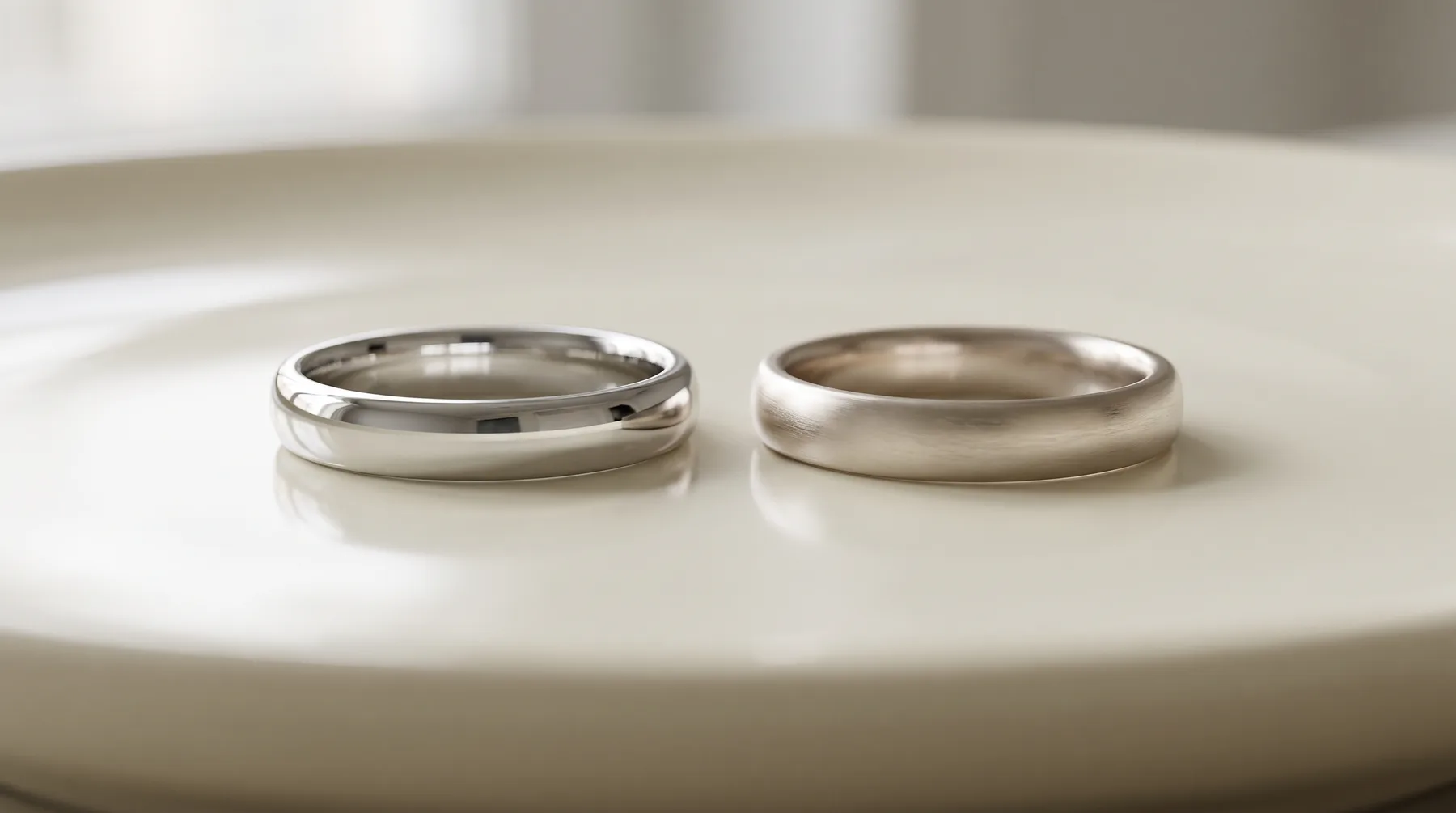
White gold and platinum look almost identical in a shop window on the day you buy them. They stop looking identical about three years later, and the difference is structural: platinum is a naturally white metal that wears by moving rather than disappearing, while white gold is a yellow metal made white with alloys and kept white with a plated coating that has a service life.
Platinum is the better metal for a ring worn every day, and it is heavier, more expensive to fabricate, and not the right answer for everyone. The honest version of this comparison is that white gold buys you a lighter ring at a lower price with a maintenance habit attached, and platinum buys you permanence at a weight some people never stop noticing.
What each metal actually is
1 min
Platinum jewelry in the United States is usually 950 platinum: 95% pure platinum with a small amount of another platinum-group metal, most often ruthenium or iridium, for working properties. The Federal Trade Commission sets the vocabulary at 16 CFR § 23.6: a product of at least 950 parts per thousand pure platinum may be marked simply platinum, while 850 and 900 alloys must carry the number, and anything from 500 to 850 parts per thousand requires disclosure of its full composition.
White gold is not a metal, it is a recipe. Yellow gold is alloyed with whitening metals, historically nickel and now frequently palladium, then almost always plated with rhodium to make it read genuinely white. Underneath that plating, most white gold is a pale, slightly warm grey. So a 14k white gold ring is 58.3% gold, and a 950 platinum ring is 95% platinum: one is a majority alloy, the other very nearly the pure element.
The price argument has quietly inverted
1 min
Everyone knows platinum costs more. That was reliably true for decades, and the metal arithmetic no longer supports it. On 13 August 2026, platinum spot sat at roughly $1,730 per troy ounce while gold sat at about $4,390. Gold is currently worth more than two and a half times platinum by weight, which would have sounded absurd twenty years ago.
Run it through to a finished ring. Pure gold at $4,390 an ounce is about $141 per gram, so the gold content of an 18k piece is worth roughly $106 per gram and a 14k piece about $82 per gram. Platinum at $1,730 an ounce is about $56 per gram, so a 950 alloy carries roughly $53 per gram of platinum. Platinum rings are around 60% heavier than the same design in white gold, and even after that penalty the raw metal in a platinum ring is now comparable to, and frequently cheaper than, the raw metal in the white gold version.
Platinum jewelry still costs more, and the reason has moved from metal to labor. Platinum melts at about 1,768 degrees Celsius against roughly 1,064 for pure gold and lower still for gold alloys, so it needs different torches, different solders, separate polishing wheels to avoid contamination, and considerably more finishing time. It also loses more material to scrap in fabrication, and not every bench works it. You are paying for the shop, not for the shine.
Weight, and how much it matters
1 min
Platinum's density is 21.4 grams per cubic centimeter. Fourteen-karat white gold is around 13 and 18k white gold around 15.6. The same ring in platinum weighs roughly 60% more than in 14k white gold, and there is no way to design around that; it is the material.
People divide cleanly on this. Some feel the weight and read it as substance, permanence, seriousness. Others take the ring off after a week because their hand notices it constantly. There is no correct answer and no way to predict which you are from a photograph, which is why the single most useful thing you can do is try both on and wear each for ten minutes before deciding anything else in this article.
How each metal wears
1 min
This is the difference that actually matters over decades, and it is a real physical distinction rather than a marketing one.
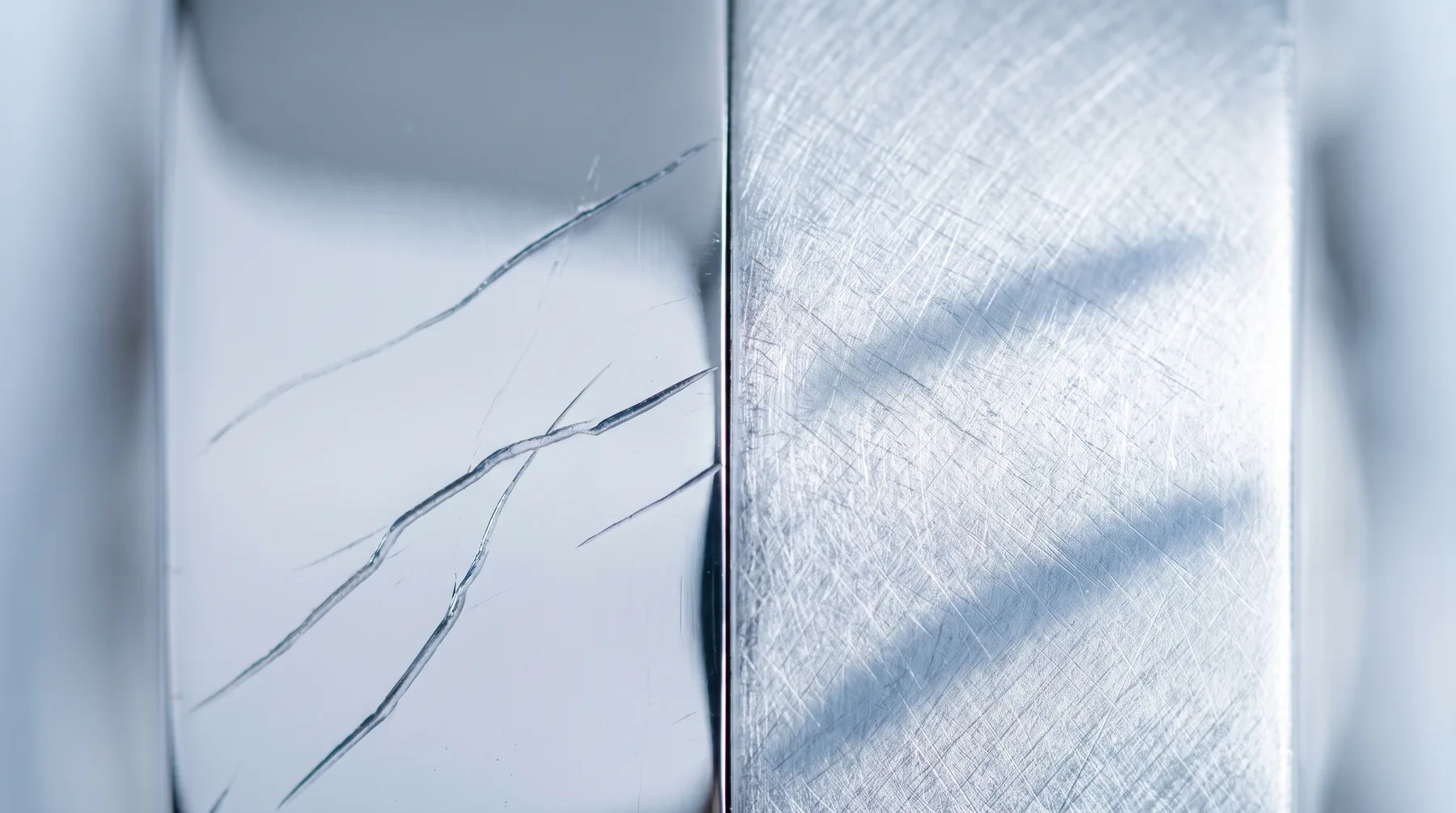
When gold is scratched, a small amount of metal is removed. It ends up in the polishing dust or on the countertop, and it is gone. Repeat that for twenty years and a shank measurably thins.
When platinum is scratched, the metal is mostly displaced rather than removed: it moves to the side of the scratch and stays on the ring. The accumulated result is a soft matte surface, the patina platinum owners either love or take to a jeweler to polish out. Either way the ring keeps its weight.
The practical consequence for buyers is that platinum ages by changing texture and white gold ages by losing material and losing plating. A thirty-year-old platinum ring is a scuffed ring of full weight; a thirty-year-old white gold ring, without maintenance, is a thinner ring with a warm cast where the rhodium wore through.
Prongs, and the argument that decides it
1 min
If you are buying a mounting for a stone you care about, this section is the whole comparison.
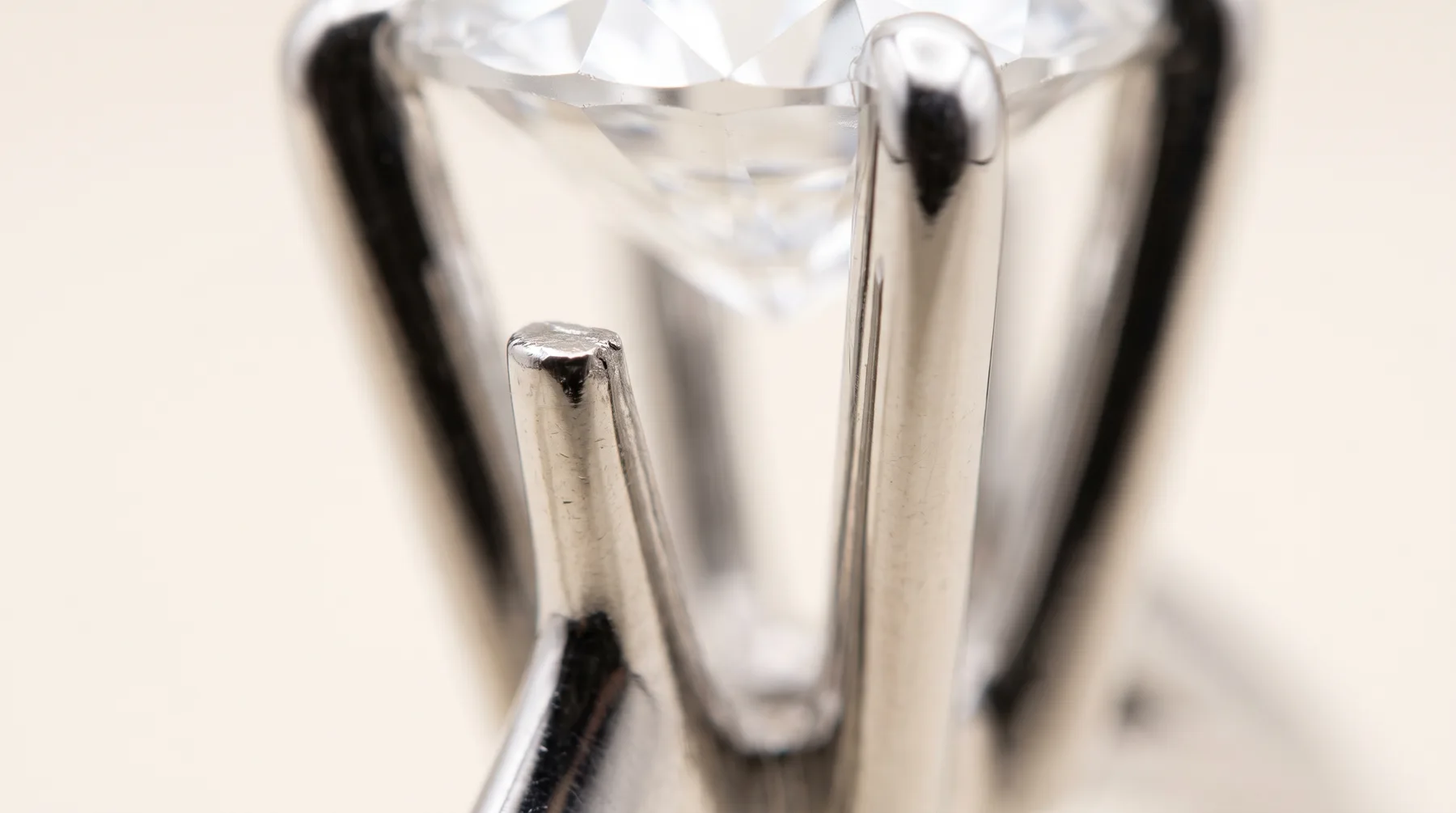
Prongs are the smallest, most exposed, hardest-working metal in any ring, and they fail by thinning. Because platinum displaces rather than sheds, platinum prongs hold their material far longer, and platinum's toughness lets a jeweler bend and re-tip them repeatedly without the metal becoming brittle. White gold prongs wear away, and re-tipping them is a routine service that comes around on a schedule.
Plenty of jewelers, mine included, will happily set a diamond in a white gold ring and will quietly prefer platinum heads for anything valuable. A common and genuinely sensible compromise is a white gold shank with a platinum head: the metal that grips the stone is the durable one, and the metal you are paying for by the gram is the lighter one. Our guide to engagement ring settings covers which mounting styles put the most stress on prongs.
What thirty years of maintenance looks like
1 min
White gold asks for a recurring appointment and platinum mostly does not. Here is the whole ownership difference in one place.
| White gold | Platinum | |
|---|---|---|
| Routine upkeep | Re-plating with rhodium when the warmth shows, typically every one to three years on a ring | Polishing when you tire of the patina, or never |
| Typical shop cost | Roughly $60 to $120 per re-plate as of August 2026 | Roughly the same for a polish, needed far less often |
| Hidden cost | Each re-plate includes a polish, which removes a little gold every time | Polishing removes a little metal too, but it happens far less often |
| Prongs | Re-tipping on a recurring schedule | Re-tipping far less often; the metal stays put |
| Resizing and repair | Any bench can do it | Needs a bench equipped for platinum, which not every shop is |
The re-plating line is the one that surprises people, because it is invisible at purchase and permanent afterward. It is not a large expense in any single year and it is a real commitment across a lifetime, in money and in the piece being polished thinner each time.
Color, and what white gold looks like unplated
1 min
Fresh rhodium is slightly brighter and cooler than platinum. Side by side on the day of purchase, a rhodium-plated white gold ring often looks whiter than the platinum next to it, which is a genuine and slightly funny fact about the shop window.
Two years later the comparison reverses. The plating thins from the underside of the shank first, the alloy's warmth comes through, and the ring reads faintly yellow next to a platinum band that has not changed color at all because it has no coating to lose.
An option worth asking about: palladium-whitened white gold worn unplated. It is a warmer grey than platinum and it will never be as white as fresh rhodium, and it also never needs the tank again. Some manufacturers will supply a piece unplated on request, and almost nobody offers it unprompted.
Skin sensitivity
1 min
Platinum at 95% purity is about as inert as jewelry metal gets, and it is the standard recommendation for anyone with a history of reacting to jewelry.
White gold depends entirely on its alloy. Nickel-whitened white gold is a real problem for nickel-sensitive wearers, and it has largely left the European market for skin-contact jewelry because of the release limits under the REACH regulation. Palladium-whitened white gold is generally well tolerated. Rhodium plating helps while it is intact and stops helping the day it wears through, which makes it a delay rather than a solution.
The practical instruction: if you know you are nickel-sensitive, ask what the white gold is whitened with and get the answer in writing, or buy platinum and stop thinking about it.
What our catalog says about how the trade stocks white metal
1 min
Our catalog is a fair sample of what American jewelers actually buy, and the ratio is startling. It carries 51,092 white gold styles across 10k, 14k and 18k, against 1,381 in platinum: 37 to 1.
The trade made a decision decades ago that a maintenance step was an acceptable price for a cheaper, lighter, easier-to-work metal, and the inventory still reflects it even now that the metal-price argument has flipped. The same data shows how thoroughly plating props that decision up: 38,693 of the 40,520 14k white gold styles, 95%, ship rhodium plated.
What that means for a shopper is practical rather than philosophical. White gold is what is in stock, in every size and every design, and platinum is frequently a special order with a longer lead time. If you want platinum, expect to ask for it and to wait.
Which should you buy
1 min
Choose platinum for an engagement ring or heirloom you intend to wear daily for decades, for holding a valuable stone, if you are nickel-sensitive, if you dislike maintenance appointments, or if you like the weight. Accept the patina as the point rather than a defect.
Choose white gold if you want a lighter ring, if the up-front price difference matters, if you want the brightest possible white on day one, or if the design you love only exists in gold. Budget for re-plating, and consider a platinum head under the stone.
Consider neither if what you actually dislike is maintenance and what you actually like is the color of gold. Yellow and rose gold wear their color permanently and never visit a plating tank, and our karat comparison covers how alloy choice changes durability.
And whichever you choose, ask for the gram weight before you pay. It is the number that tells you whether you are buying a substantial ring or a light one, in either metal, as our guide to why similar rings cost different amounts shows with real catalog data.
Frequently Asked Questions
2 min
Is platinum better than white gold?
For durability and prong life, yes. Platinum is naturally white so it never needs plating, and it displaces rather than loses metal when scratched, which keeps prongs and shanks intact far longer. White gold is lighter, cheaper up front, easier for any bench to work on, and requires periodic re-plating to stay white.
Why is platinum jewelry more expensive if platinum costs less per ounce than gold?
Because the price is mostly labor and weight rather than metal. Platinum melts at about 1,768 degrees Celsius, needs its own solders, torches and polishing equipment, takes longer to finish, and produces more scrap. A platinum ring also uses around 60% more metal by weight than the same design in white gold.
Does platinum scratch?
Yes, readily, and that is normal. The difference is that platinum's scratches displace metal to the sides rather than removing it, which produces the soft satin patina platinum is known for. A polish restores the shine whenever you want it, and the ring keeps its weight either way.
How often does white gold need re-plating?
Typically every one to three years on a ring worn daily, and much less often on earrings or a pendant. The signal is a warm cast on the underside of the shank in daylight. It is a cosmetic threshold, so re-plate when the look bothers you rather than on a schedule, since every re-plate includes a polish that removes a little gold.
Which is better for sensitive skin?
Platinum, at 95% purity, is close to inert and is the safe default. White gold depends on the alloy: nickel-whitened white gold causes reactions in nickel-sensitive wearers, palladium-whitened white gold generally does not, and rhodium plating protects only until it wears through.
Can you mix platinum and white gold in one ring?
Yes, and it is a common professional choice: a white gold shank with a platinum head puts the durable metal where the stone is gripped and the cheaper metal where weight adds cost. The two look nearly identical once finished, and a jeweler equipped for platinum can work on both.