
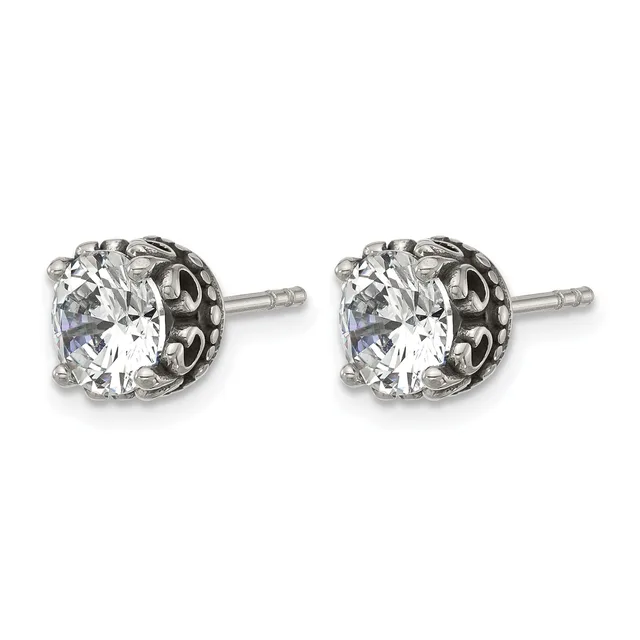
What Sets CZ Studs Apart
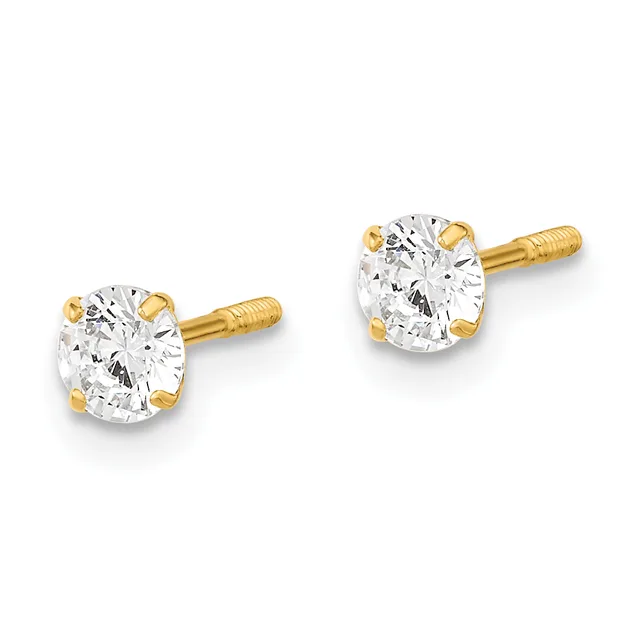
Cubic zirconia is a lab-created crystalline material cut and faceted to the same proportions as a diamond. It refracts light with high brilliance and, in a well-made stud setting, reads almost identically to a diamond at conversational distance. Because the stone is grown rather than mined, the price sits well below comparable diamond studs, making CZ a practical choice for everyday wear, travel, or a second-piercing look you rotate frequently.
Choosing a Style
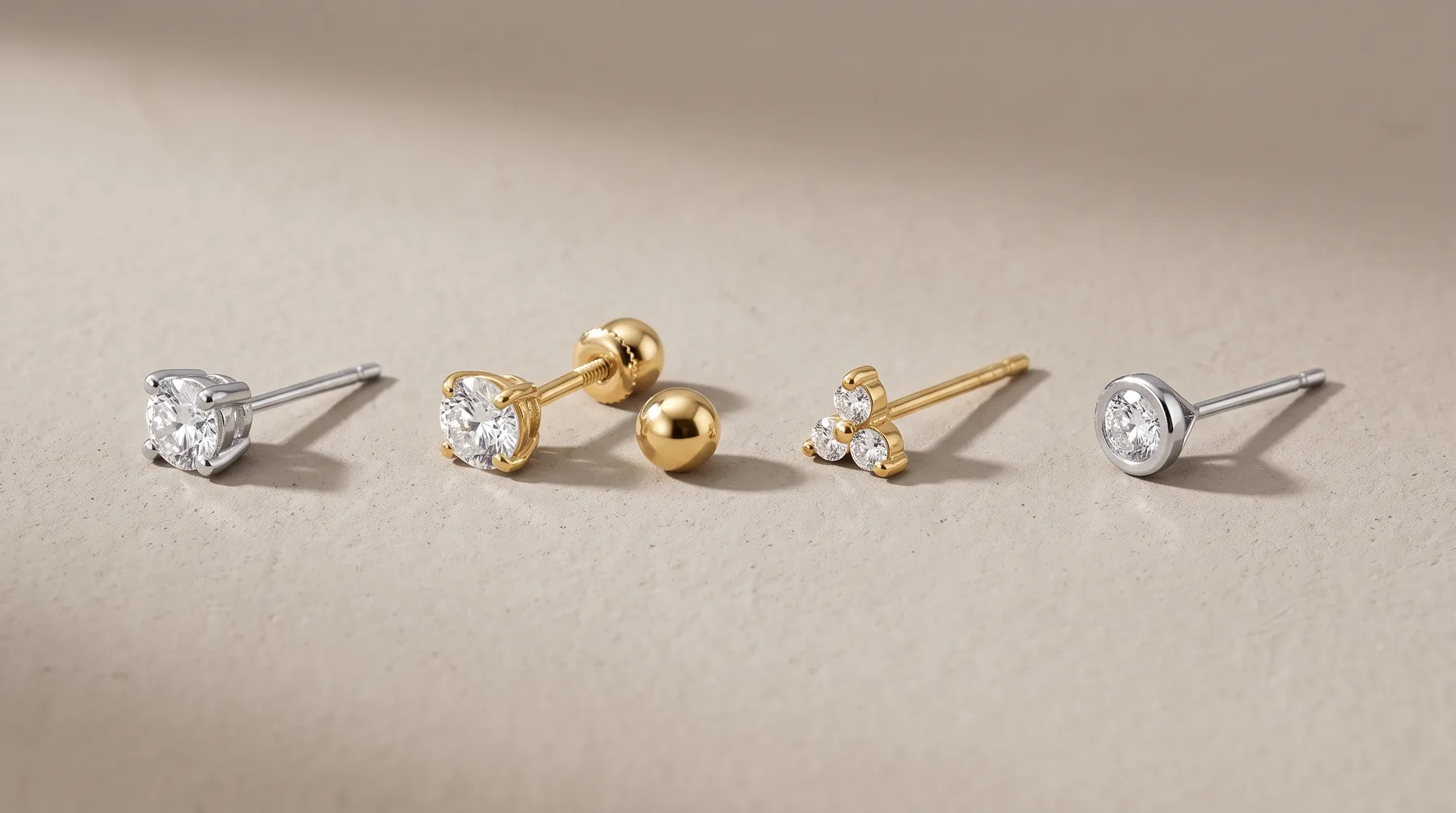
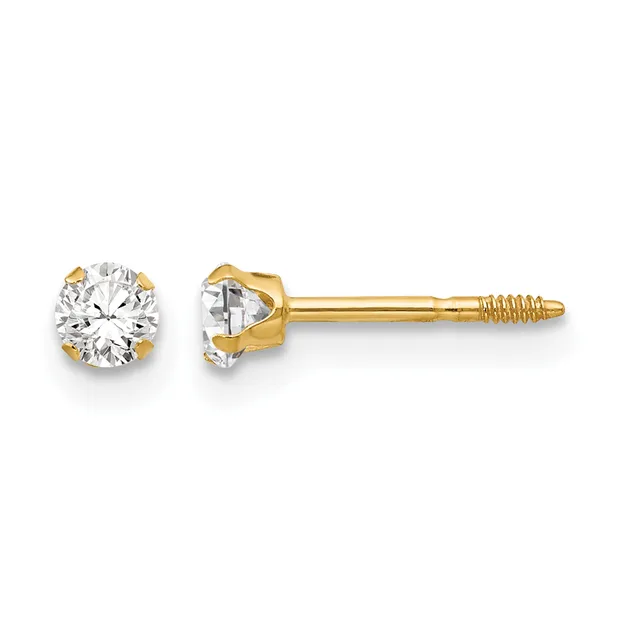
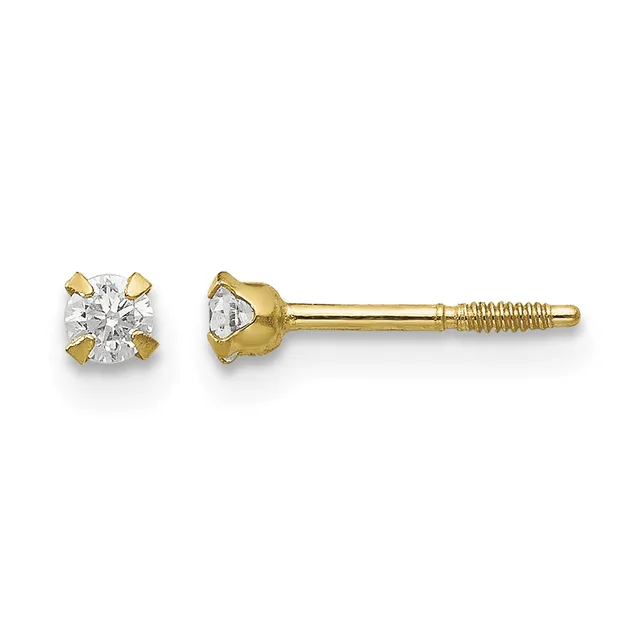
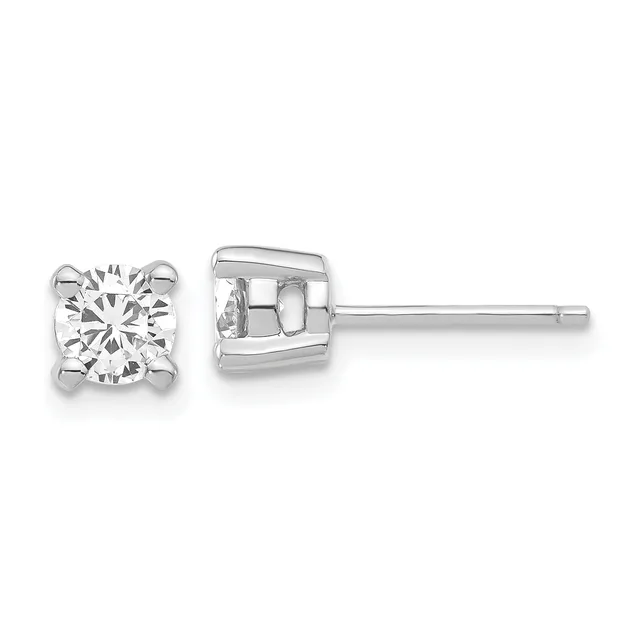
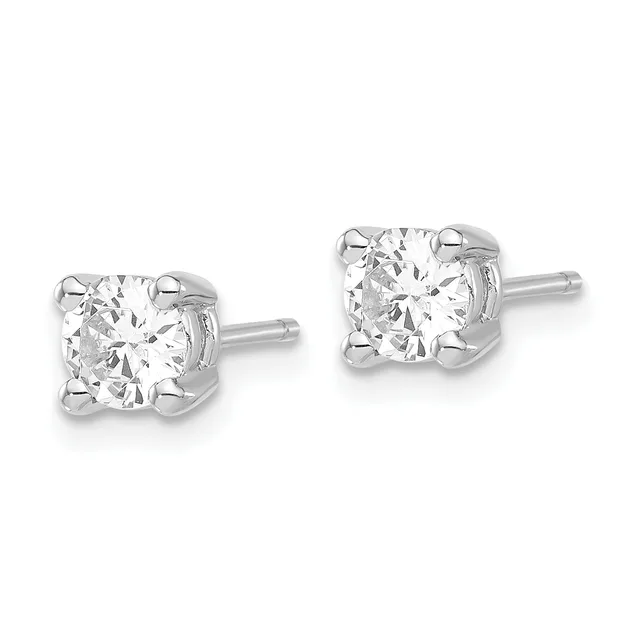
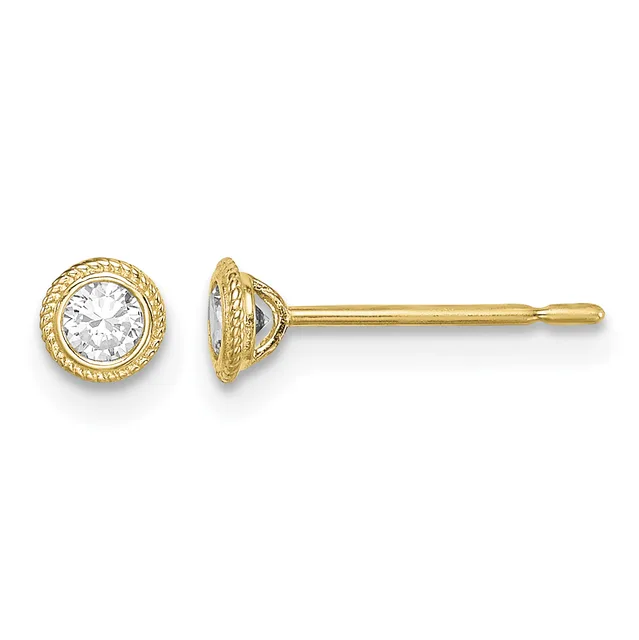
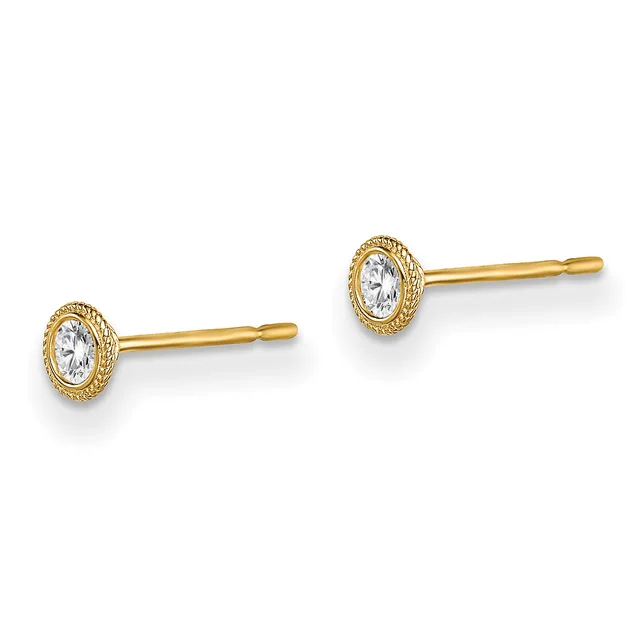
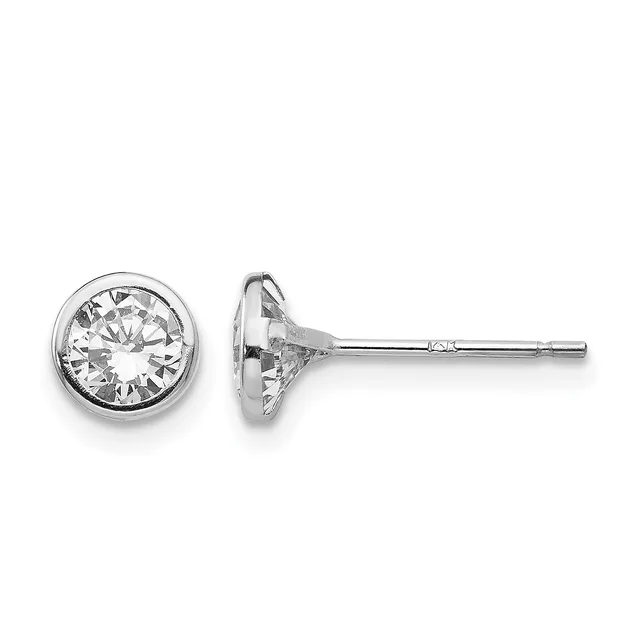
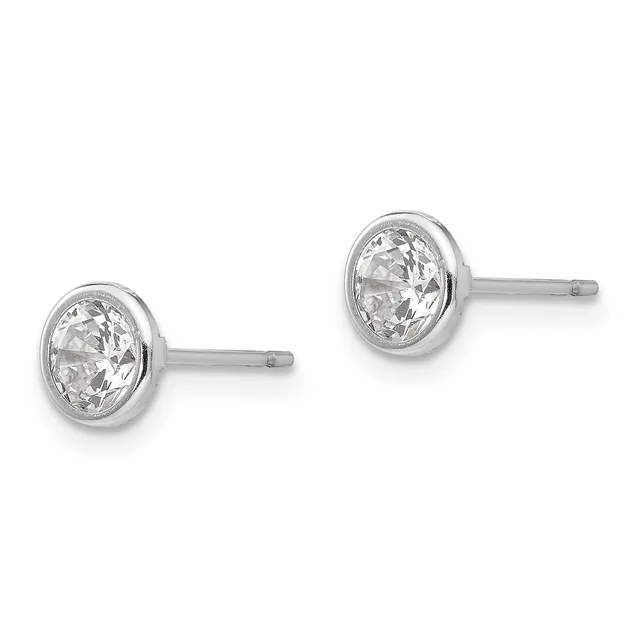
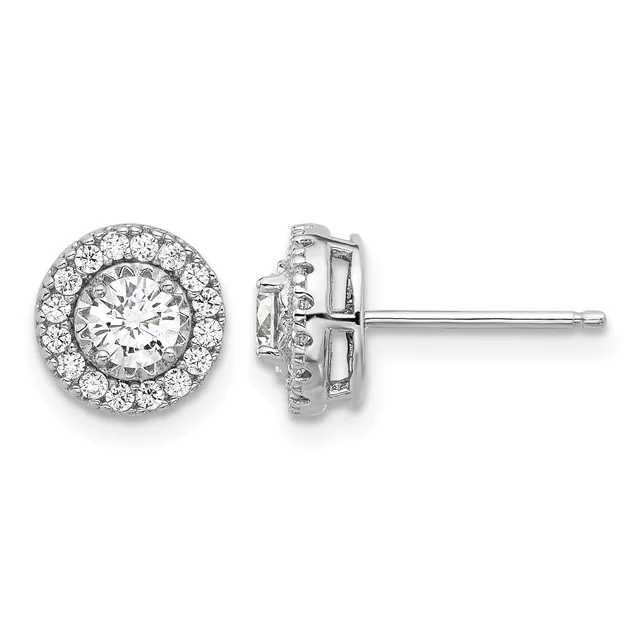
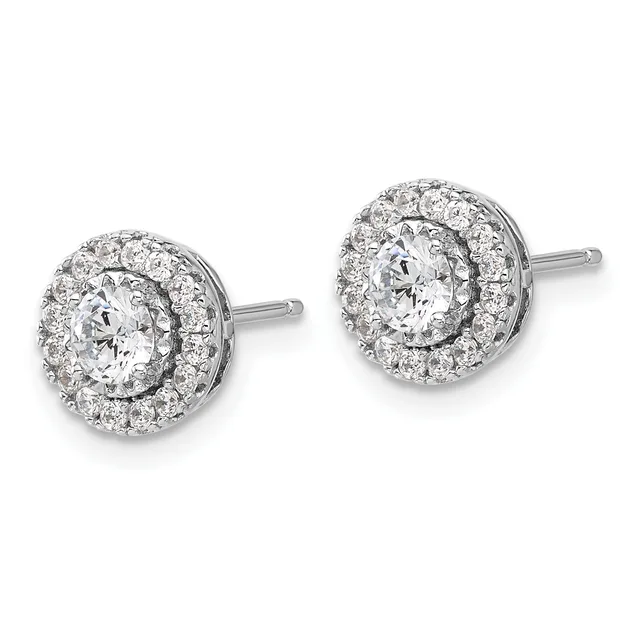
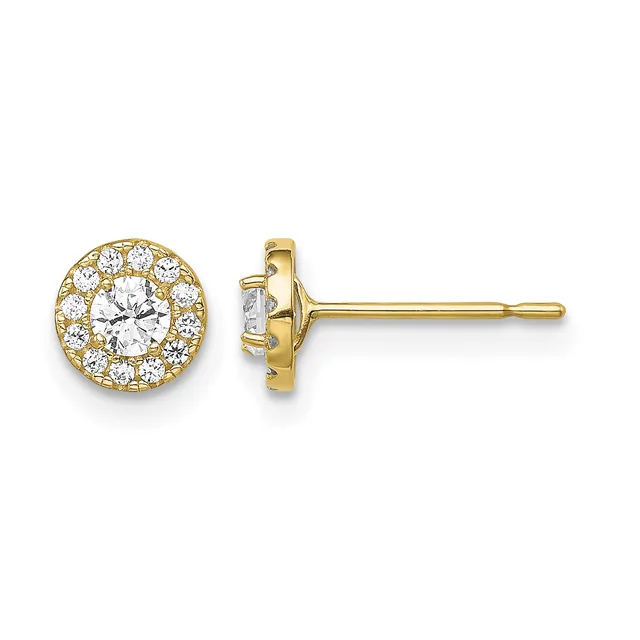
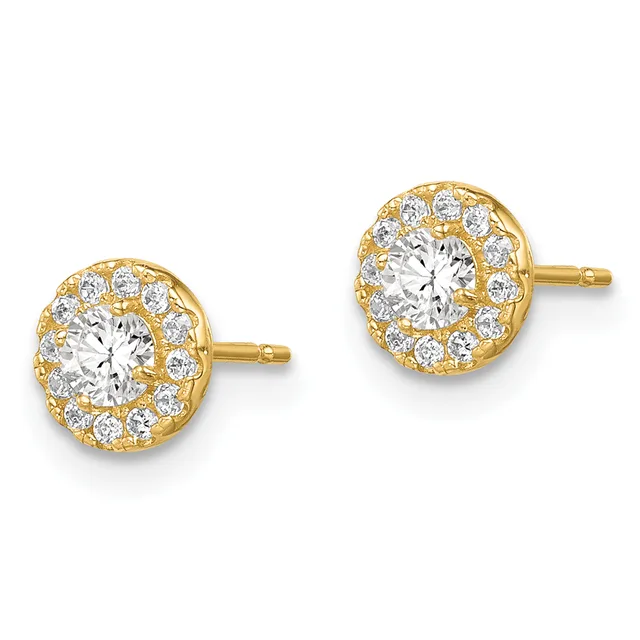
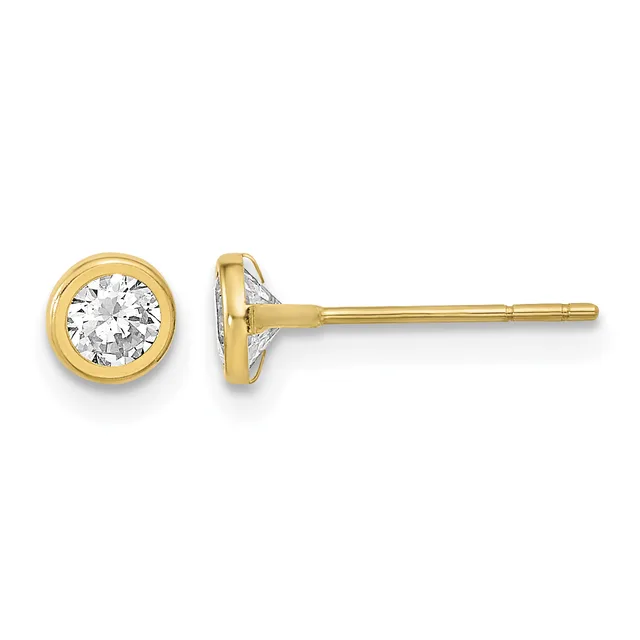
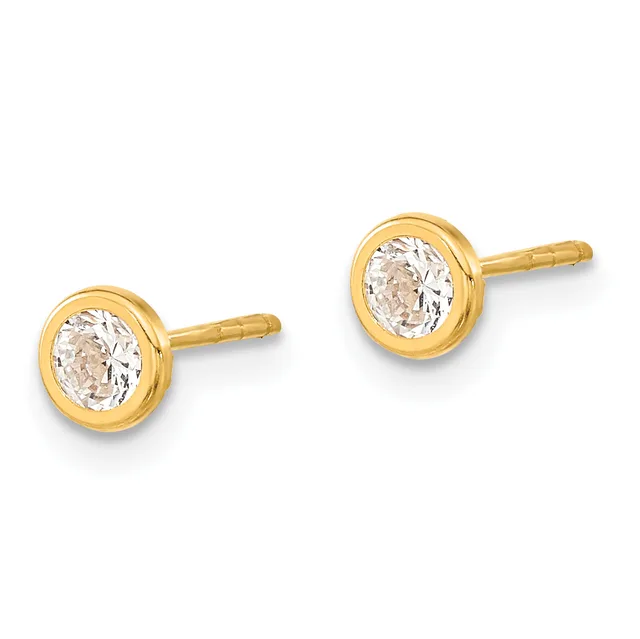
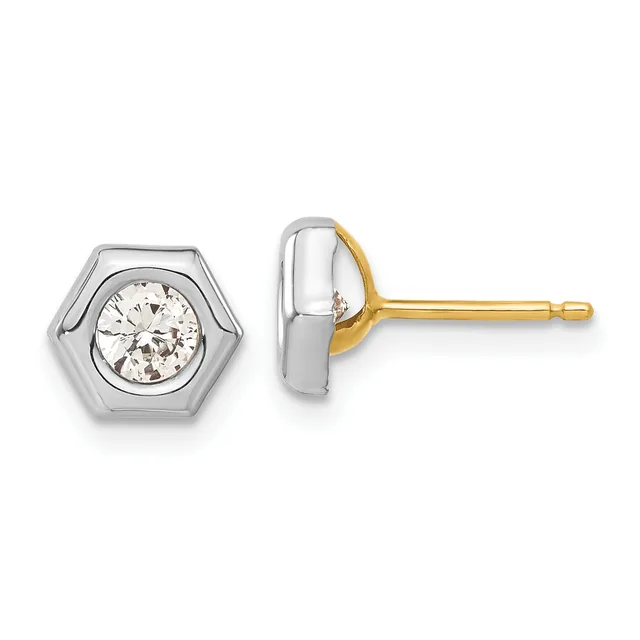
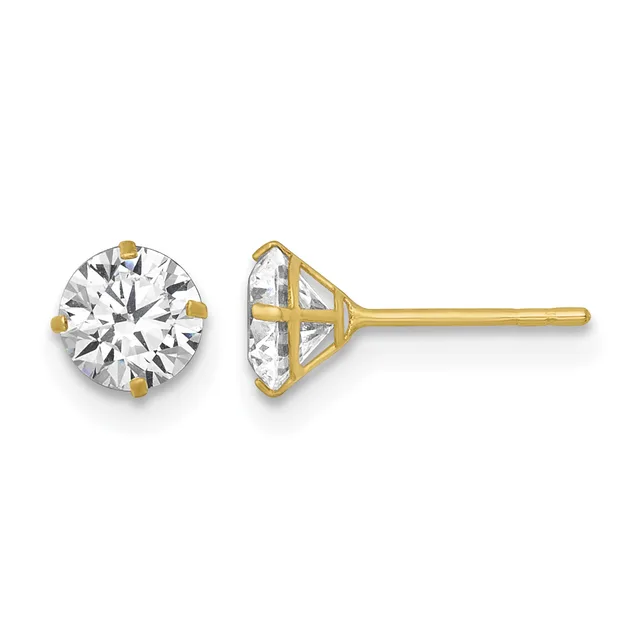
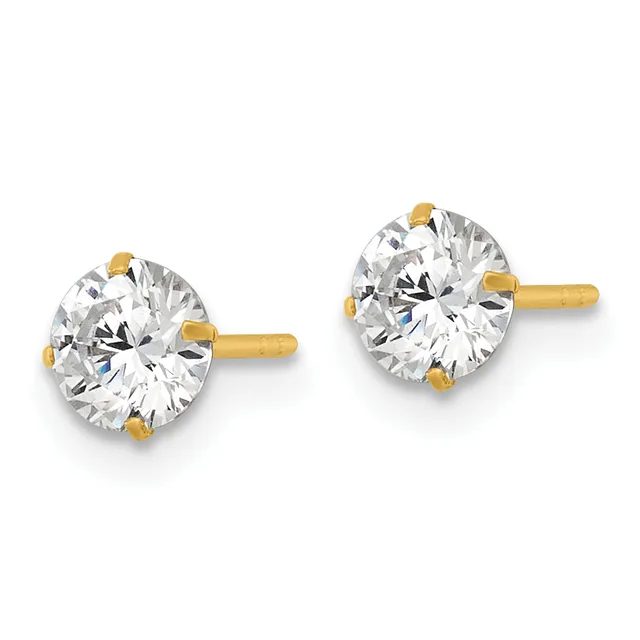
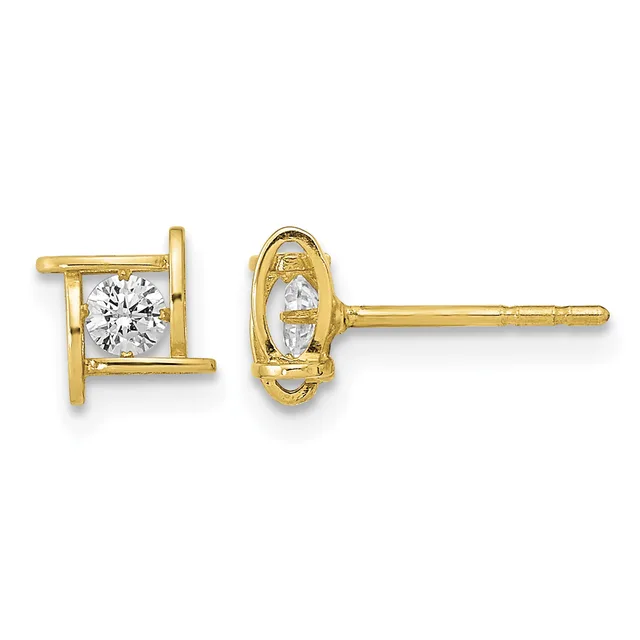
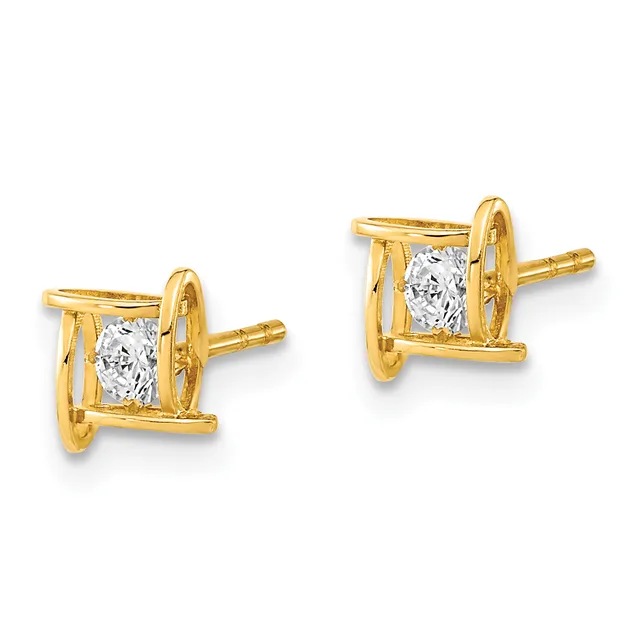
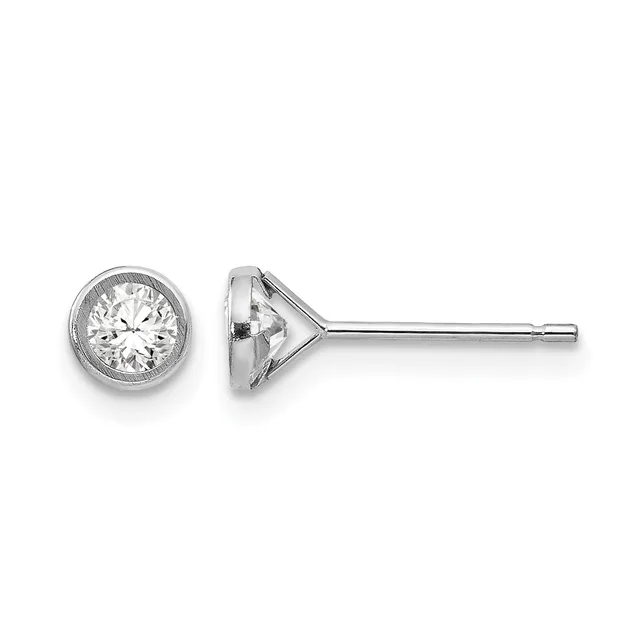
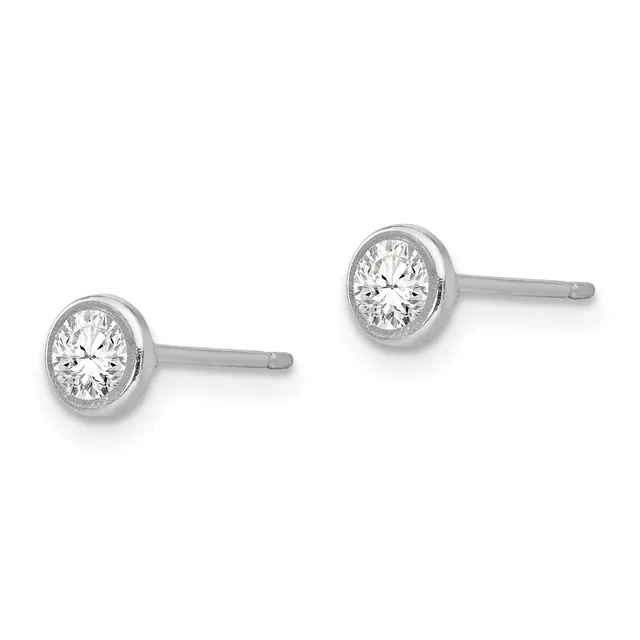
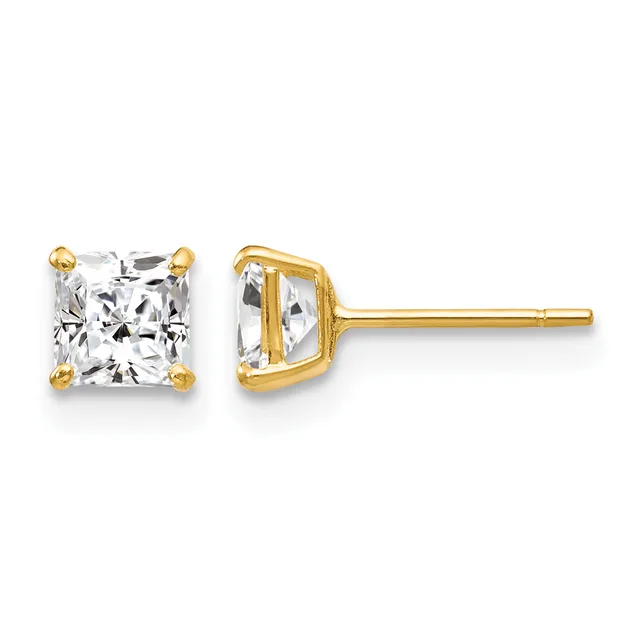
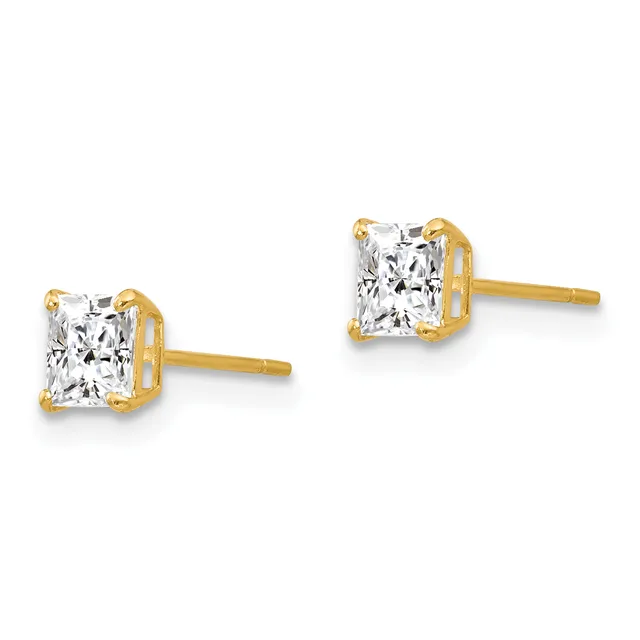
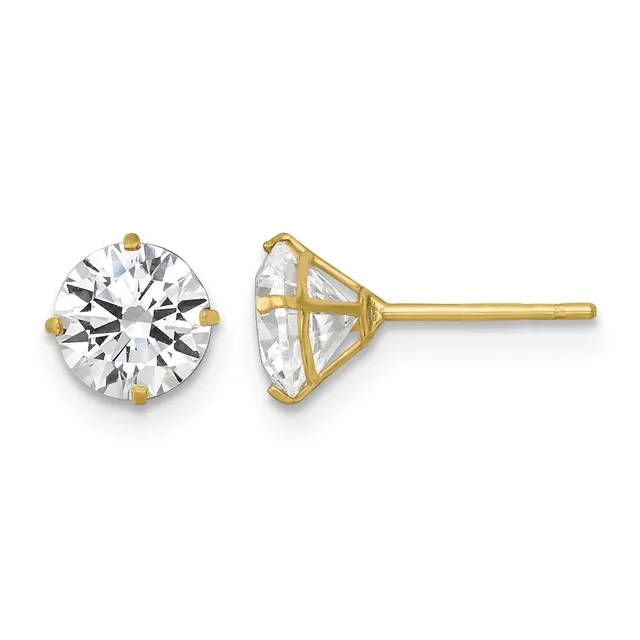
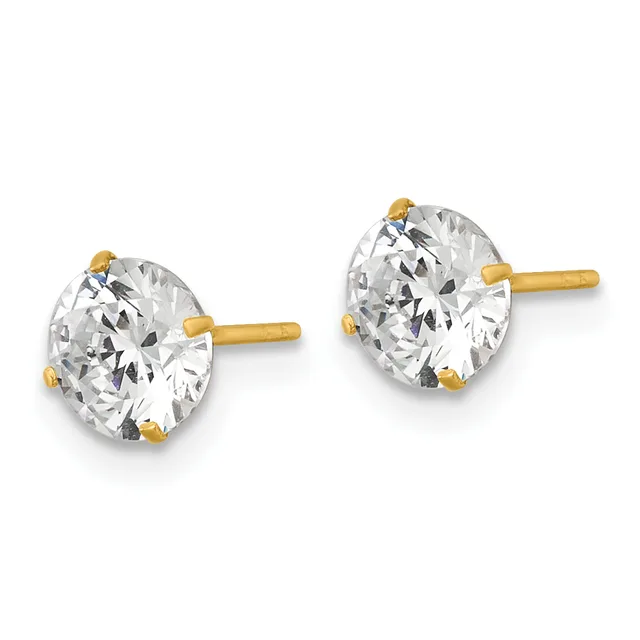
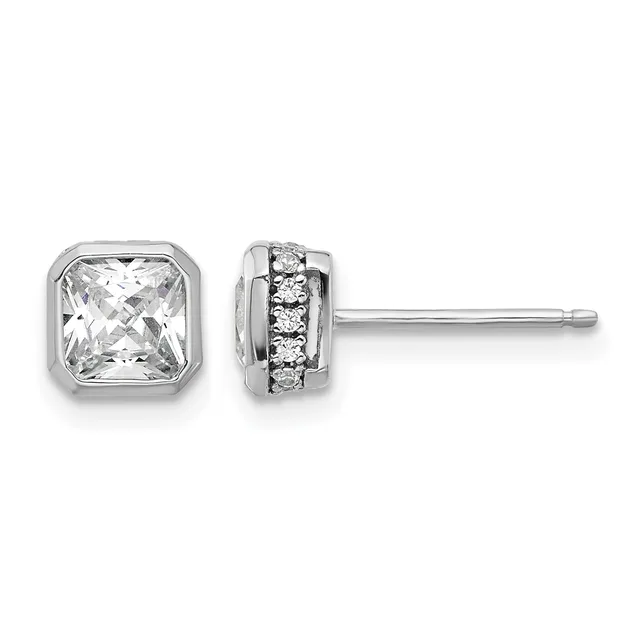
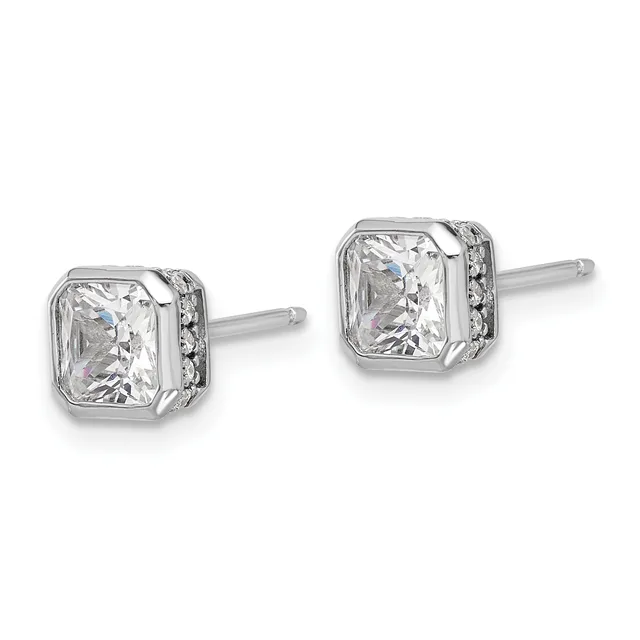
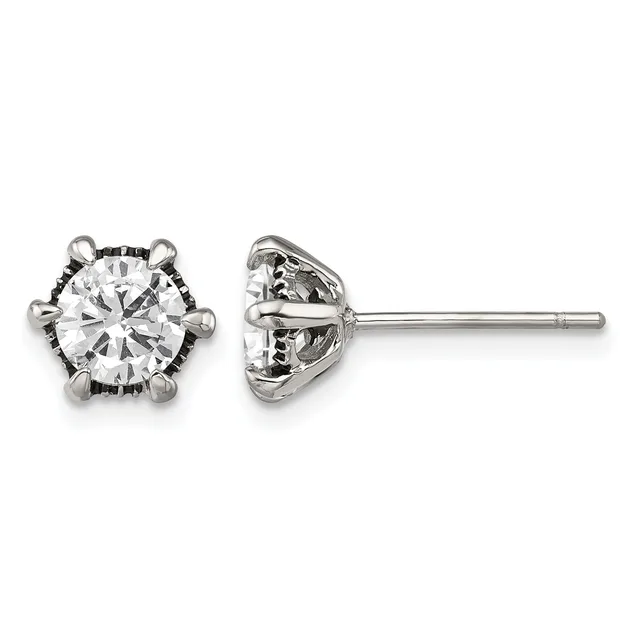
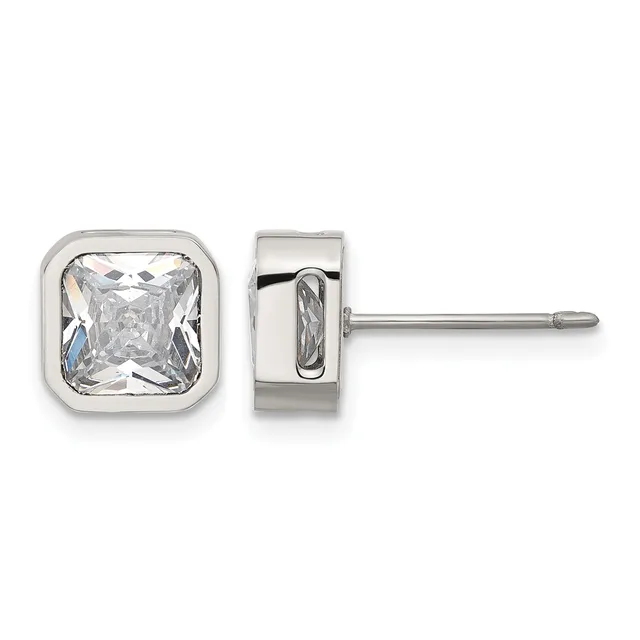
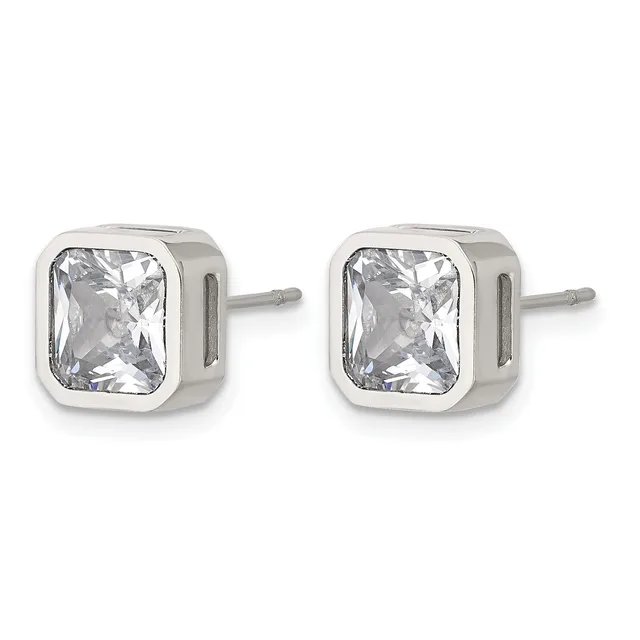
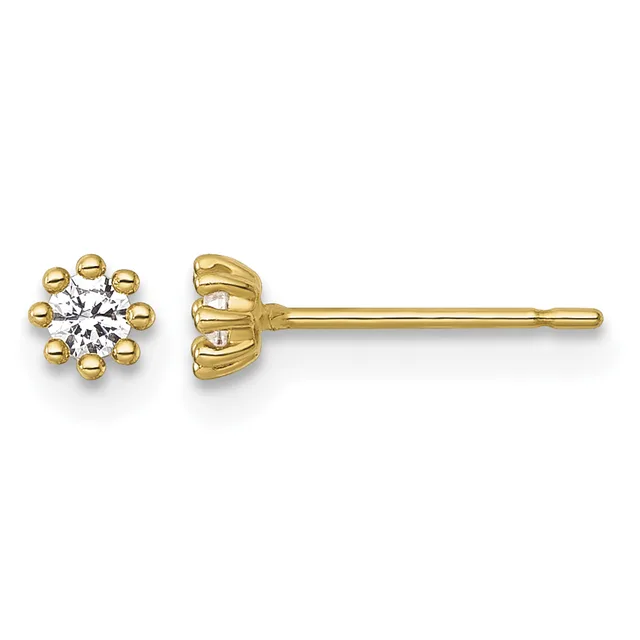
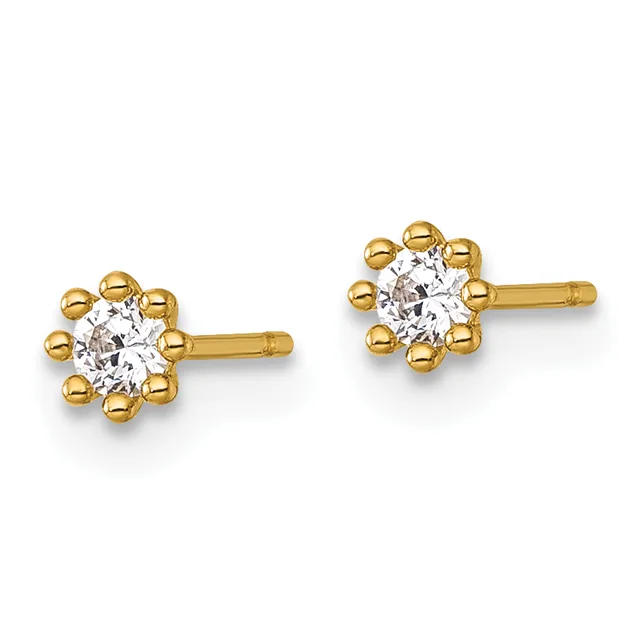
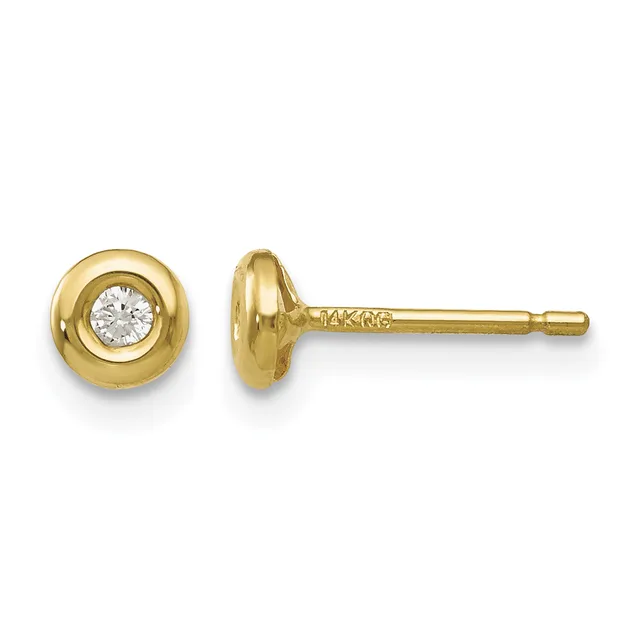
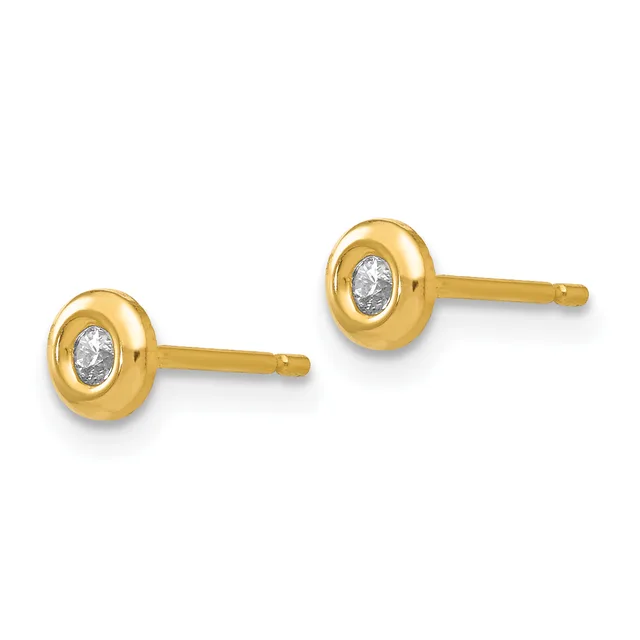
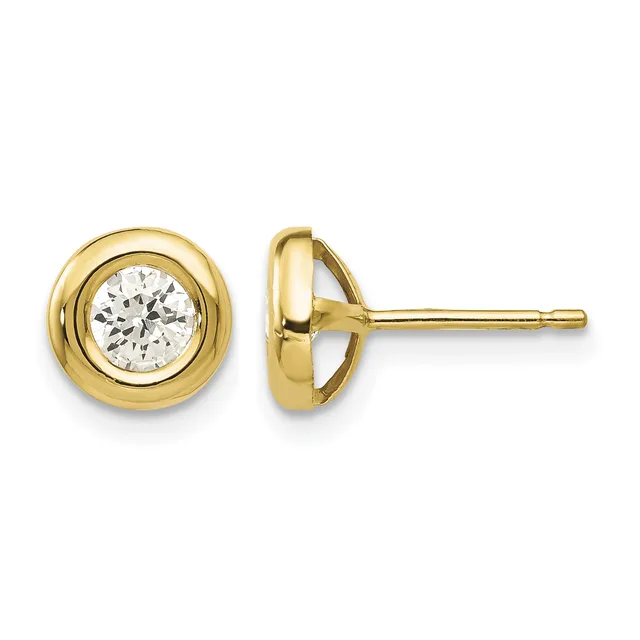
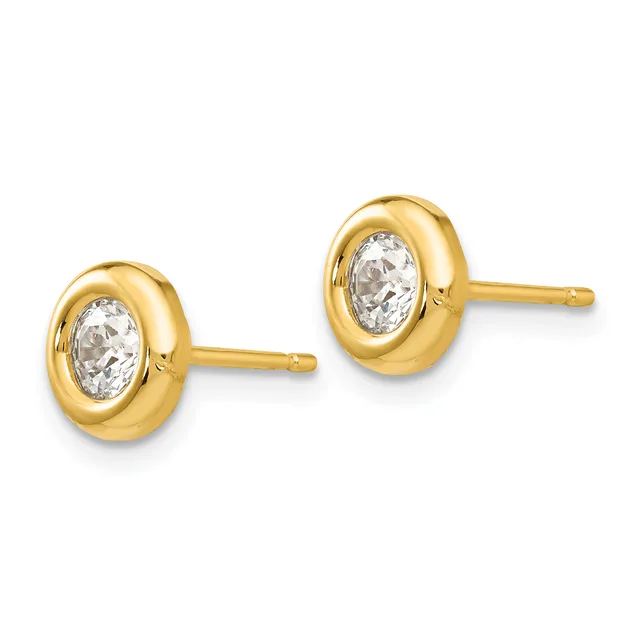
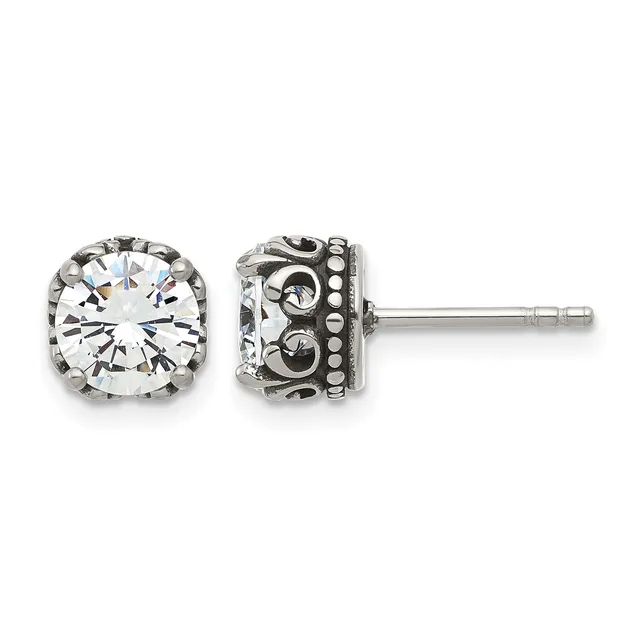
The most important variables in a CZ stud are stone size and setting style. A smaller stone in a simple four-prong or bezel setting stays close to the ear and suits all-day, professional wear with minimal snagging. A larger center stone or a pavé-bordered setting reads as a statement piece more appropriate for evenings or occasions. Bezel settings — where a metal rim wraps the entire girdle of the stone — offer the most security and the cleanest silhouette. Prong settings lift the stone slightly higher, allowing more light to enter from the sides and maximizing the CZ's natural brilliance.
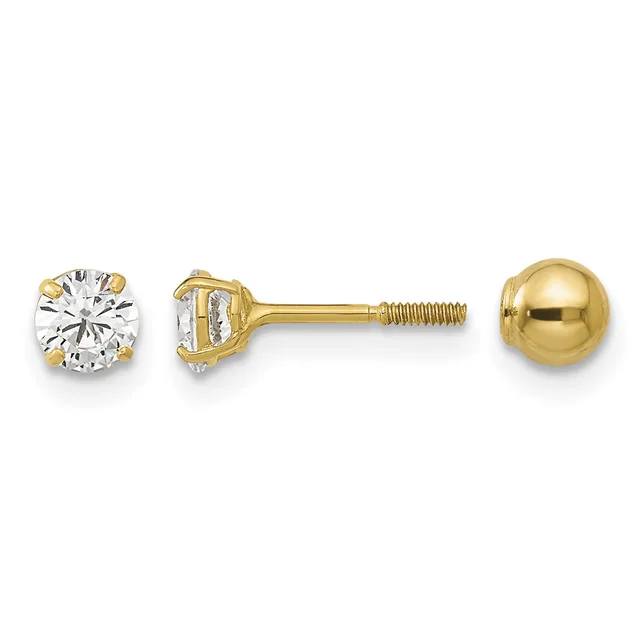
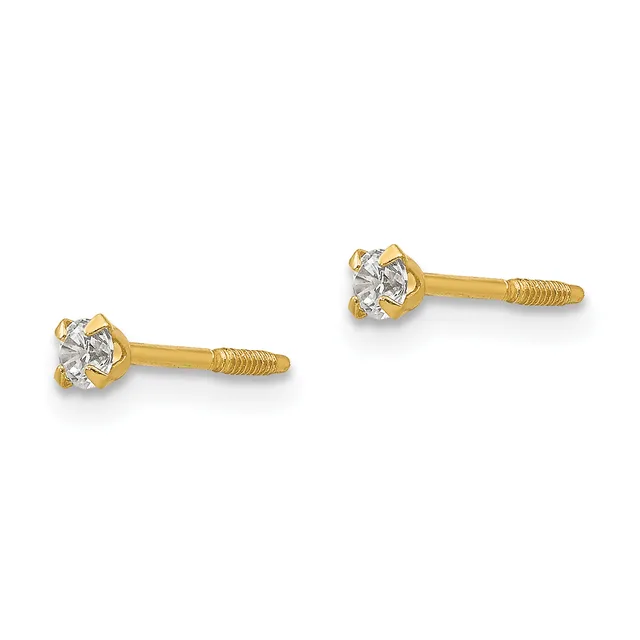
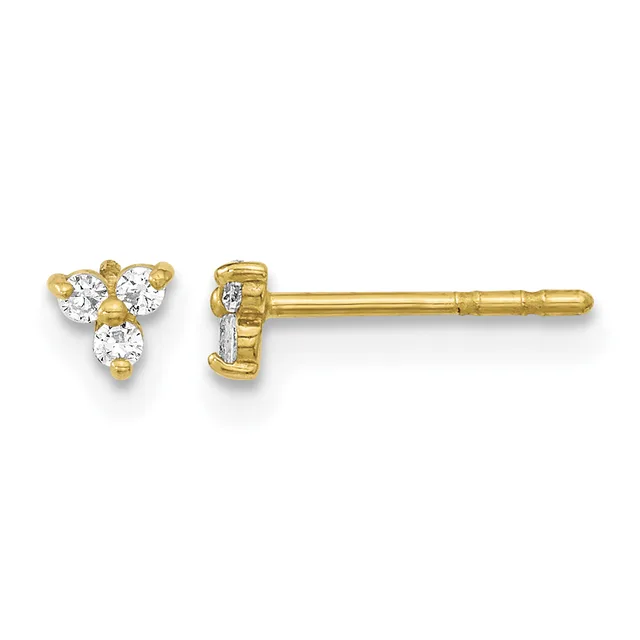
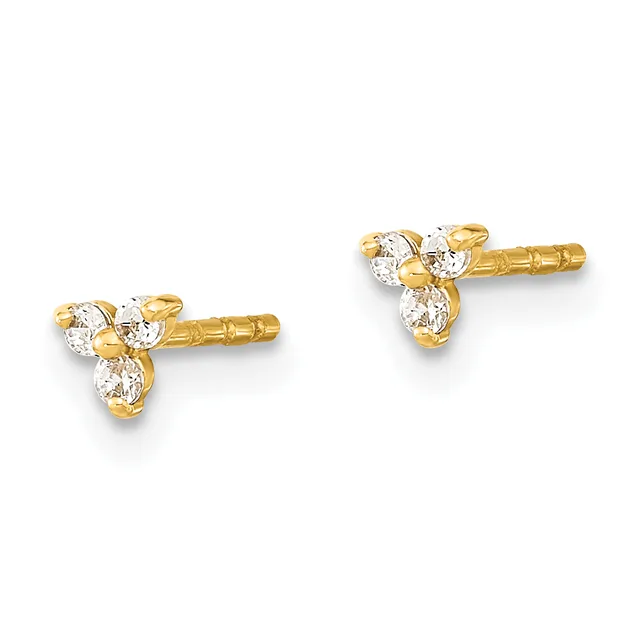
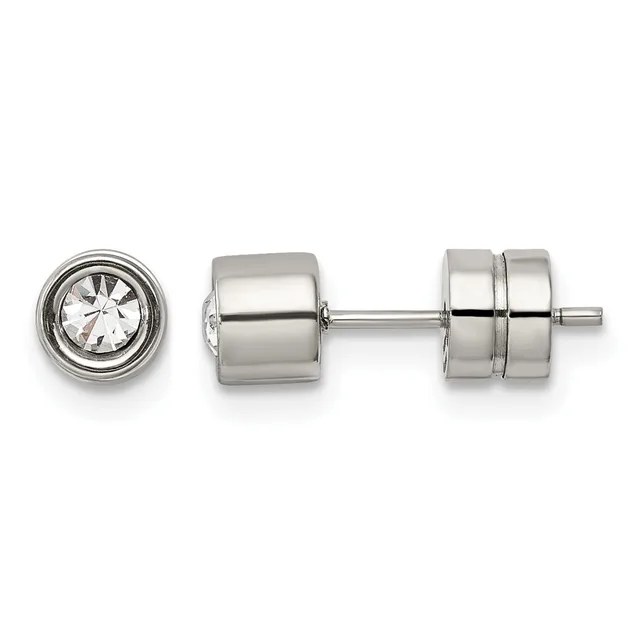
Children's styles within this selection are typically set in simpler, lower-profile mounts with secure screw-back or friction-back posts suited to active wear. If you are shopping for a child's first pair, prioritize post gauge and backing type alongside stone size.
Metal Considerations
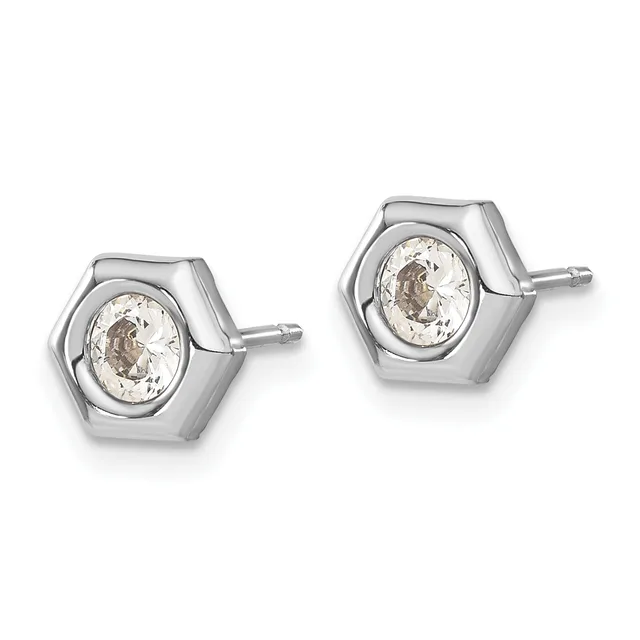
CZ studs here are offered in yellow gold, white gold, and rose gold — at various karat weights — as well as sterling silver. A higher karat gold (18k versus 14k) is slightly softer but contains more pure gold and carries a warmer, richer tone. Sterling silver is the most affordable metal option and works well for CZ, though it can oxidize over time and benefits from occasional polishing. White gold is rhodium-plated at the factory, which gives it its bright, cool finish; that plating gradually wears and may eventually need replating to maintain its original appearance.
Care and Wear
CZ is hard and durable but can accumulate soap residue and lotions, which dull its surface brilliance over time. Clean studs with warm water, a drop of mild dish soap, and a soft-bristle brush — rinse thoroughly and pat dry. Remove studs before swimming in chlorinated pools, as prolonged chemical exposure can affect both the metal and the prong integrity. Store them individually or in a soft pouch to prevent the stones from scratching against harder metals or one another.
Frequently asked questions
How does cubic zirconia differ from a diamond in a stud setting?
CZ is a lab-created crystal that closely mimics diamond's faceting and light return. It is slightly less hard than diamond and can show surface wear over years of daily contact, but in a stud setting — where the stone faces upward and contact is minimal — it holds up well and maintains its brilliance with regular cleaning.
Are there CZ studs suitable for children in this selection?
Yes. A portion of the selection is specifically designed for children, with appropriately scaled stone sizes and mount styles suited to younger wearers.
What backing type do CZ studs typically use?
Most studs here use friction push-backs (butterfly backs), which are the standard for lightweight earrings. Some styles, particularly children's options, may feature screw-backs for added security — check the individual product details to confirm.
Will white gold CZ studs stay bright over time?
White gold gets its cool, silver-like finish from a rhodium plating applied at the factory. With regular wear that plating gradually thins, and the natural warmer tone of the gold alloy beneath may begin to show. A jeweler can re-plate the earrings to restore the original finish.
Can I wear CZ studs every day?
CZ studs are well suited to daily wear — the stone is hard enough to resist most everyday knocks, and a bezel or low-prong setting minimizes snagging. Removing them before swimming, heavy exercise, or sleeping will extend both the metal's finish and the stone's clarity.