
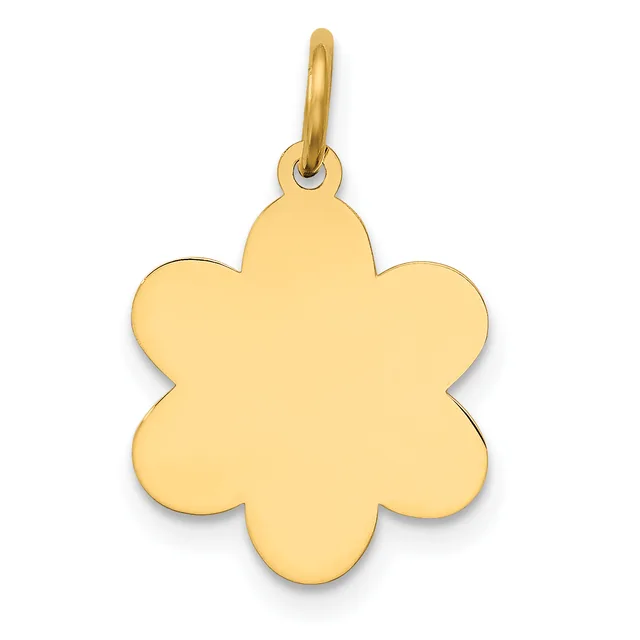
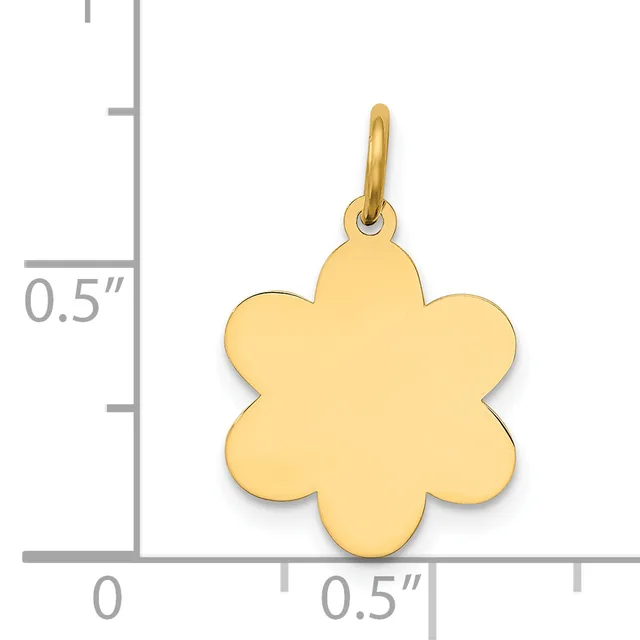
What a Scalloped Disc Is
A scalloped disc pendant shares the same flat, engravable surface as a classic round disc, but its perimeter is finished with a series of small, even curves rather than a smooth edge. That scalloped border catches light differently and adds a quiet decorative quality without relying on a stone or ornate setting. The result is a piece that feels considered without drawing attention away from any text or symbol engraved at its centre.
Wearing and Engraving
Because the disc is the focal point, engraving choice matters. A name, date, or short initial reads clearly on the flat face, and the scalloped border frames it without competing. As a pendant, this format layers well with finer chains or sits neatly on its own. The compact format means it stays in place during everyday wear rather than shifting the way longer or heavier charms sometimes do.
Caring for Your Disc
The scalloped edge has more surface detail than a plain disc, so a soft cloth or a gentle brush helps keep the curves free of residue from lotions or everyday contact. Storing the pendant in a pouch or compartment on its own prevents the edge from catching on other pieces. Avoid ultrasonic cleaners if the piece carries engraving, as vibration can stress fine-cut lines over time.
Frequently asked questions
What can I engrave on a scalloped disc?
Most scalloped discs accommodate a name, initials, a short date, or a brief word on the flat face. The usable engraving area is slightly smaller than the disc's full diameter, so very long phrases may not fit — confirm character limits when you order.
Does the scalloped edge affect how the pendant sits on a chain?
No — the bail or jump ring connects at the top of the disc as usual, so the pendant hangs and moves the same way a plain disc would.
Is this a good option for layering with other necklaces?
Yes. The disc format is flat and relatively compact, which means it layers cleanly without tangling or adding significant bulk alongside finer chains.
How do I clean around the scalloped edge?
A soft-bristle brush — such as a clean, dry toothbrush — works well for reaching the small curves along the border. Follow with a dry lint-free cloth and avoid harsh chemicals.