
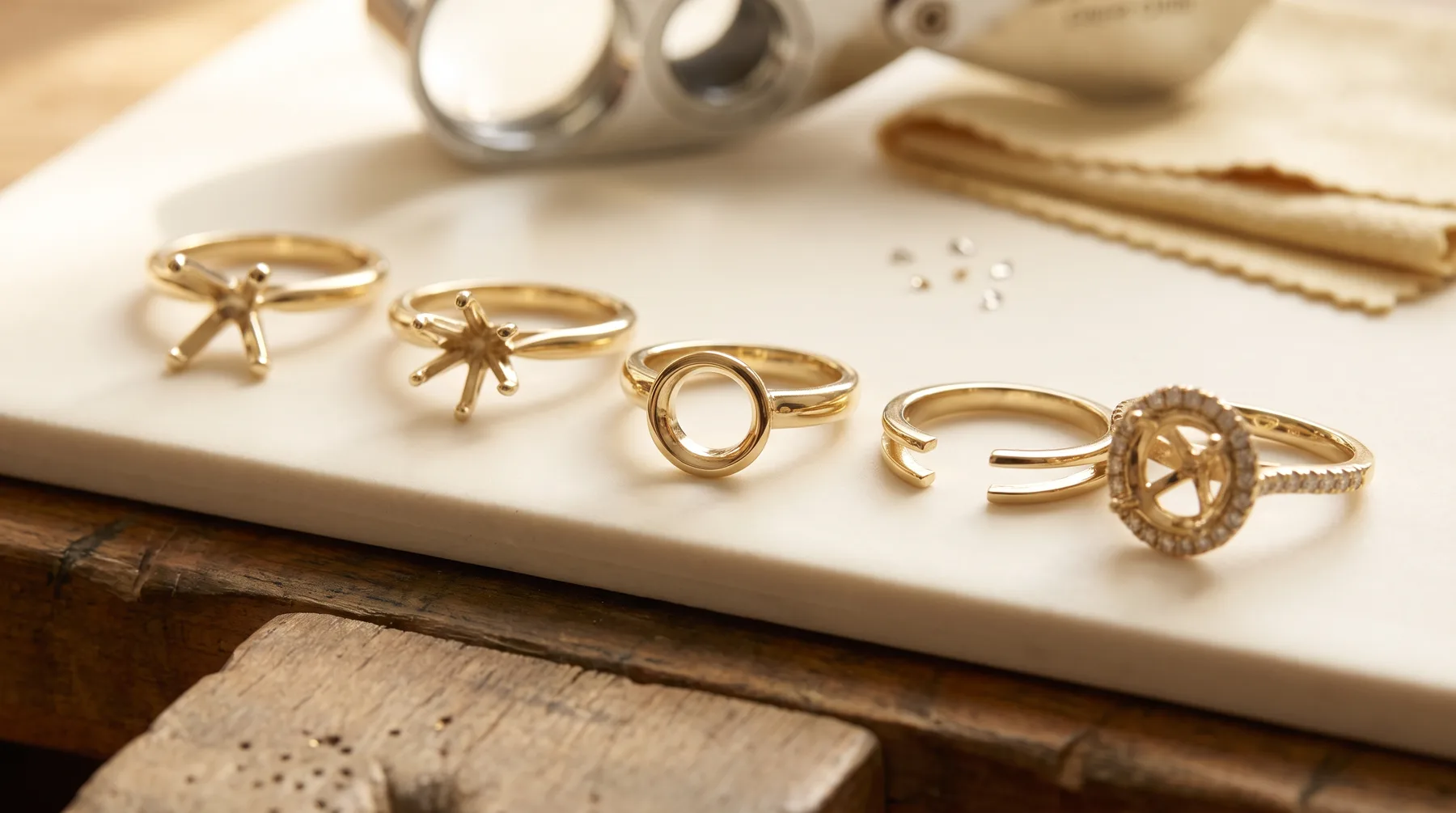
Pick the setting for the hand it will live on, not for the photograph. If the wearer types, gardens, lifts, or works clinical shifts, a low-profile solitaire or a bezel will still look right in thirty years. If maximum sparkle-per-dollar is the goal, a halo does more than a bigger stone. And if a design leans on rows of tiny pavé stones, understand that you are buying a little ongoing maintenance along with the shimmer.
We can say that with a straight face because this advice comes from years in the trade — behind the retail counter, inside a jewelry manufacturer on the wholesale side, and running a jewelry business — and mountings are what a setting actually is. What follows is the guide we wish more people read before choosing: how each style is physically built, what tends to fail at the bench, and which lives each one suits.
What is an engagement ring setting, exactly?
1 min
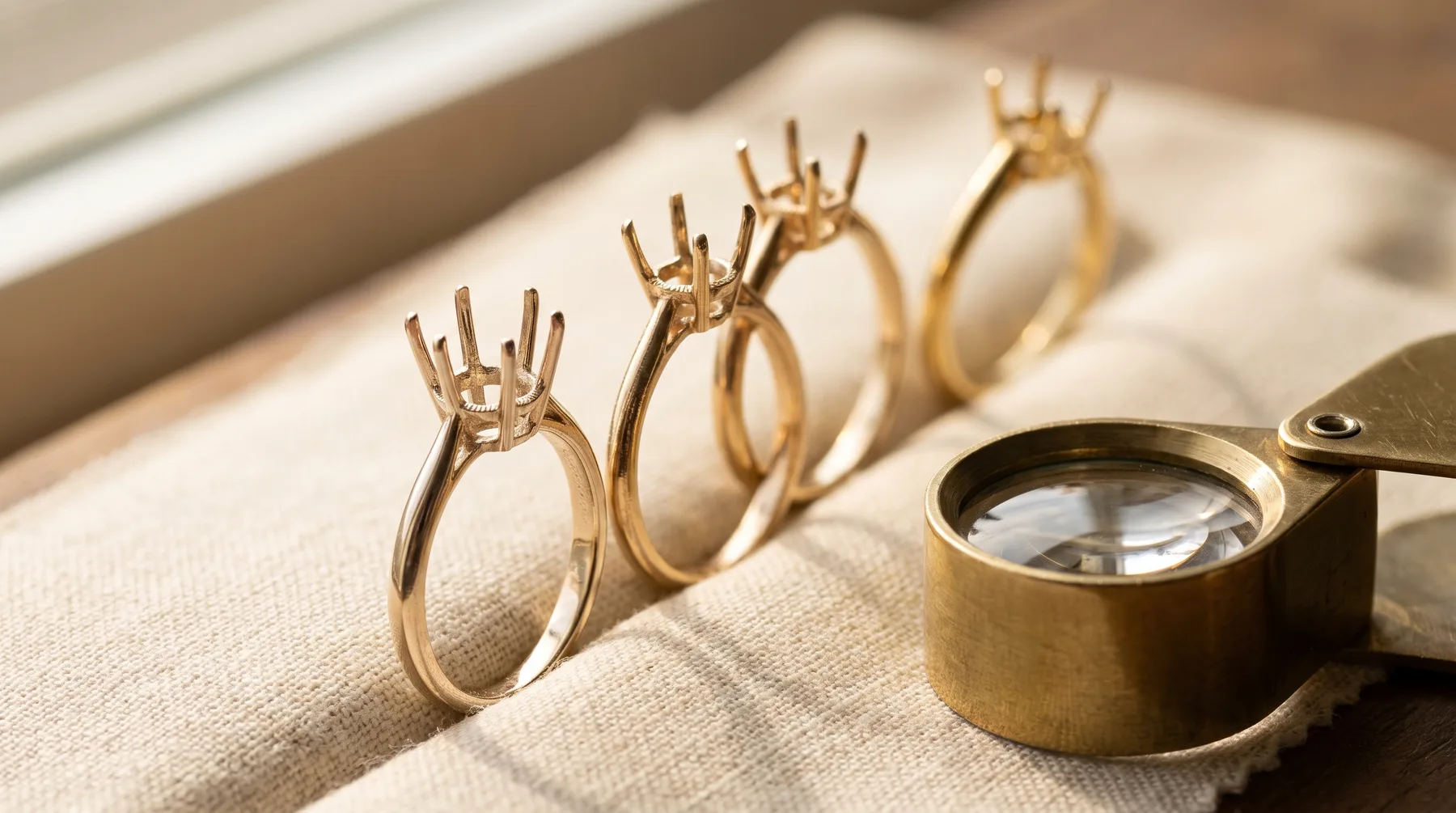
The setting — the trade calls it the mounting — is everything except the stone: the head that grips the diamond, and the shank that wraps the finger. Every named style you have seen on a hand is a variation in how those two parts are shaped and how the metal holds the stone. That grip is the whole job. A setting that flatters the stone but holds it badly is a beautiful way to lose a diamond.
One piece of trade practice worth knowing up front: the head and the shank are often different metals. Suppliers openly recommend a platinum head regardless of the shank metal — Stuller's guidance to jewelers says exactly that — because platinum prongs flex without cracking and hold their grip for decades, while a gold shank keeps the ring's color and price where the buyer wants them. If your jeweler suggests platinum prongs on a 14k yellow gold ring, that isn't upselling; it's engineering.
Solitaire: the default for a reason
2 min
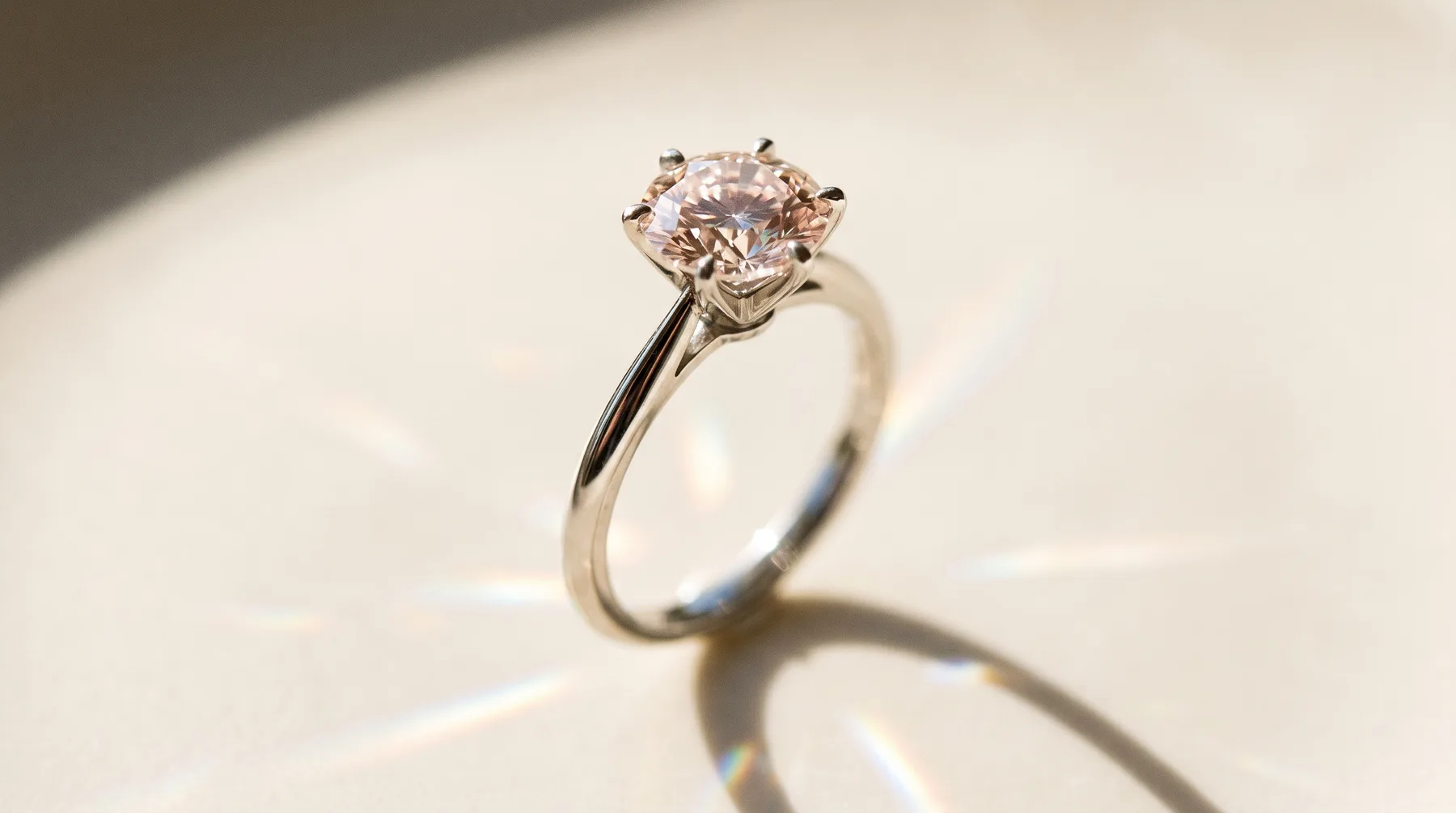
A solitaire is one center stone on a plain shank, held by prongs — usually four or six claws of metal, notched to seat the stone's girdle and folded over it. It is the least metal between the diamond and the light, which is why nothing else makes a stone of a given size look better.
The four-versus-six question is the real decision. Four prongs show more stone; six give redundancy, so one worn or snagged prong is an inconvenience instead of an emergency. The International Gem Society's advice is that four prongs hold well for a less active lifestyle; for everyone else, and for stones large enough to hurt to replace, we lean six. That layout has history behind it — Tiffany & Co. introduced the six-prong, raised solitaire in 1886, and the company still claims it as the design that first lifted the diamond off the band.
What fails at the bench: prong tips, slowly. Every brush against fabric planes away a whisper of metal, until one day the tip that was a bead is a flake. The fix is routine — a jeweler rebuilds the tip with solder or a laser weld — but only if someone is looking. There is no fixed retip schedule; it is wear-based, which is why Jewelers of America's once-a-year professional check is the number that matters. High, claw-style prongs also snag knits and hair; if that annoys you, ask for rounded tips or a lower head.
Halo and hidden halo: sparkle arithmetic
1 min
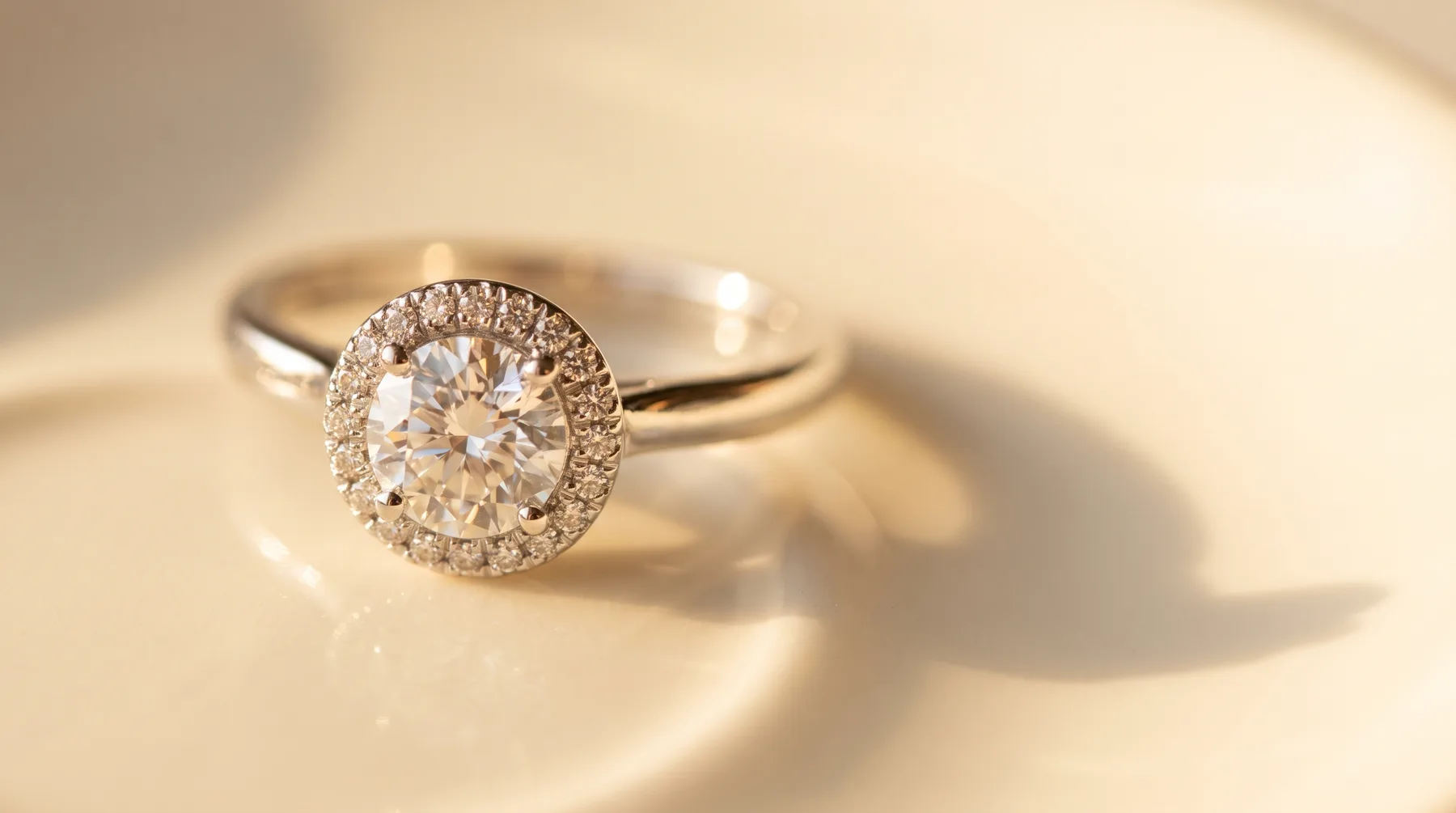
A halo rings the center stone with a circle of small diamonds, and the effect is straightforward: the International Gem Society notes a halo makes the center stone appear larger, because the eye reads the whole glittering disc as one. It is the most sparkle a budget can buy, and it photographs like twice the money.
The hidden halo tucks that diamond circle underneath the center stone, wrapped around the base of the head, so the ring reads as a clean solitaire from above and lights up in profile. It has quietly become the more popular of the two: in The Knot's 2024 Jewelry & Engagement Study, 18% of engagement rings had a hidden halo against 13% for the classic version.
What the sparkle costs you later: a halo is a dozen or more tiny stones, each in its own tiny grip, and a hard knock can loosen several at once. And a common complaint we hear echoed in every jewelry forum is discovered years later, at upgrade time — a meaningfully larger center stone rarely fits an existing halo, so "just swap the diamond" becomes a new head or a full remake. Choose a halo for what it is today, not as a placeholder for a future stone.
Bezel: the engineer's choice
1 min
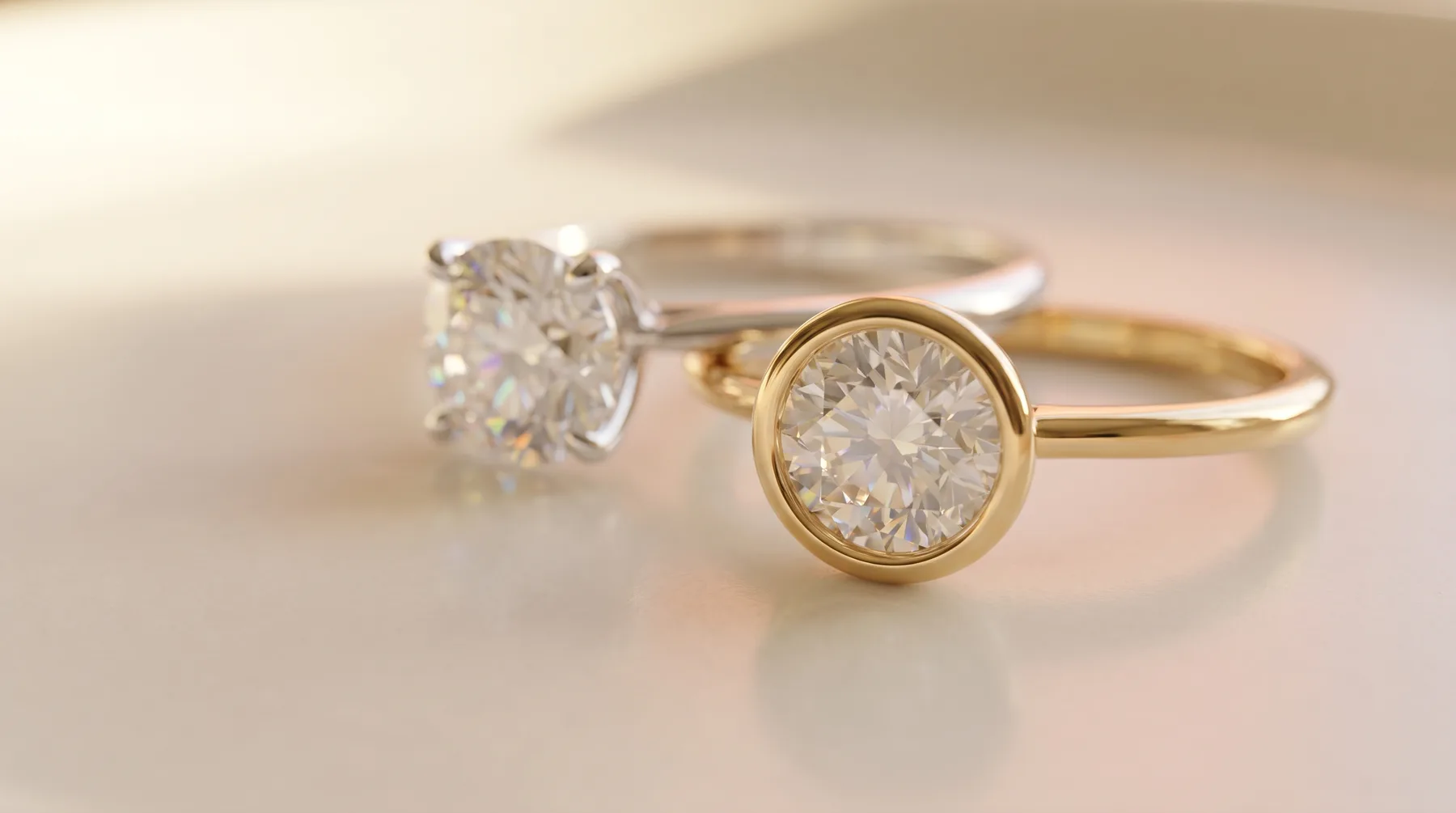
A bezel replaces prongs with a continuous wall of metal, burnished down over the stone's girdle all the way around — at the bench, the setter works the metal over the crown in several passes until the stone sits so tight it makes no sound when shaken. The Gemological Institute of America (GIA) credits the style with extra protection against accidental bangs and bumps, and the metal rim can even make the stone's face read larger.
This is the setting we recommend to nurses, climbers, potters, and anyone whose hands work for a living. Nothing snags, nothing catches a glove, and the girdle — the stone's most chip-prone edge — is armored. The honest trade-offs: less light enters from the sides, so a bezel-set stone gives up a little brilliance next to an identical solitaire, and some wearers feel the look runs modern whether they want it to or not. The market has been moving its way regardless — National Jeweler has listed bezels among the styles expected to rule 2025, half-bezels included, and kept them on the 2026 list.
Pavé and micro-pavé: where the maintenance lives
1 min
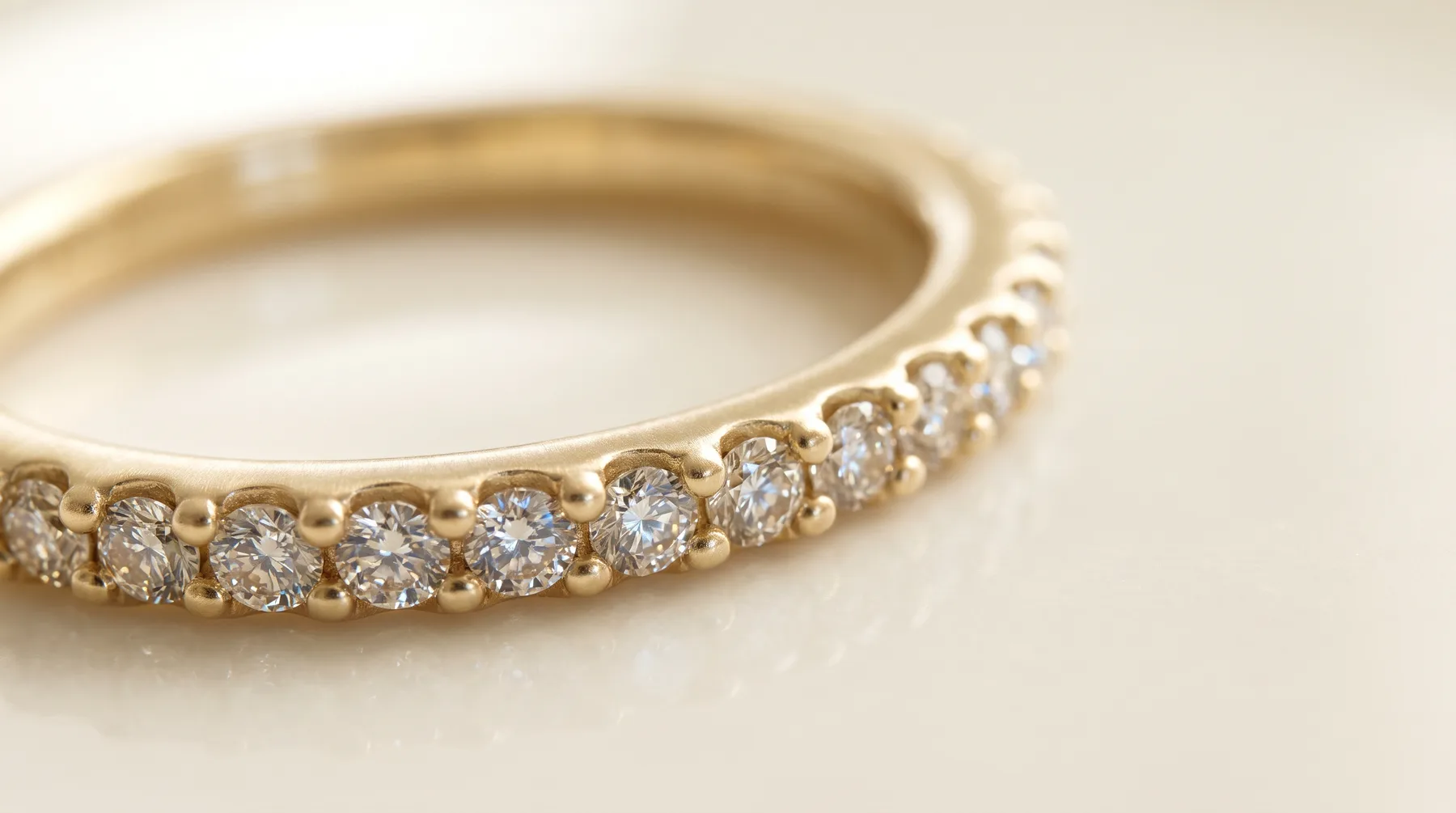
Pavé is a bead setting: each small diamond sits in a recessed hole, held by tiny beads of metal raised at its girdle, the stones packed close so the surface reads as continuous glitter — that is GIA's own description of the technique. Watching it done explains everything about how it behaves later: the setter drills a pilot hole for every stone, cuts each seat with a series of burs, then raises beads out of the surrounding metal with a graver — with only about half a millimeter of metal to spare beyond the stones. Micro-pavé shrinks all of that further.
Done well, in enough metal, pavé is reliable. But those beads are the smallest stone-holding structures in all of jewelry, and the style's reputation for shedding melee is earned wherever the beads were cut thin or the shank flexes. Two rules from the bench side: don't buy pavé on a whisper-thin band, because a shank that flexes works its beads loose; and know that resizing a pavé ring is delicate, since the stress of stretching or compressing the band lands right where the stones sit. A pavé ring that loses one stone every few years and gets it replaced at a routine visit is behaving normally — budget for that rhythm rather than resenting it.
Cathedral: height, drama, and door frames
1 min
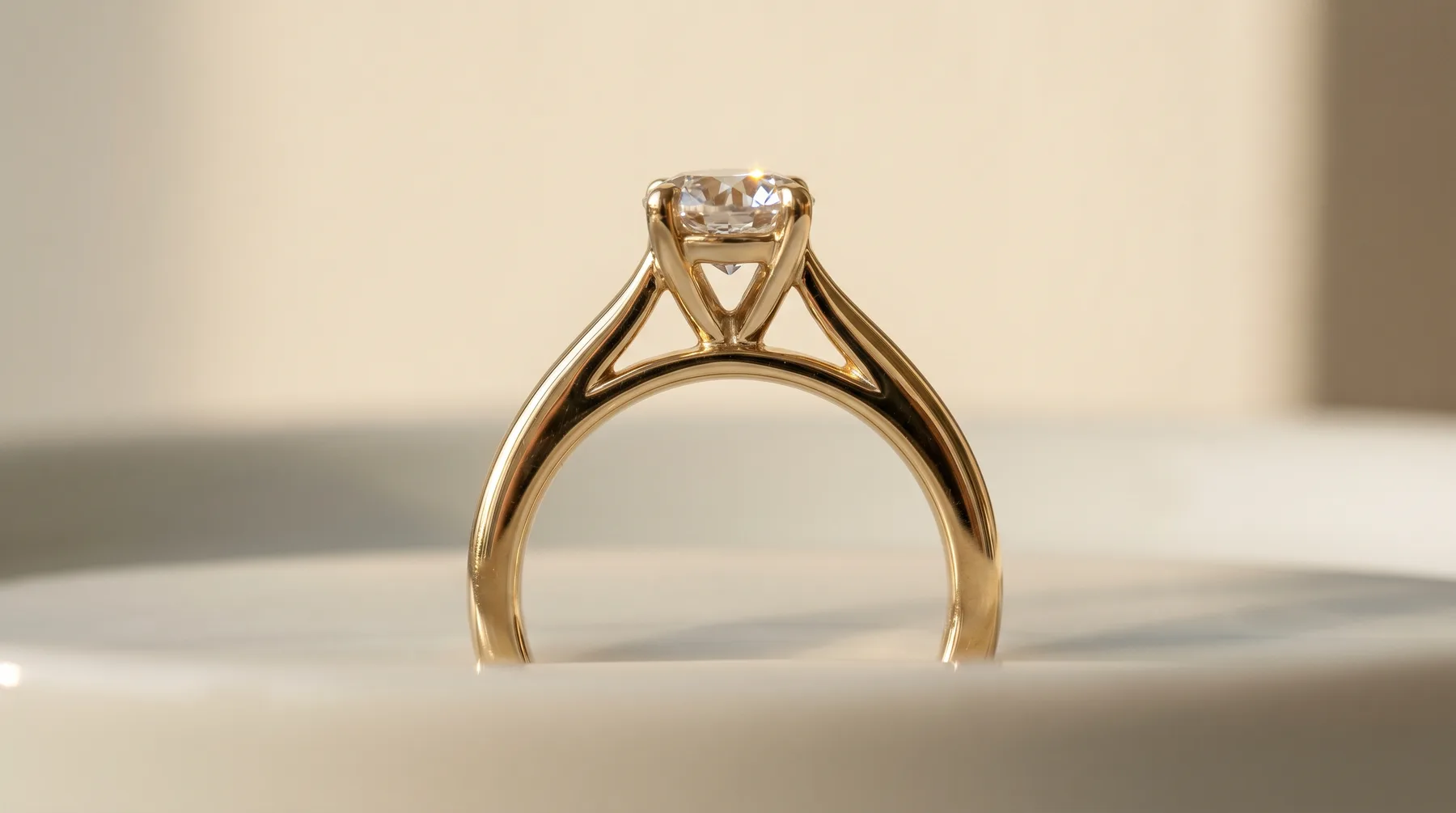
A cathedral setting sweeps the shank upward in two arches that rise alongside the center stone, like the roofline it is named for — the International Gem Society describes the A-frame shape well. The arches add presence, make the center ride high and proud, and give the profile real architecture.
The physics of that height cuts both ways. The arches brace the head from two sides, but the assembly stands taller, and tall settings meet door frames, car doors, and sweater sleeves first. In The Knot's 2024 study, cathedrals accounted for 9% of rings — a classic, not a crowd. We suggest them for wearers who love the look and live reasonably gently with their hands, and we quietly steer daily-abuse hands toward the same stone set lower.
Three-stone: symbolism with spare parts
1 min
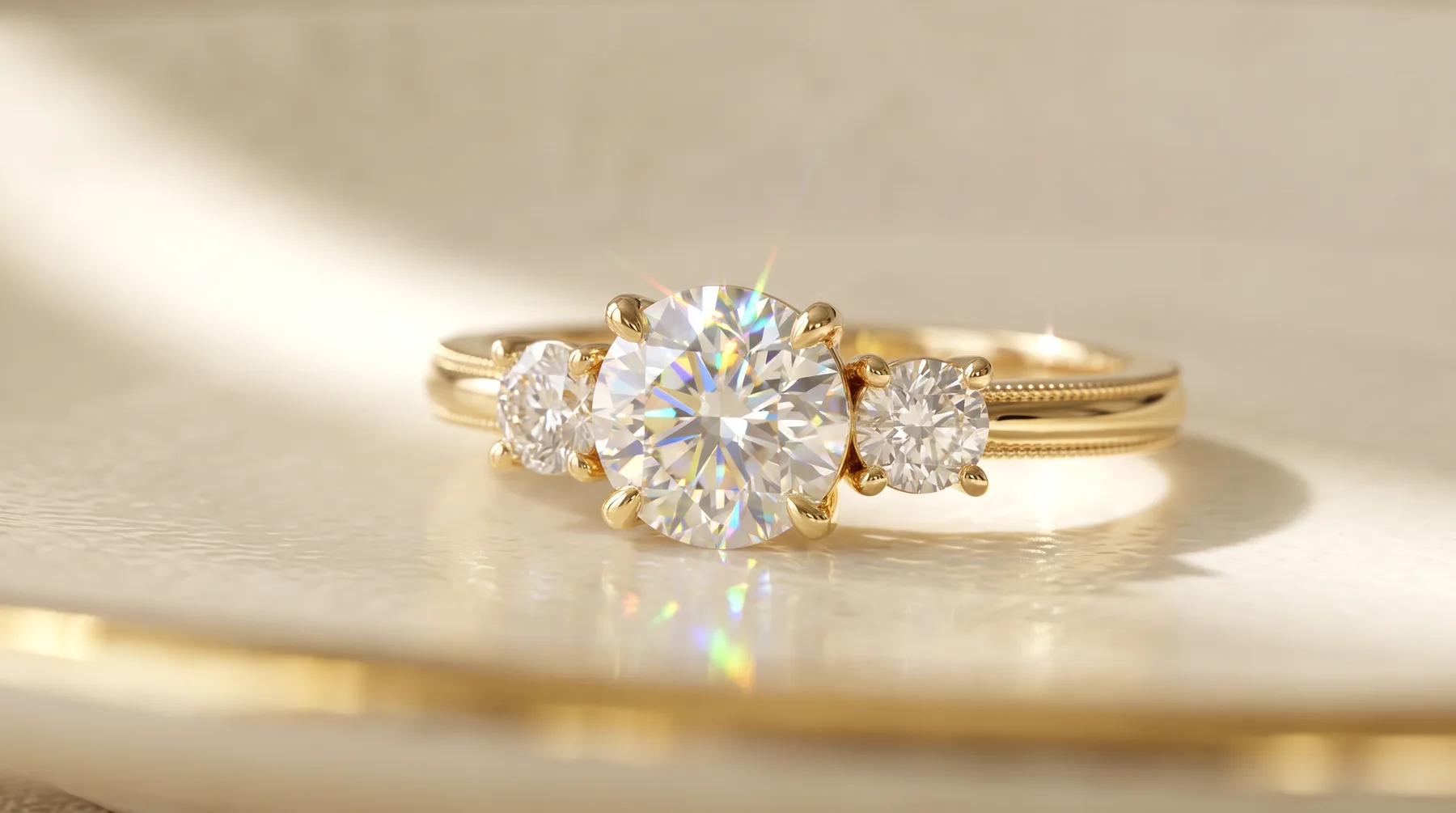
A three-stone ring flanks the center with two side stones — the trade's shorthand is "past, present, future" — and it is the rare style where the romance and the engineering both benefit: the side stones shield the center's girdle from edge-on knocks, and the wider head spreads impact across three seats instead of one.
The cost is proportional: three stones mean up to a dozen prong tips to wear, and the side stones' outer edges take the hits the center used to. It is also the style most sensitive to proportion — side stones too large swallow the center; too small read as an afterthought. This is the one we most recommend seeing on the hand, in metal, before committing.
How the settings compare
1 min
| Setting | How it holds the stone | Protection | Snag risk | Maintenance to expect | Best suited to |
|---|---|---|---|---|---|
| Solitaire | 4–6 prongs folded over the girdle | Moderate | Moderate (claw tips) | Prong checks yearly; retip when worn | Almost everyone; maximum light |
| Halo / hidden halo | Prongs + a ring of bead-set melee | Moderate | Moderate | Melee checks; upgrades often mean a new head | Sparkle-first buyers |
| Bezel | Continuous burnished metal wall | Best | Lowest | Minimal; occasional wall inspection | Hands that work: healthcare, gym, trades |
| Pavé / micro-pavé | Tiny raised metal beads per stone | Center as per its head | Low–moderate | Expect occasional melee replacement; resize with care | Buyers who love shimmer and keep up with visits |
| Cathedral | Prong head braced by shank arches | Sides braced, but rides high | Highest (profile) | Prong checks; watch for knocks | Gentle-wearing traditionalists |
| Three-stone | Prong seats for center + flankers | Good (side stones shield center) | Moderate | More tips to check; side-stone edges | Anniversary-minded romantics |
What we'd tell you across the counter
1 min
Start from the wearer's ordinary Tuesday. Gloves on and off all day argues bezel. A desk job and a love of light argues solitaire. If the budget question is "biggest honest look," a halo on a modest center beats a strained solitaire. Rings that will never come off want lower profiles and harder metal — 14k holds prong shape longer than 18k — and any ring worn daily should see a jeweler once a year, whatever the style, because every failure mode above is cheap to catch and expensive to discover.
Buy the stone with your head — our lab-grown versus natural guide is that conversation — and then set it in something built to outlast the question. The stone is the poetry; the mounting is the marriage.
Frequently Asked Questions
2 min
Are 4 or 6 prongs better for a diamond ring?
Four prongs show more of the stone; six add security through redundancy, since one damaged prong out of six still leaves a working grip. For active hands or a center stone above about a carat, we default to six; for lower-key wear, four is fine with annual checks.
Do pavé diamonds fall out easily?
Well-made pavé in adequate metal holds for years, but the beads gripping each melee stone are jewelry's smallest holding structures, and thin, flexy bands work them loose. Occasional melee replacement is normal maintenance for the style, not a defect.
What is the difference between a halo and a hidden halo?
A classic halo circles the center stone face-up, making it read larger from above. A hidden halo sits beneath the stone around the head's base, invisible from the top and sparkling in profile — and per The Knot's 2024 study it is now the more popular of the two.
Which engagement ring setting is best for nurses and active lifestyles?
A bezel, with a full metal wall and nothing to snag a glove, is the standing recommendation — a low-set solitaire with rounded prongs is the runner-up. High cathedrals and delicate micro-pavé are the styles we'd steer working hands away from.
Can you resize a channel-set or tension-set ring?
Cautiously and sometimes not at all. Resizing can distort a channel and loosen the row of stones inside it, and tension settings depend on calibrated spring pressure, so most need the maker's involvement. Buy both styles as close to the true size as possible.
How often should ring prongs be checked?
At least once a year by a professional, per Jewelers of America — and immediately if a stone ever clicks when you tap the ring near your ear. Retipping is wear-based rather than scheduled; the annual visit is how the wear gets noticed in time.
Why do jewelers put platinum prongs on gold rings?
Because platinum flexes without cracking and wears down far more slowly, while a gold shank keeps the ring's color and cost where the buyer wants them. Mounting suppliers recommend the combination outright; it is standard good practice, not an upsell.
Every setting on this page can carry the same stone and tell a different story with it. Choose for the hand, ask to see your shortlist in metal, and let the jeweler across the counter know how you actually live — the right mounting is the one that makes that conversation boring in twenty years.