
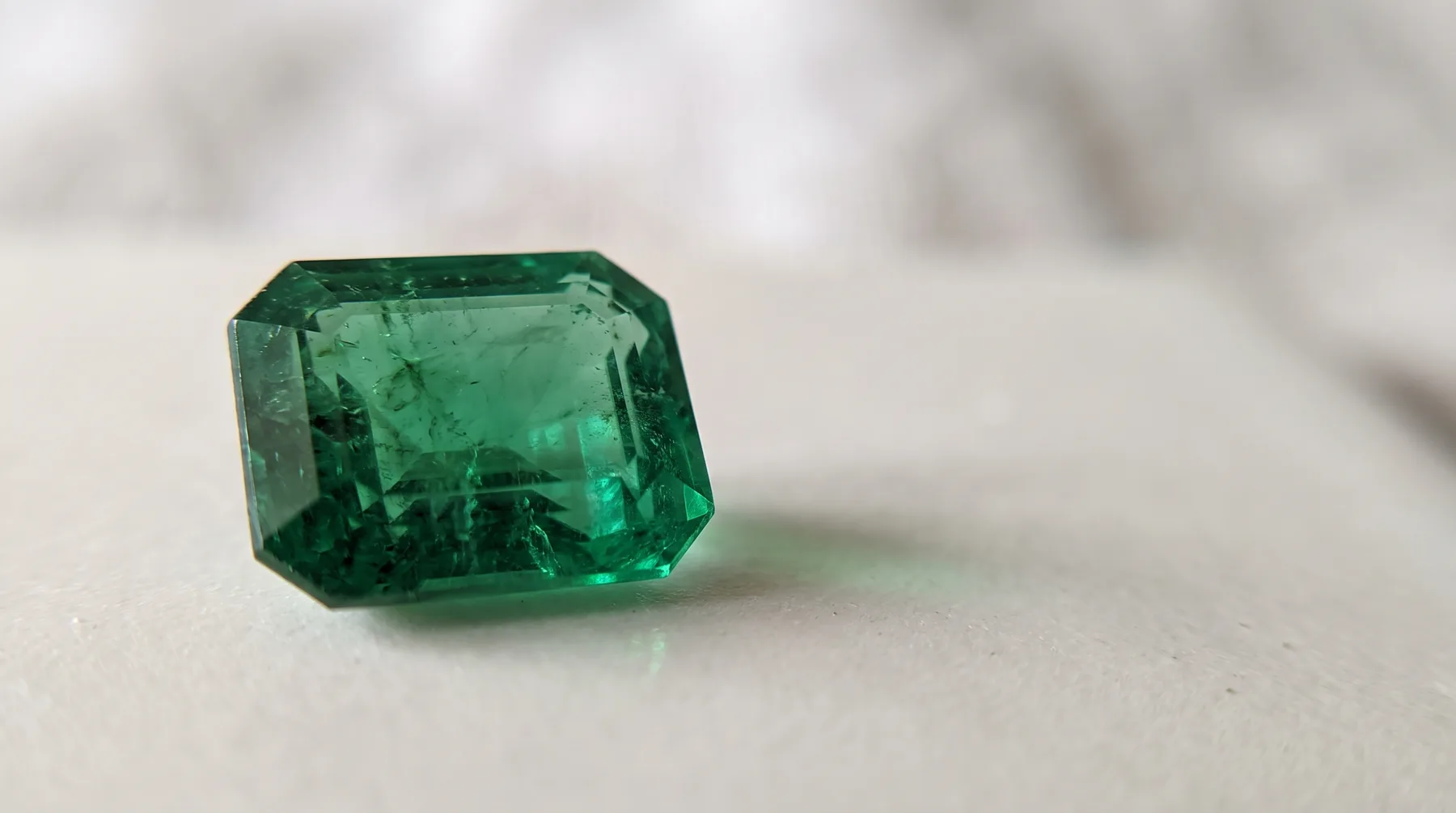
May's birthstone is emerald, and it is the one major gem the trade agrees to judge by different rules. Everywhere else in jewelry, fewer inclusions means a better stone. In emerald, the inclusions have a name, jardin, and a fine emerald with a visible garden inside it can be worth many times a flawless one that is a duller green. Color decides almost everything; clarity is a supporting argument.
The second thing to know is that emerald is hard but not tough. It sits at 7.5 to 8 on the Mohs scale, which is harder than quartz and perfectly able to resist everyday scratching, yet the fractures running through most emeralds make it far more likely to chip than a sapphire of lower hardness would be. That single distinction explains the ring you should buy, the cleaning method you should use, and why most emeralds on earth have been treated with oil.
A green that was old before Rome
1 min
Emerald mining in the Egyptian desert near the Red Sea is documented from the Ptolemaic period and the workings are still traditionally called Cleopatra's mines. Those stones were pale and heavily included by modern standards, and they were treasured anyway, because nothing else available at the time was that color.
Everything changed in the sixteenth century, when the Spanish encountered Colombian emeralds already in circulation among the Muzo and Chivor peoples and moved them into European and Indian courts by the shipload. Mughal emperors had them inscribed with prayers. The best Colombian material set a standard for saturated green that the trade still measures other emeralds against, and the mines that produced it, Muzo, Chivor and Coscuez, are still working today.
The meaning behind the stone
1 min
Emerald has carried associations with rebirth, fertility, patience and truth for most of recorded history, which fits a stone that turns up in spring and looks like new growth. A more specific old belief held that an emerald placed under the tongue let you see the future, and a slightly more practical one held that it would reveal a lover's lies, which says something about what people wanted from jewelry.
None of that is testable, and we would rather not pretend otherwise. What is true is that emerald is the gemstone of the twentieth and thirty-fifth wedding anniversaries, so a second wave of buyers arrives for a date rather than a birthday, usually looking for something more substantial than a first piece.
What makes an emerald green?
1 min
Emerald is the green variety of beryl, colored by traces of chromium, vanadium, or both. Beryl itself is colorless when pure; change the trace element and you change the gem. Iron gives you the blue-green of aquamarine, which is the same mineral wearing a different impurity, and manganese gives the pink of morganite.
The color is judged on three things: hue, which should be green to slightly bluish-green rather than yellowish; tone, which should be medium to medium-dark, because a pale stone reads as green beryl rather than emerald; and saturation, which is the one that separates the good from the extraordinary. There is no universal cutoff where green beryl becomes emerald, and laboratories differ on where they draw it, which is worth knowing before you argue with a seller about a pale stone's name.
The jardin: why emerald clarity is judged differently
1 min
Jardin is French for garden, and it is the trade's word for the fissures, growth tubes and mineral crystals inside a natural emerald. Emeralds grow in a violent geological environment and almost all of them carry these marks; a completely clean emerald with strong color and real size is rare enough that its first likely explanation is a laboratory.
Practically, this reverses the buying logic people bring from diamonds. With a diamond you look for eye-clean and then optimize color. With an emerald you find the color you love first, then check that the inclusions do not do two specific things: dull the transparency of the stone as a whole, or reach the surface at a corner or an edge where an impact could start a break. A dense jardin in the middle of a vividly green stone is a signature. A single fissure running to the girdle is a problem.
Some inclusions are prized on their own. A trapiche emerald from Muzo grows with six dark spokes radiating from the center like a wheel, and collectors pay for the pattern rather than despite it.
Oil, resin, and what has to be disclosed
1 min
Nearly all commercial emeralds are clarity enhanced, usually by filling surface-reaching fractures with a colorless substance whose refractive index is close to the stone's, so the fissures become far less visible. Traditionally that meant cedarwood oil. Today it may be a synthetic resin, which is more durable and more controversial.
The important consumer facts are these. Treatment is routine and legal, and it is not a defect on its own. It must be disclosed, and laboratories including GIA report the extent of enhancement on a scale that runs from none through minor and moderate to significant. Minor enhancement barely affects value in a market where nearly everything is treated. Significant enhancement means much of what you are looking at is filler, and it should cost meaningfully less than a comparable stone with little or none.
Oil is also not permanent. Heat, solvents, ultrasonic cleaning and time can drive it out, and an emerald that looked bright when you bought it can go visibly cloudier years later. Re-oiling is a routine service that a competent shop can perform, which is another way of saying that emerald is a gem that expects a relationship with a jeweler.
Where emeralds come from today
1 min
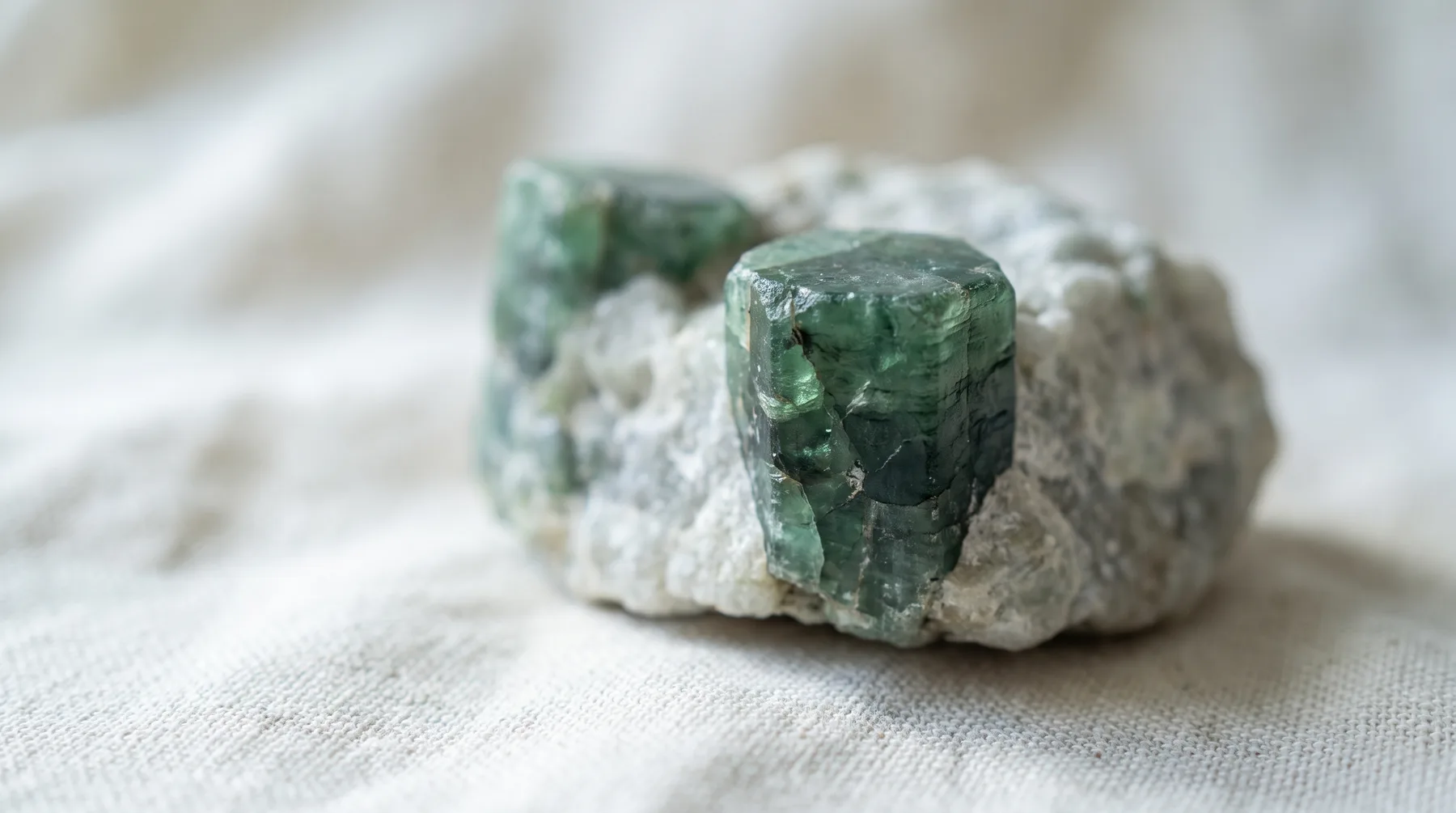
Colombia still sets the standard for color, and Colombian origin carries a premium of its own on fine stones. Zambia is the other giant: the Kagem mine, majority owned by Gemfields, is the largest single emerald mine in the world and is estimated to supply roughly a quarter to a third of global production. Zambian emeralds tend to run slightly bluer and, on average, cleaner than Colombian material, and the trade increasingly treats that as a preference rather than a ranking.
Brazil produces large volumes across a wide quality range, and Ethiopia's Shakiso region has been a genuine new source since 2016, yielding bluish-green stones with good clarity. For a sense of what fine rough actually commands, Gemfields sold 38 lots of higher-quality rough from Kagem at auction in September 2025 for about $32 million, an average of $160.78 per carat, with a single 11,685-carat crystal accounting for a reported $1.9 million of it.
How emerald wears in real life
1 min
Hardness and toughness are different properties, and emerald is the gem that teaches people the difference. Hardness is resistance to scratching, and at 7.5 to 8 emerald handles ordinary contact well. Toughness is resistance to breaking, and the fractures that define emerald make it markedly less forgiving of a knock than a sapphire or a diamond.
That is why the emerald cut exists. The step-cut design with its cropped corners was developed centuries ago for cutting the mineral itself, because step facets put less strain on fractured rough and cutting the corners off removes the four points where a crystal is most likely to chip. The shape later became a favorite for diamonds; the reason it was invented was structural.
What this means for buying: an emerald in a bezel or with protected corners is a daily-wear ring. An emerald with exposed corners in a high setting is an occasional ring, and it will eventually meet a door frame. Emerald earrings and pendants are close to worry-free, because nothing hits them. Our guide to engagement ring settings covers which mountings protect a stone and which show it off at the stone's expense.
What our catalog says about emerald at the counter
1 min
The counter reality of May's birthstone is not Colombian rough. Across our catalog, 628 styles declare emerald as the stone, and 289 of those, 46%, are laboratory-created emerald rather than mined. Include every style whose description names emerald in some form and the figure is 2,181, of which 499 are in stock as of 13 August 2026.
That balance is honest and worth explaining rather than hiding. A well-grown laboratory emerald is chemically and optically emerald, it typically shows better clarity than mined material at the same price, and for a $200 birthstone pendant it is often the sensible choice. What it is not is an investment or an heirloom in the way a fine natural stone can be, and any seller who blurs the distinction, or uses the word emerald with no qualifier on a stone grown in a factory, is telling you something about the shop rather than the stone.
One more number from the same data: 972 styles use the octagon or emerald cut shape. The cut invented to protect a fragile green crystal now mostly holds diamonds and other stones, which is a fair summary of how good ideas travel in this trade.
Choosing May birthstone jewelry by the piece
1 min
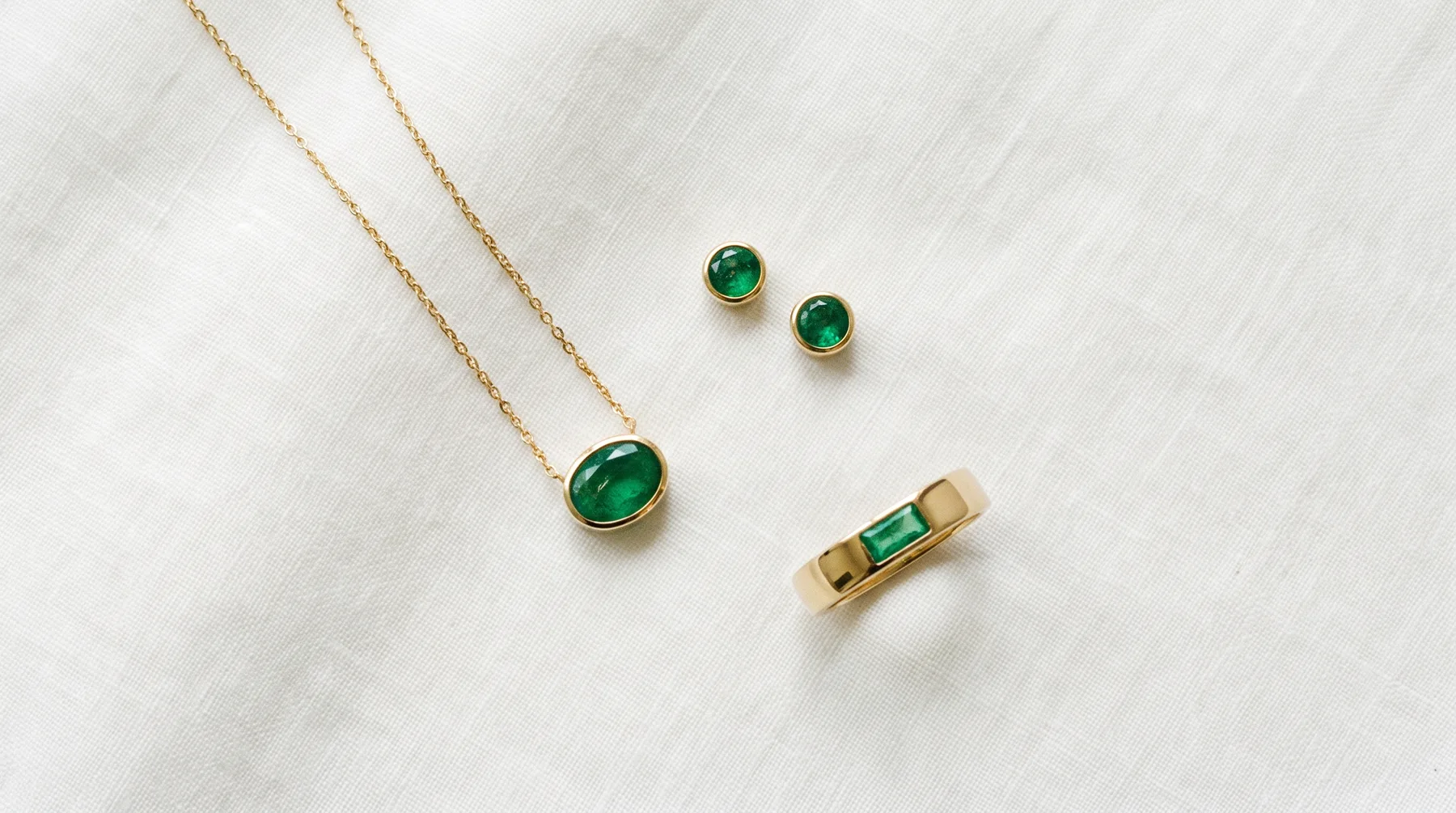
Pendants and necklaces are the easiest first emerald. Nothing strikes a pendant, so the stone's fragility stops mattering, and the color sits where people see it. A bezel or a half-bezel adds security for very little visual cost.
Earrings are the second-safest choice and the most flattering, because emerald green reads beautifully against most skin tones in daylight. Studs with a protective rim outlast dangling designs with exposed corners.
Rings deserve the most thought. Buy the setting as carefully as the stone: bezels, low profiles, cut corners, and enough metal around the girdle. If the ring is for someone who works with their hands, consider an emerald-set band worn on the right hand rather than a solitaire worn every day.
Bracelets take more punishment than any other category, since a wrist meets desks, counters and car doors constantly. If the piece is meant for daily wear, choose small bezel-set stones or accept that a large exposed emerald will need attention.
How to buy an emerald worth keeping
1 min
Buy the color first and everything else second, then verify three facts before you pay: how much treatment the stone carries, whether it is natural or grown, and whether any fracture reaches a corner. Here is the order I would actually work in at a counter.
- Judge the color in daylight first, before you look at anything else and before you look at the price. Medium to medium-dark, green or slightly bluish-green, strongly saturated. Warm shop lighting flatters emerald more than any other gem, so take it to a window.
- Then look through the stone, not at it. Transparency is what separates a good jardin from a bad one. If the stone looks sleepy or grey-veiled in the middle, no amount of surface color redeems it.
- Ask for the treatment level in writing: none, minor, moderate, or significant, and what filler was used. This is a normal question and a good seller answers it flatly.
- Ask whether it is natural or laboratory-grown, and get the answer on the receipt. Both are legitimate; only one is worth natural money.
- Check the corners and the girdle with a loupe for fractures reaching the surface, especially near where prongs will sit.
- On anything substantial, get an independent report. Origin, treatment level and natural versus synthetic are exactly the facts a laboratory settles and a photograph cannot.
Caring for emerald jewelry
1 min
The care rules are short and non-negotiable, because most of the ways people clean jewelry are the ways emeralds are ruined.
- Never use an ultrasonic cleaner. Vibration works fissures and drives out oil. This is the single most common way emeralds are damaged, and it usually happens at a jeweler who was not asked.
- Never steam clean. Heat does the same thing faster.
- Wash by hand: lukewarm water, a drop of mild dish soap, a soft brush, and a soft cloth to dry. Our home cleaning guide covers the method for the metal around it.
- Keep it away from solvents: acetone, alcohol, bleach, and anything sold to strip paint or degrease an engine.
- Store it alone, in a soft pouch. Almost everything else in a jewelry box is harder than the fissures in an emerald.
- Take it off for the gym, the garden, and the kitchen, and mention that the stone is emerald every time you hand it to a jeweler for anything at all.
Frequently Asked Questions
2 min
What is May's birthstone?
Emerald, the green variety of the mineral beryl. Agate is the traditional alternate stone for May and chrysoprase appears on some modern lists, but emerald has been the primary May birthstone throughout the modern era.
Why do emeralds have so many inclusions?
Emerald forms where beryllium-bearing fluids meet chromium or vanadium, which is a geologically chaotic setting, and the crystals trap fluids, gas and other minerals as they grow. The result is the jardin. A natural emerald with no inclusions at all is rare enough that gemologists treat perfect clarity as a reason to test the stone.
Are all emeralds oiled?
Close to all commercial emeralds are clarity enhanced in some way, and the treatment is accepted trade practice as long as it is disclosed. What matters is the extent: minor enhancement is normal and barely affects value, while significant enhancement means a large share of what you see is filler and the price should reflect it.
Is a laboratory-created emerald a real emerald?
Yes, in the material sense. It is beryl with the same chemistry, hardness and color mechanism, grown by flux or hydrothermal methods that date back to the 1930s. It must be described as laboratory-created or synthetic, and it sells for a small fraction of natural prices. Nearly half the emerald styles in our own catalog are laboratory-created.
Can I wear an emerald ring every day?
Yes, if the setting is built for it. A bezel or a low protective mounting, with the corners covered, makes emerald a reasonable daily ring for most people. A high solitaire with exposed corners on an active hand is asking for a chip, and chipped emerald is a recut, not a repair.
How often does an emerald need re-oiling?
There is no schedule. Watch the stone: if it looks cloudier or the fissures become more visible than you remember, the filler has dried out or been driven off, and a jeweler can re-oil it. Ultrasonic cleaning, steam, and solvents all accelerate that, so avoiding them is the same thing as extending the interval.