
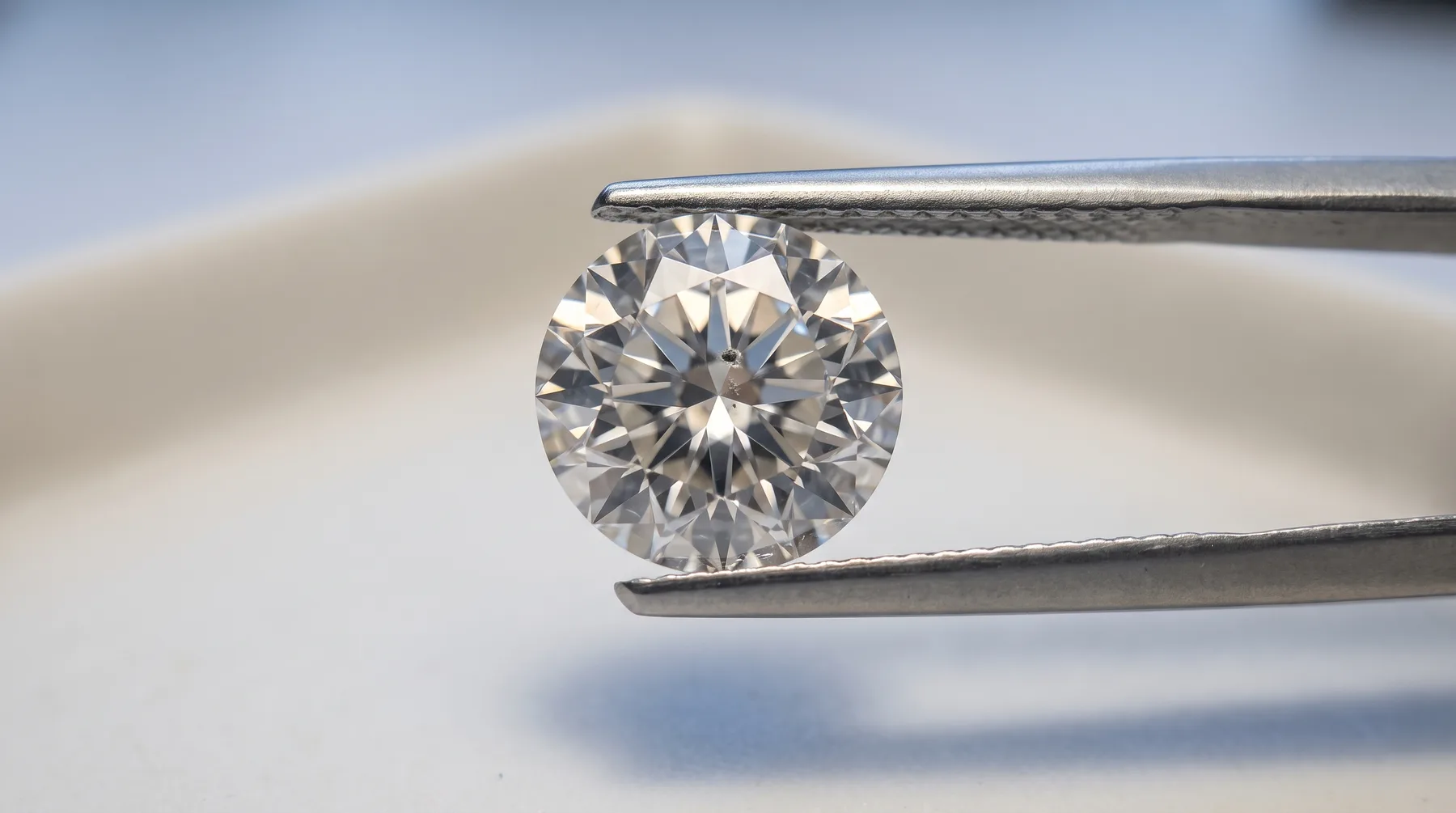
Diamond clarity is graded on how visible a stone's internal characteristics are to a trained grader at 10x magnification. Note what that definition does not say: it says nothing about what you can see. The grade is a laboratory measurement made under a loupe, and the thing you actually want, a diamond whose inclusions are invisible to your eye at normal distance, has no grade at all.
The whole decision comes down to finding the lowest clarity grade that is still eye-clean for that particular stone in that particular shape and size, and then spending the money you saved on cut. Cut is the only one of the 4Cs that a human controls and the only one that changes how a diamond behaves in light.
The GIA clarity scale in plain language
1 min
The Gemological Institute of America's scale has 11 grades in six categories. Grading considers the size, nature, position, color or relief, and number of the characteristics visible at 10x magnification.
| Grade | What it means | Who should buy it |
|---|---|---|
| FL, Flawless | No inclusions or blemishes visible to a skilled grader at 10x | Collectors. Under 0.5% of gem diamonds |
| IF, Internally Flawless | No inclusions; only surface blemishes at 10x | Buyers who want the certificate to be perfect |
| VVS1, VVS2 | Inclusions difficult for a skilled grader to see at 10x | Step cuts above 2 carats; buyers who plan to resell |
| VS1, VS2 | Minor inclusions, difficult to somewhat easy at 10x | The value sweet spot for most rounds and most step cuts |
| SI1, SI2 | Noticeable to a skilled grader at 10x | Rounds and brilliant shapes under about 1.5 carats, chosen individually |
| I1, I2, I3 | Obvious inclusions that may affect transparency, brilliance and durability | Small accent stones; rarely a good centre stone |
Two words in that table do a lot of work: skilled and 10x. Everything from FL down to SI2 is invisible or nearly invisible without magnification on a well-chosen stone. That is why the honest version of this conversation starts with your eyes rather than with the scale.
What eye-clean actually means, and where it starts
1 min
Eye-clean means no inclusion is visible to a person with normal vision looking at the stone face-up from about arm's length, roughly 25 to 30 centimeters, in ordinary light. It is not a laboratory term and no report will state it, which is exactly why it is worth understanding: it is the threshold where clarity stops mattering to how the ring looks and starts mattering only to the paper.
As a starting point rather than a rule: a well-chosen SI1 round brilliant under about a carat is usually eye-clean, an SI2 sometimes is, and a VS2 nearly always is. Above that, you are paying for grades that no one can see without equipment. Below SI2, inclusions begin to show as dark spots or a general haziness, and at I1 and worse they are part of the stone's appearance.
The word usually is doing real work in that paragraph. Clarity is the one grade where two stones with identical letters can look completely different, so it is the one grade you should never buy sight unseen without either a high-resolution video or a return policy.
How the shape changes the answer
1 min
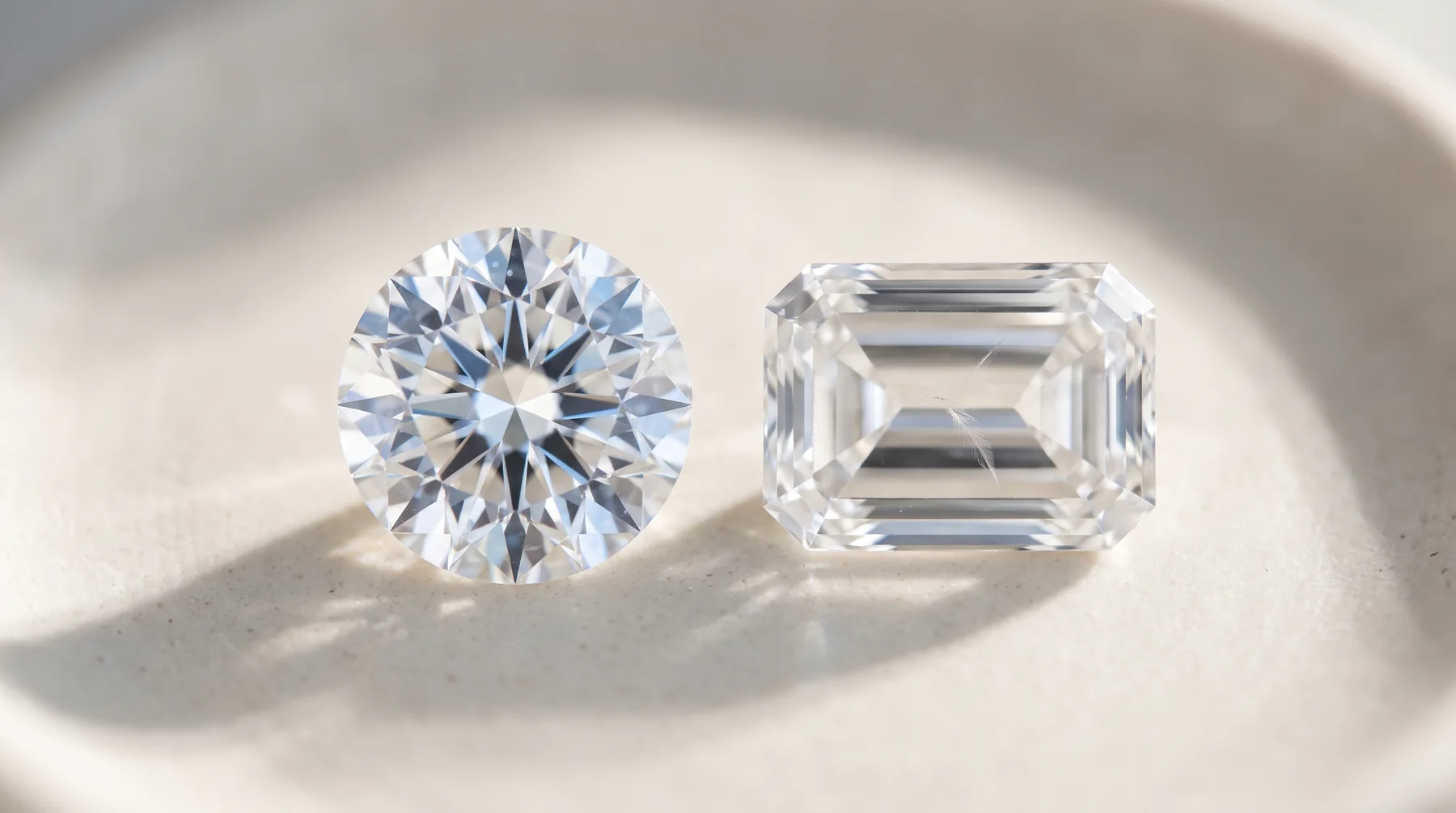
Round brilliants and other brilliant-cut shapes, ovals, pears, cushions, marquises, chop light into hundreds of small flashes. That visual noise hides inclusions extremely well, which is why a round SI1 is often a bargain.
Step cuts do the opposite. Emerald and asscher cuts have long parallel facets that behave like windows into the stone, and anything inside is on display. The practical consequence: for step cuts, treat VS2 as the floor and VS1 as the comfortable choice, and inspect any SI stone personally rather than buying it on a grade. It is not a coincidence that the same shape shows a stone's color more honestly too.
Baguettes and other small step-cut accents follow the same logic in miniature, which is why a channel of baguettes with grey-looking stones ruins a ring that a row of tiny brilliants would have carried.
How size changes the answer
1 min
A bigger stone has a bigger window. The same physical inclusion occupies the same absolute area whether it is in a half-carat or a three-carat diamond, but the larger stone gives your eye more time to find it, spreads the same clarity grade over more surface, and gets looked at more.
A workable ladder, again as a starting point: under 1 carat, SI1 and often SI2 will do in a brilliant shape. From 1 to 2 carats, aim at SI1 to VS2. Above 2 carats, VS2 is the sensible floor and VS1 buys peace of mind. Above 3 carats in a step cut, VS1 or VVS2 stops being vanity.
Where the inclusion sits matters more than the grade it earned
1 min
Two SI2 diamonds can have identical grades and completely different problems, and the report tells you which is which. This is the single most useful skill in clarity buying, and it takes about a minute per stone.
- Under the table, dead centre: the worst location. The table is the biggest facet and the one your eye lands on first.
- Near the girdle, under a prong: the best location. The setting hides it and the facet pattern breaks it up.
- Dark and high-relief versus white and transparent: a black crystal shows at half the size of a white feather. Relief, meaning how strongly an inclusion contrasts with the diamond around it, is graded but not printed as a number.
- Scattered versus concentrated: many tiny pinpoints spread through a stone often read as haze rather than as spots, which is worse than one identifiable crystal in a corner.
All of this is on the plot diagram of a full grading report, which is why the report is worth reading rather than skimming for letters. Our guide to reading a laboratory report line by line walks through the plot and what each symbol means.
The inclusions that are a durability problem, not a beauty problem
1 min
Most inclusions are cosmetic. A few are structural, and this is where a clarity grade can matter for reasons that have nothing to do with sparkle.
A large feather, which is the trade term for a fracture, that reaches the surface, and especially one crossing the girdle where prongs press, is a genuine weak point. Diamond is the hardest natural material and it is still brittle along its cleavage planes: a sharp knock in the wrong place on a stone with a big surface-reaching feather can chip or split it. That is why GIA's own description of the I grades mentions durability alongside transparency and brilliance, and it is the reason I would decline an I1 with a long feather across the girdle at any price for a ring worn daily.
The practical check: ask whether any feather on the plot reaches the surface, and where. A jeweler who is setting the stone will look at exactly that before choosing a mounting.
Clarity treatments, and the ones a laboratory refuses to grade
1 min
Two treatments improve apparent clarity and they are treated very differently by the trade.
Laser drilling burns a microscopic channel to a dark inclusion so it can be bleached out. GIA considers it permanent, will grade such a stone, and always marks the drill holes on the plot. It is disclosable and it lowers value, but it is stable.
Fracture filling injects a glass-like substance into a feather so the fracture stops reflecting light. GIA does not issue grading reports for fracture-filled diamonds at all, because the treatment is not considered stable, and the filler can be damaged by a jeweler's torch during a routine repair. If a document claims to be a GIA grading report and says clarity enhanced or fracture filled on it, that is not a GIA grading report.
Both must be disclosed under FTC rules. A stone described as clarity enhanced is a fracture-filled stone, and the phrase is doing polite work.
Clarity versus cut: where the money should go
1 min
If you take one instruction from this article, take this one: buy the cut first. Cut determines how much light comes back out of the stone and in what pattern, and it is visible from across a room. Clarity, once the stone is eye-clean, is visible to nobody.
A concrete way to spend: start with an excellent cut, take the clarity grade down until the stone stops being eye-clean, then take the color grade down until it stops looking white in the metal you have chosen. Warm gold hides warm color, so a G in yellow gold is money spent on a difference no one perceives. That is the same logic our guide to why similar rings cost different amounts applies to the mounting.
What our catalog says about clarity in real jewelry
2 min
Here is the part of the clarity conversation that almost never gets published, and our own data shows it plainly.
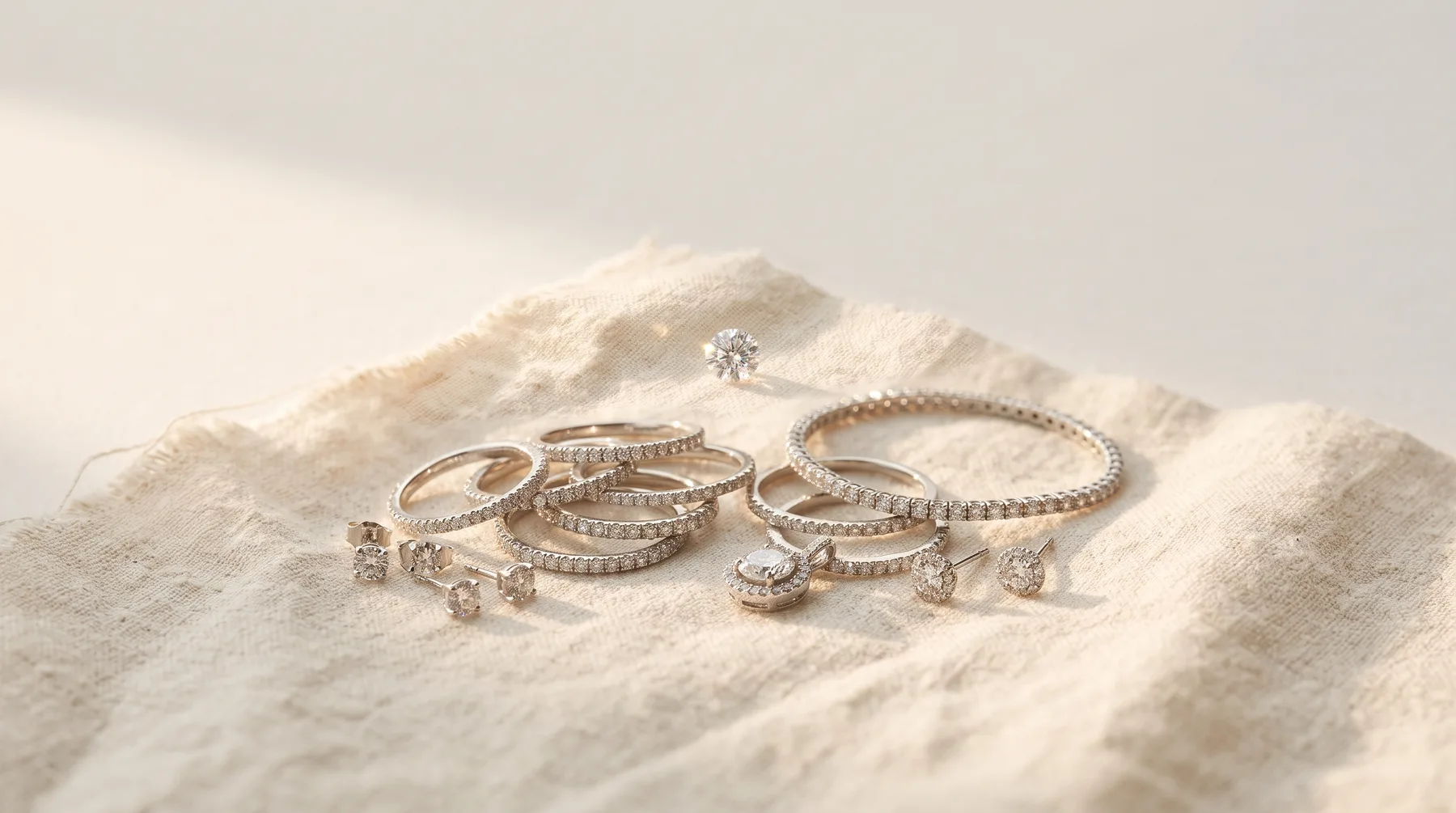
Of the 43,187 diamond styles in our catalog that state a diamond weight, 52.8% carry less than a quarter of a carat in total, and 27.5% carry less than 0.05 carats. Most diamond jewelry sold in America is melee, small stones set in numbers, and melee is not graded stone by stone. It is bought in parcels.
So when 23,732 of our styles do declare a clarity, they declare it in ranges and in-house letter codes rather than in GIA grades. The 13 values that appear include I1 (AA) on 5,773 styles, VS/SI+ on 4,830, VS+ on 3,565, I2 (A) on 3,336, and SI2/SI3 (AAA) on 2,089. Not one of them is a single GIA grade.
Read those letter codes carefully, because they are the point. A supplier's AAA quality corresponds to SI2 to SI3. Its AA corresponds to I1. Nearly 40% of all the clarity declarations in the catalog, 9,397 styles, are I-grade material. None of that is dishonest; parcel grading is how the industry has always sold small stones, and an I1 melee stone in a 1.2 mm pave seat is genuinely invisible. But it means the triple-A on a mall jewelry tag is a supplier's internal code, not a gemological grade, and a shopper who reads it as the latter is being misled by an accident of vocabulary rather than by a lie.
The rule that falls out: on a centre stone, insist on a single GIA grade from an independent report. On accent stones, ask for the range and expect a range, and judge the melee by looking at whether the little stones are bright and matched rather than by any letter at all.
How to buy clarity without overpaying
1 min
The short version is that clarity is bought downward, from a floor set by shape and size, and stopped the moment the stone stops being eye-clean. Here is that process as six steps.
- Set your shape and size first, because they determine the clarity floor. Round under a carat, step cut over two carats, and a three-carat oval are three different problems.
- Start one grade below where you assumed you needed to be, then look. Most people start at VS1 out of anxiety and buy an invisible improvement.
- Read the plot, not the letter. Location, relief and whether feathers reach the surface tell you more than the grade does.
- Look at the actual stone, or a high-magnification video of that stone, at arm's length, in daylight and in a lamp. Never buy an SI grade on the grade alone.
- Ask about treatments explicitly. Laser drilled and fracture filled are both disclosable, and one of them cannot carry a GIA grading report.
- Put what you saved into cut. Then, if there is anything left, into carat, which people actually notice.
Frequently Asked Questions
2 min
What is the best diamond clarity for the money?
VS2 for most buyers, and SI1 in a round brilliant under about a carat if you can inspect the specific stone. Both are usually eye-clean, and both cost meaningfully less than VVS grades that look identical without magnification.
Is VVS clarity worth it?
Rarely, for appearance. VVS inclusions are difficult for a trained grader to find at 10x, so they are invisible to you by definition. VVS earns its price in three situations: very large stones, step cuts where the facets act as windows, and buyers who care about resale, where the paper matters as much as the stone.
Can you see an SI1 inclusion with the naked eye?
Usually not in a round brilliant under a carat, sometimes yes in a step cut or a large stone. SI1 means noticeable to a skilled grader at 10x magnification, which is a very different bar from noticeable to you. Judge the individual stone.
Does clarity affect a diamond's durability?
Occasionally, and only for specific inclusions. A large feather reaching the surface, particularly across the girdle where prongs apply pressure, is a real weak point. GIA's own description of the I grades notes that inclusions may affect durability. Small crystals and pinpoints have no structural consequence at all.
What is a clarity-enhanced diamond?
Almost always a fracture-filled diamond: a glass-like filler injected into a fracture so it reflects less light. It must be disclosed, it sells for far less, and GIA will not issue a grading report for one because the treatment is not considered stable. A jeweler's torch during an ordinary repair can damage the filling.
Why does jewelry say AAA quality instead of a clarity grade?
Because small accent stones are bought in parcels rather than graded individually, and suppliers use their own letter codes for parcel quality. In our own catalog those codes map to real ranges: AAA corresponds to SI2 to SI3 and AA to I1. They are inventory language, not gemological grades, and they are not comparable between suppliers.