
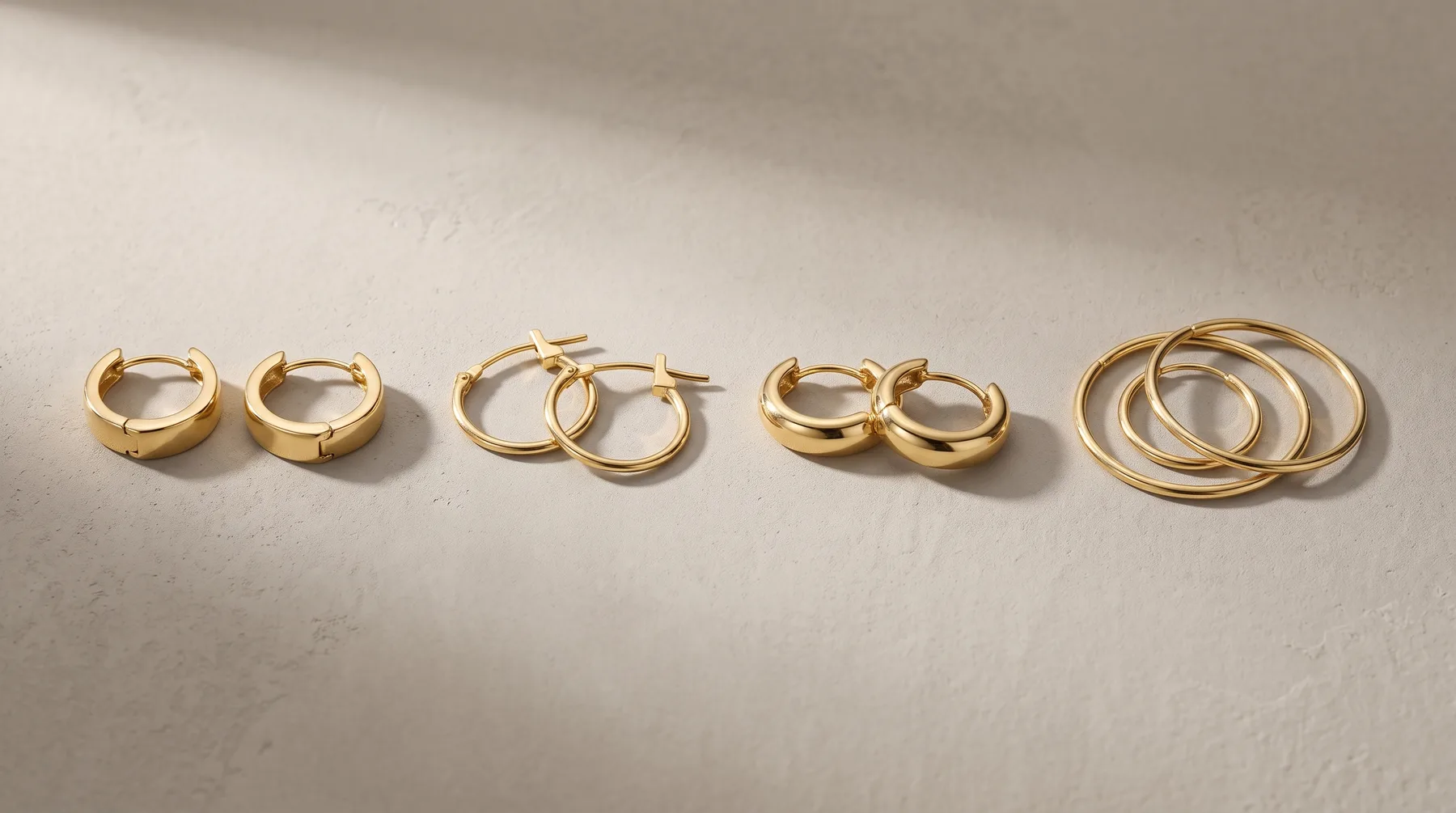
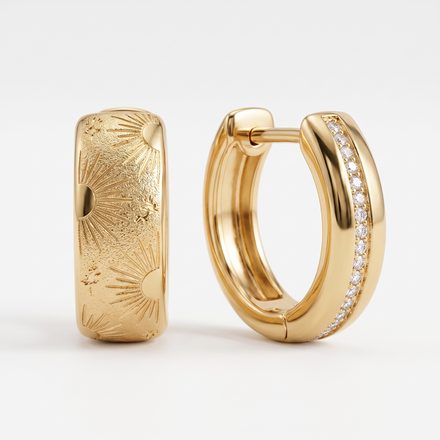
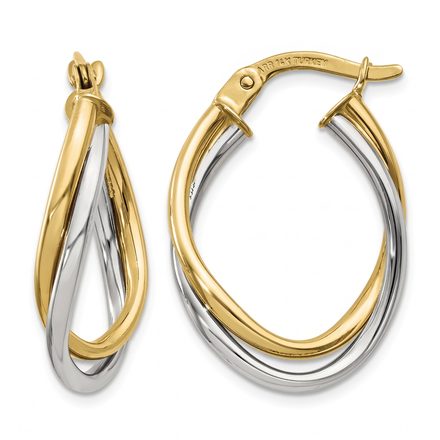
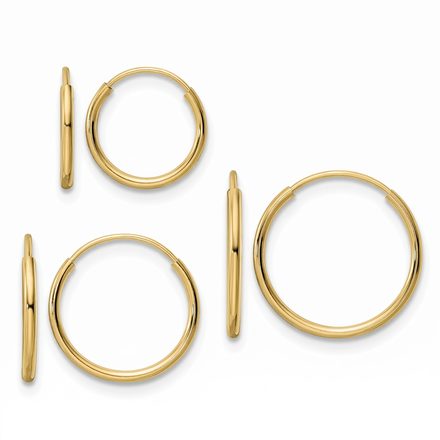
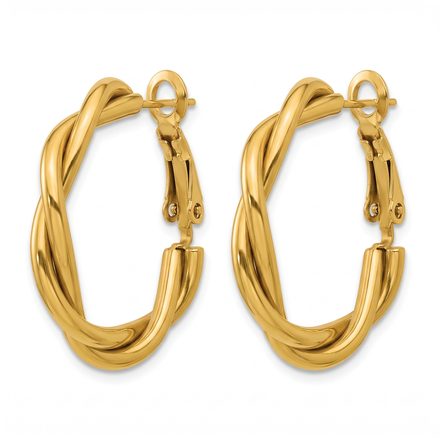
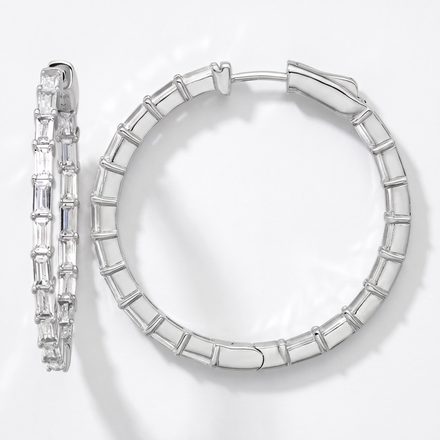
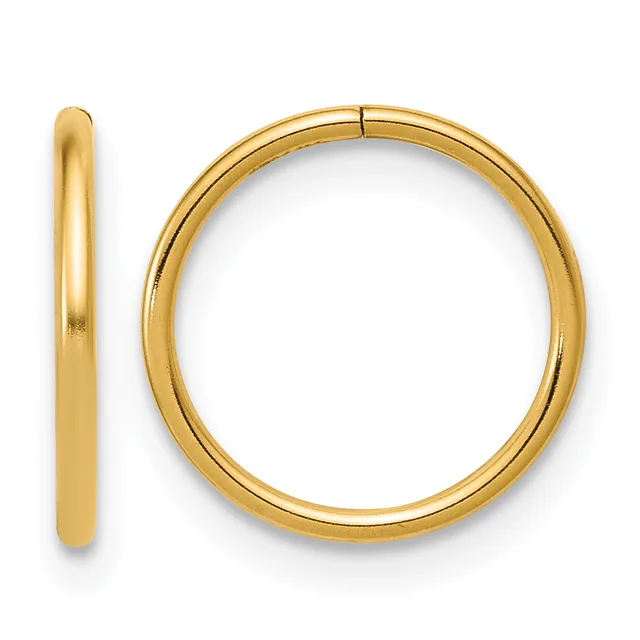
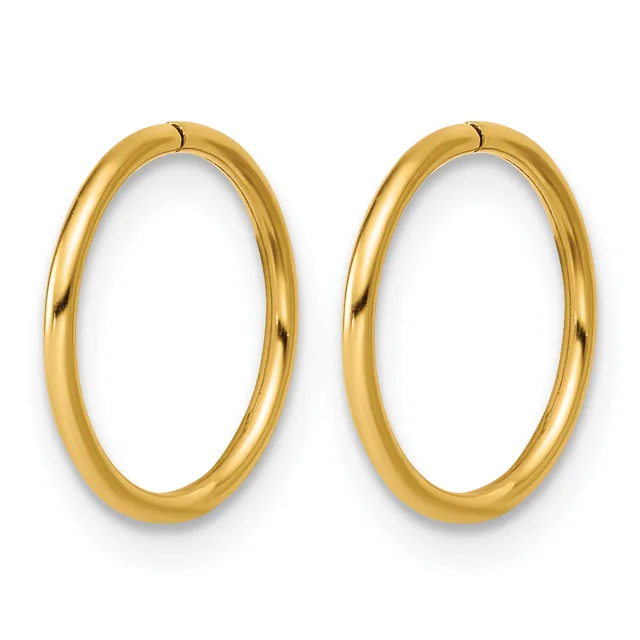
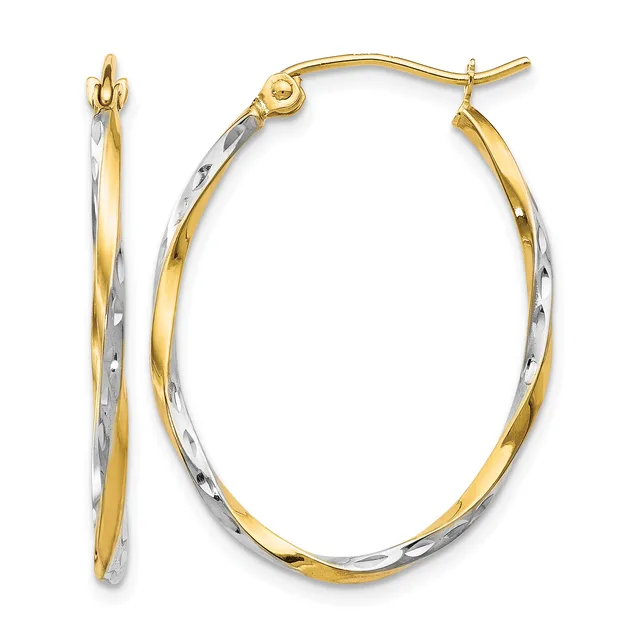
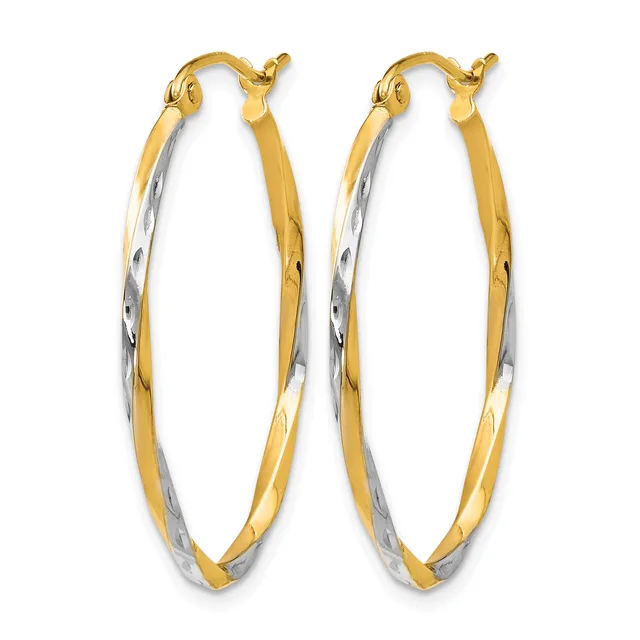
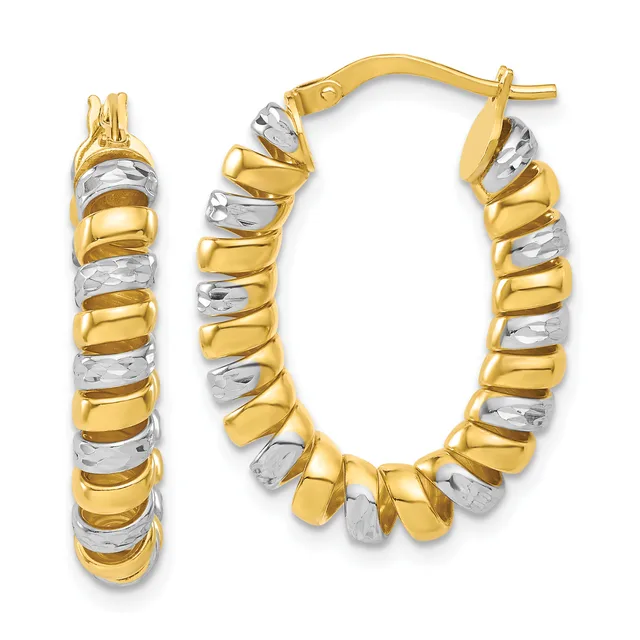
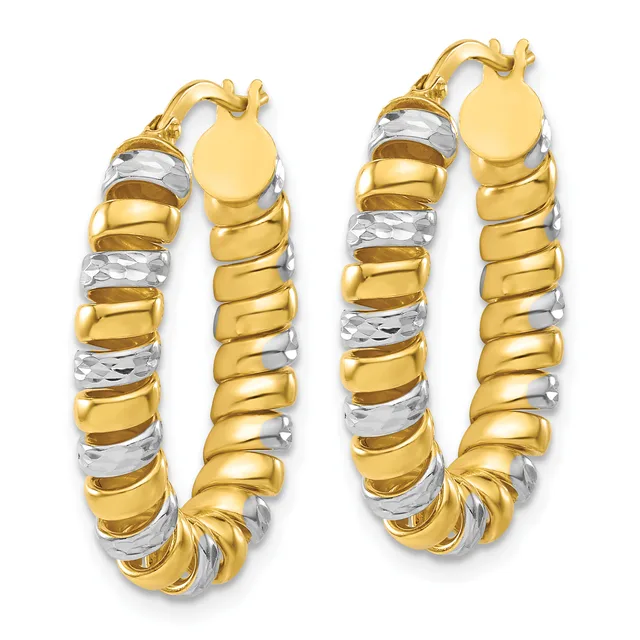
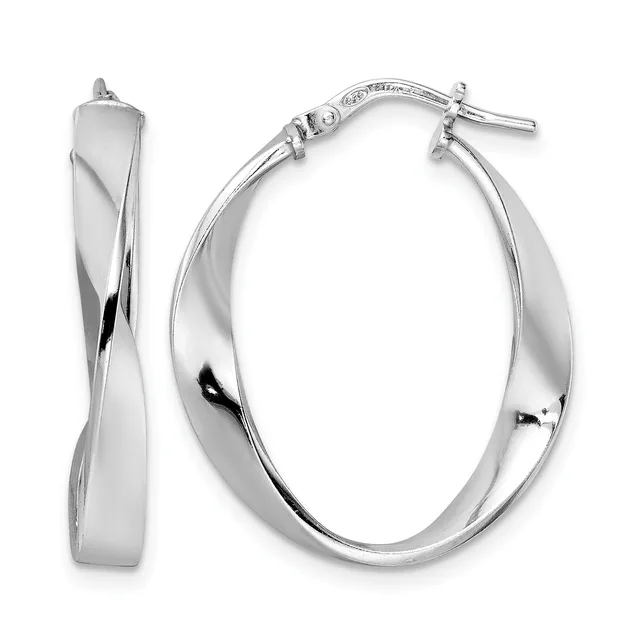
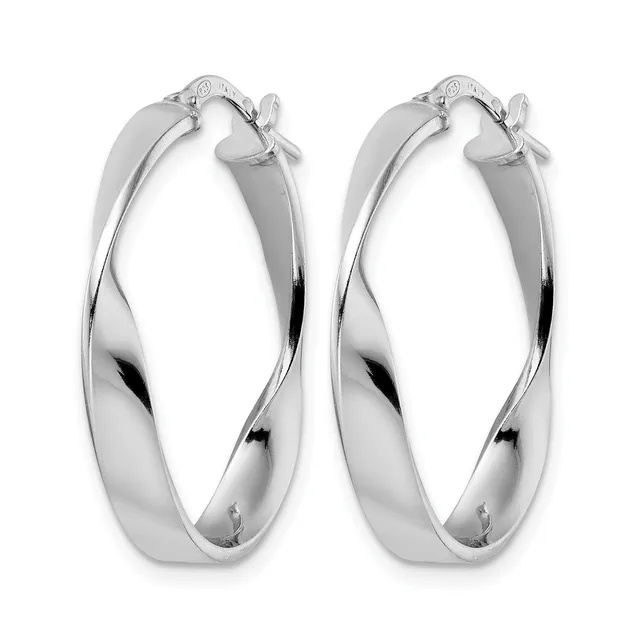
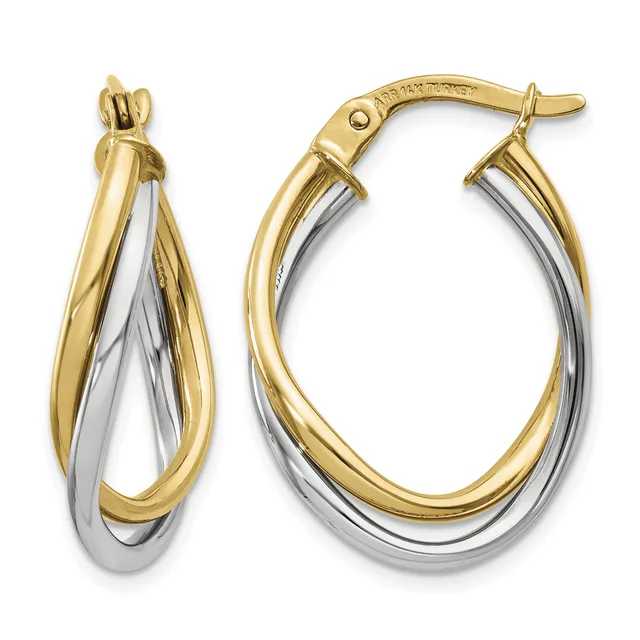
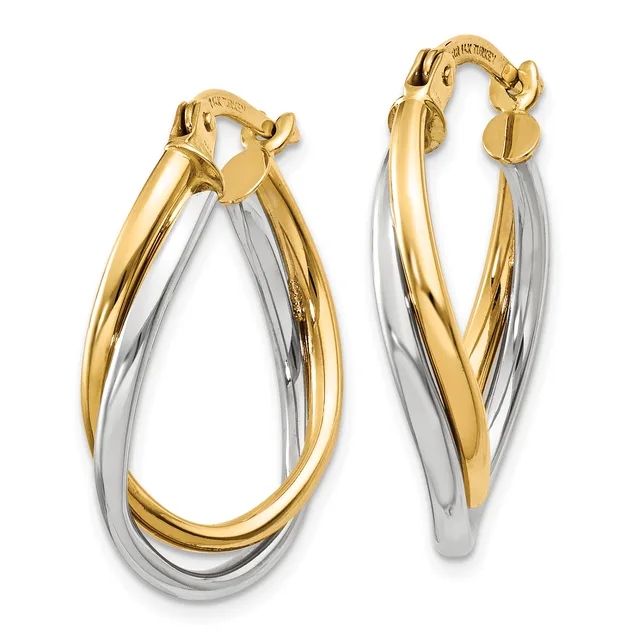
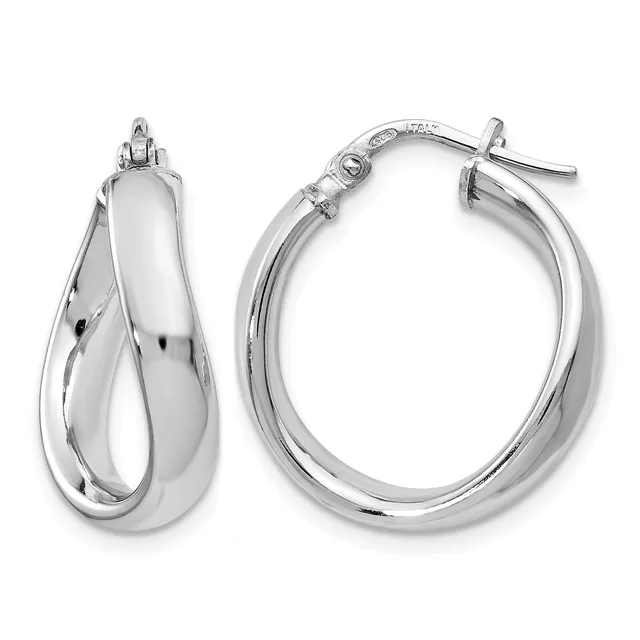
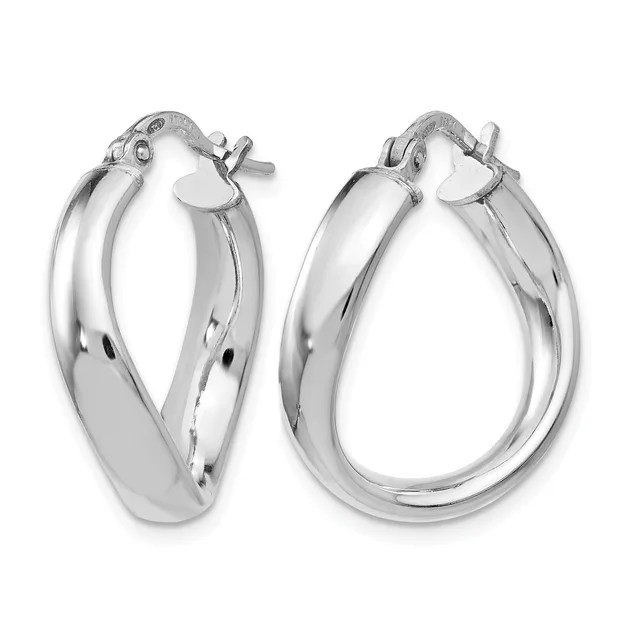
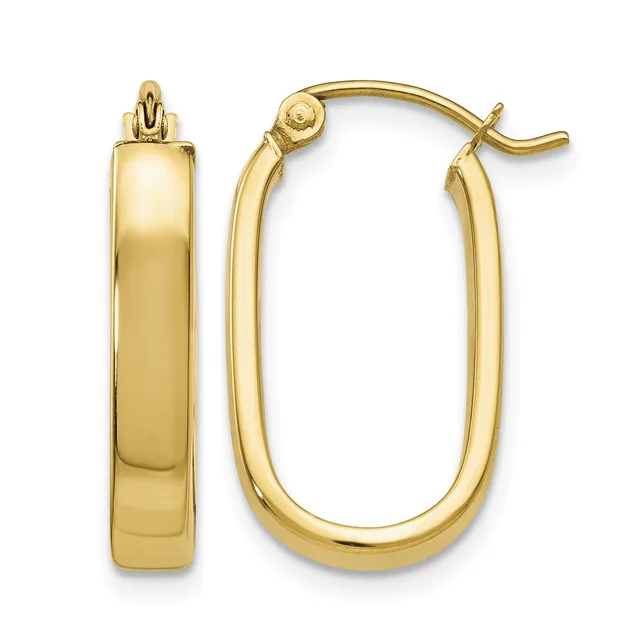
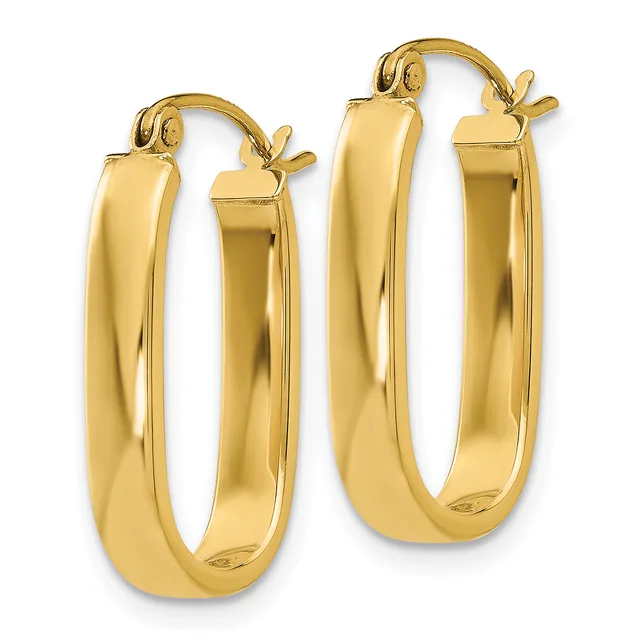
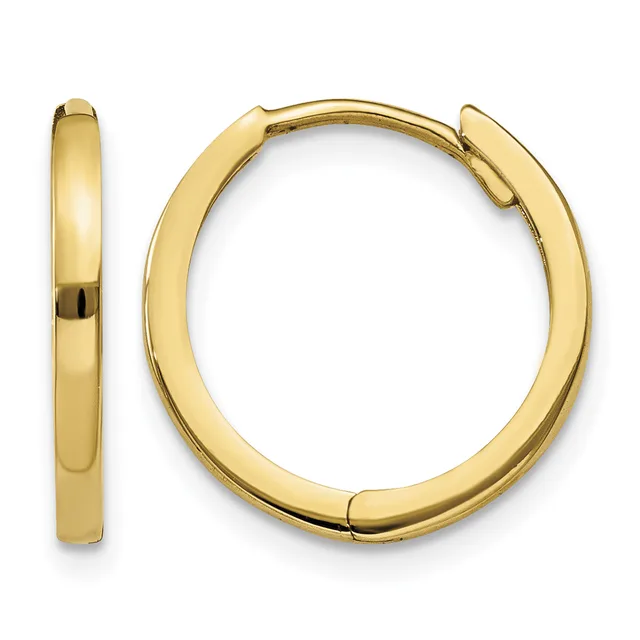
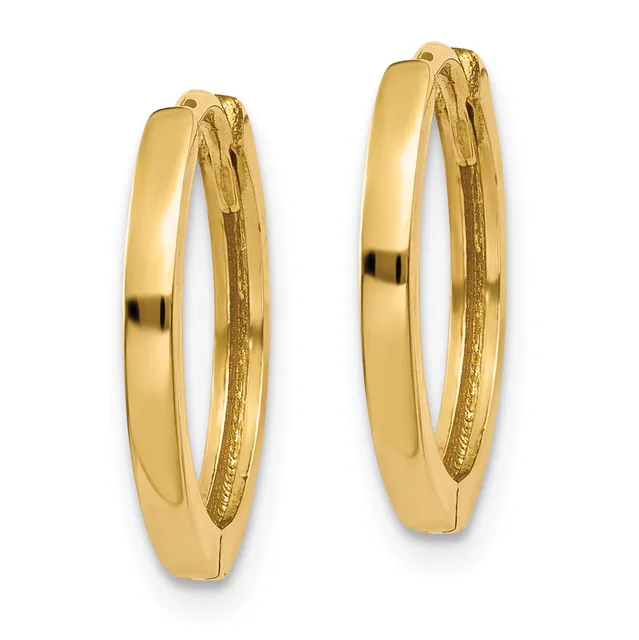
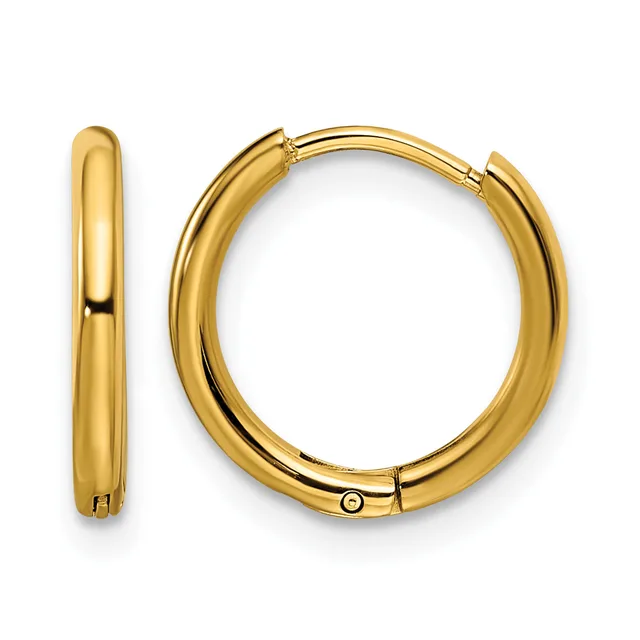
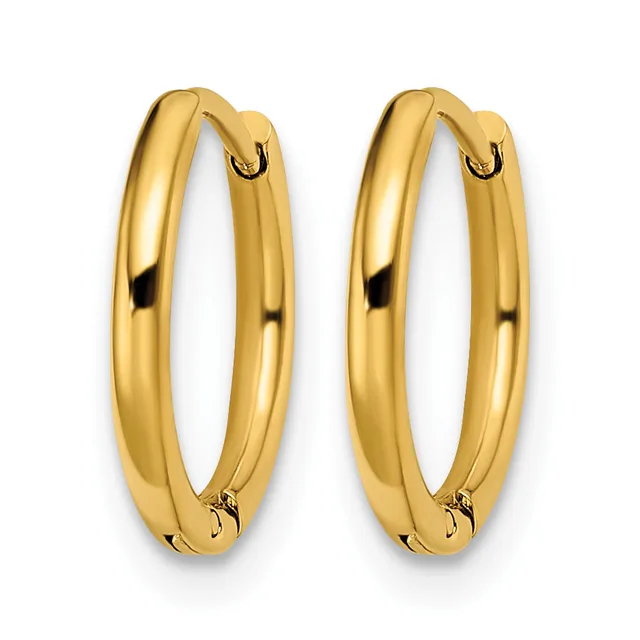
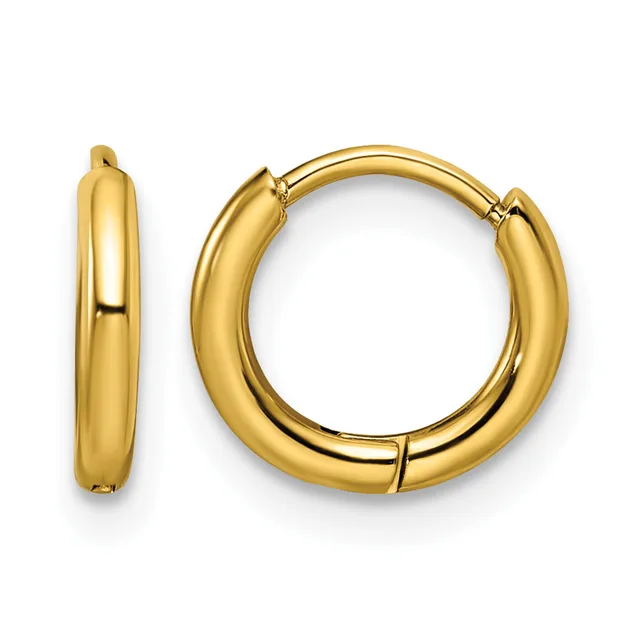
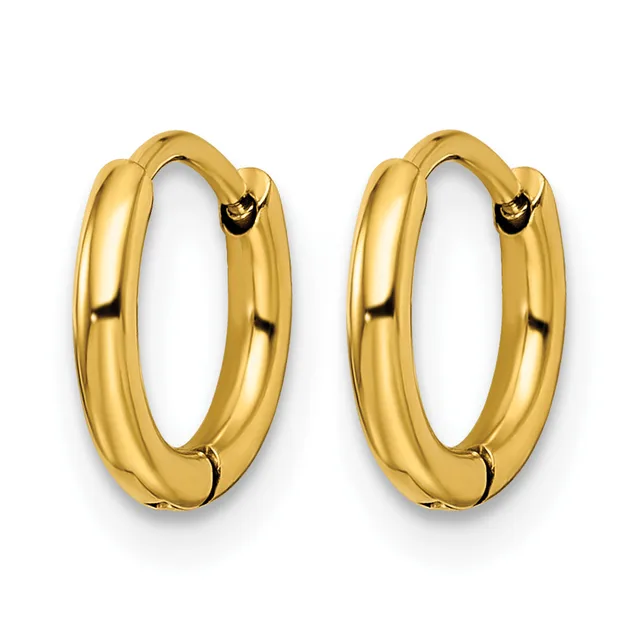
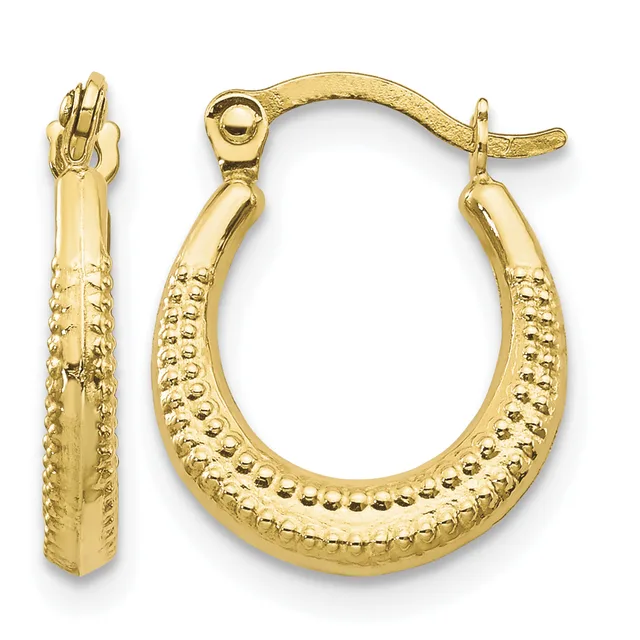
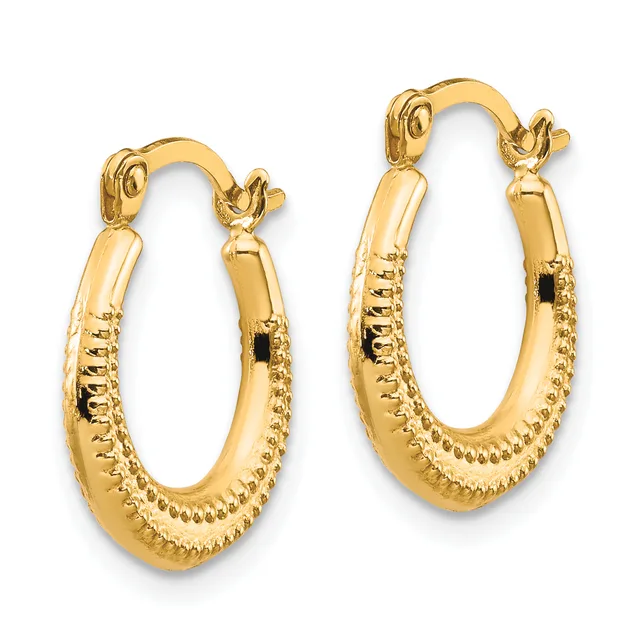
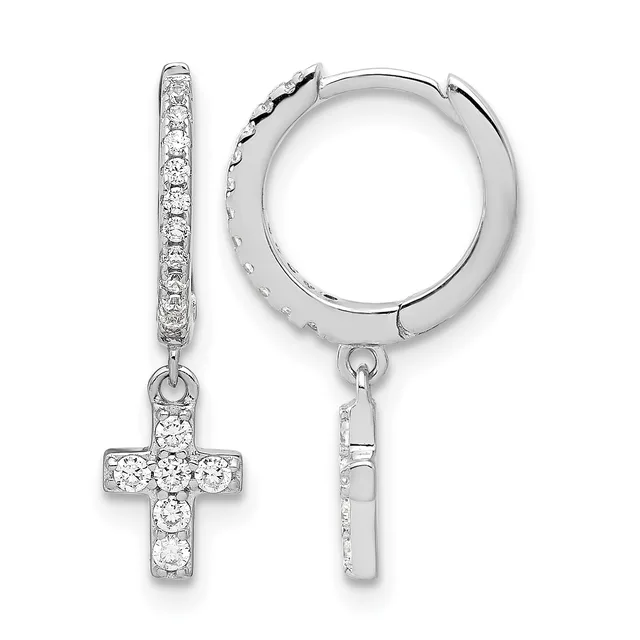
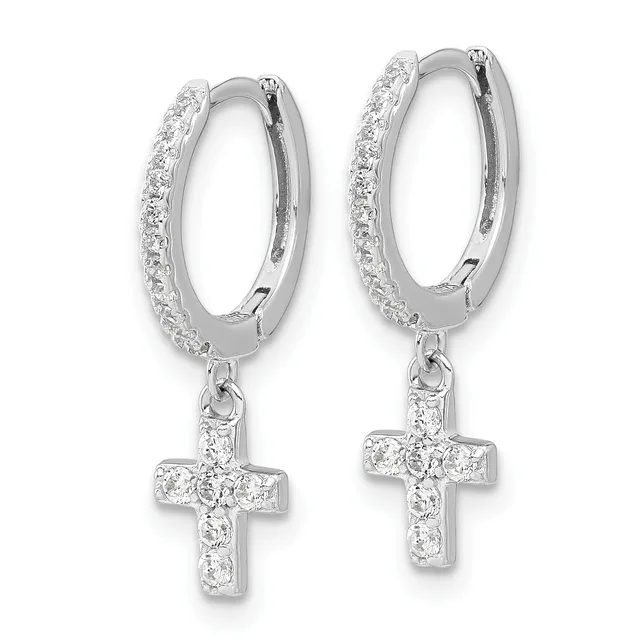
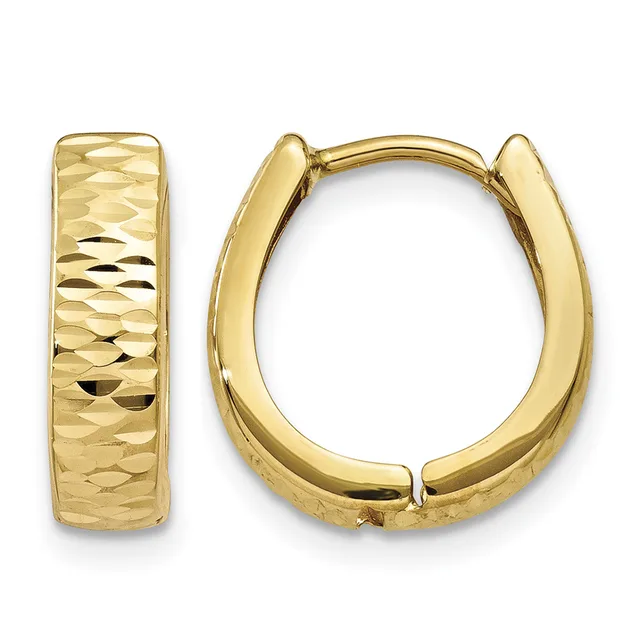
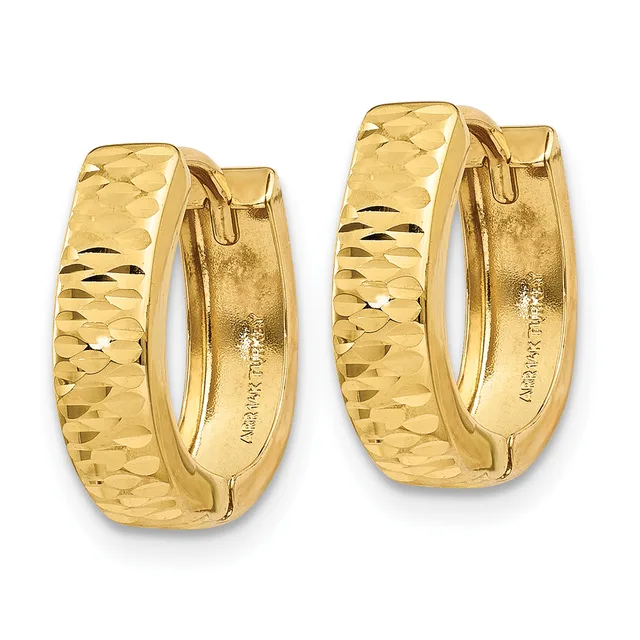
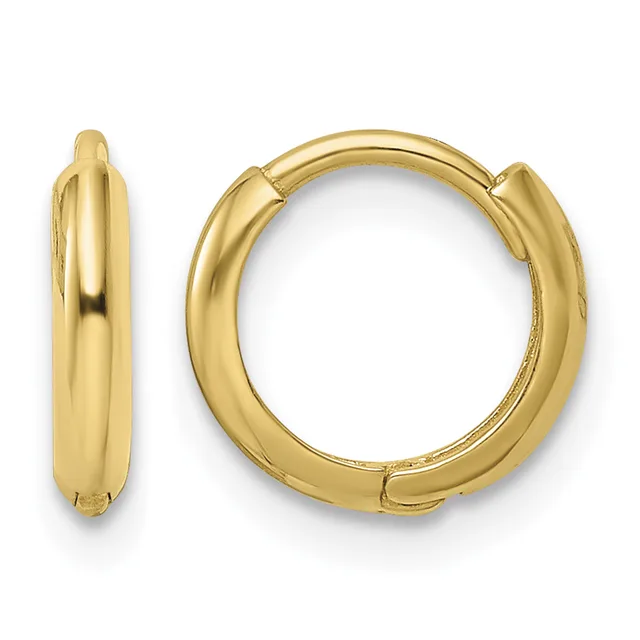
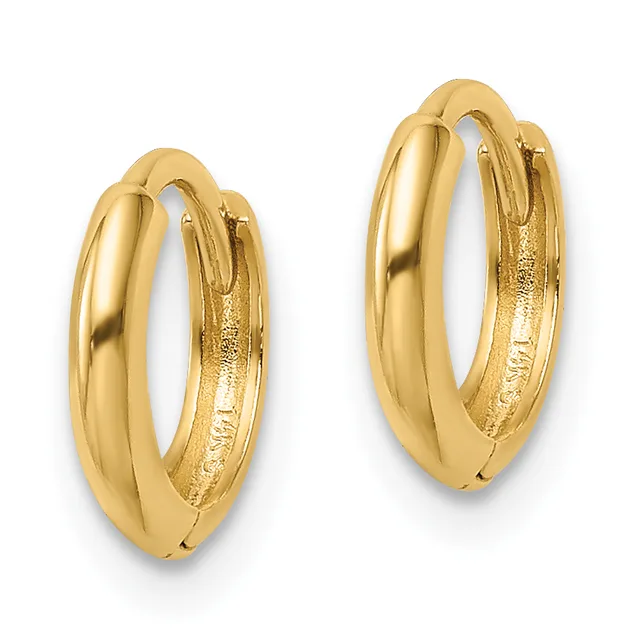
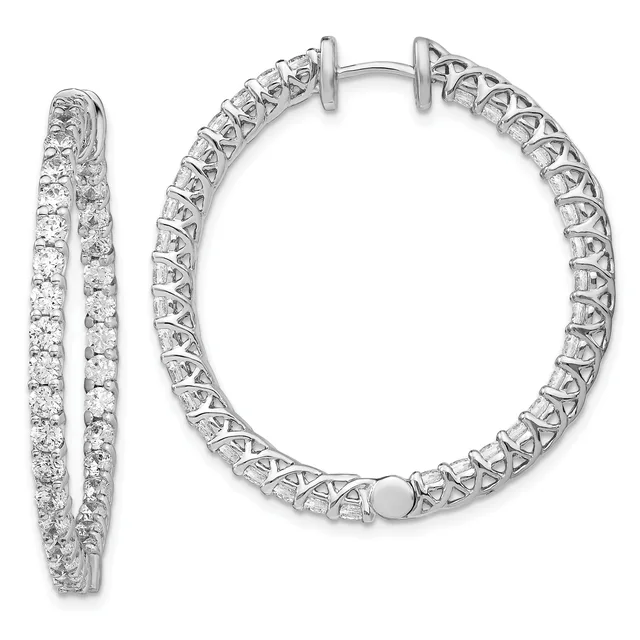
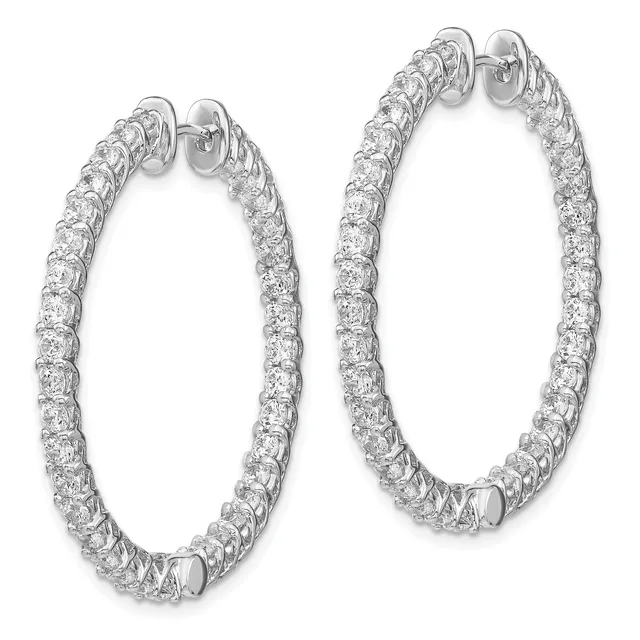
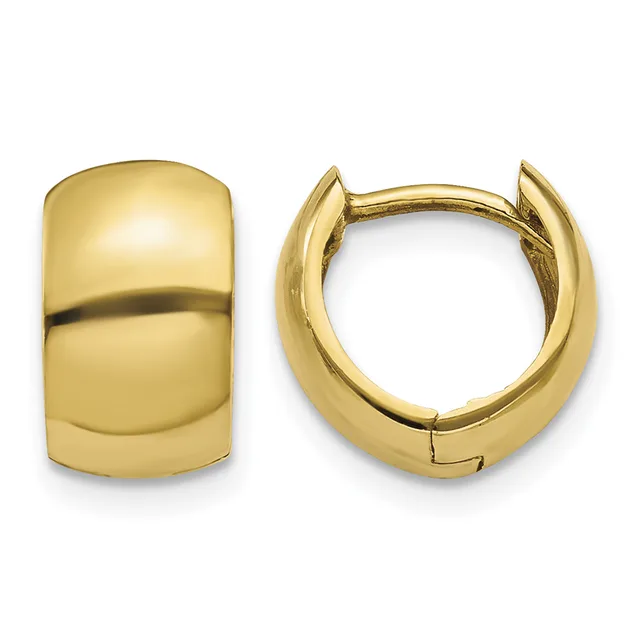
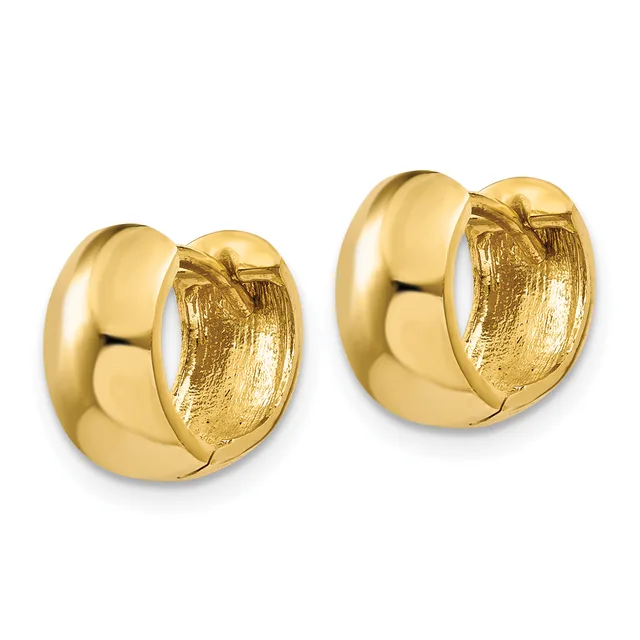
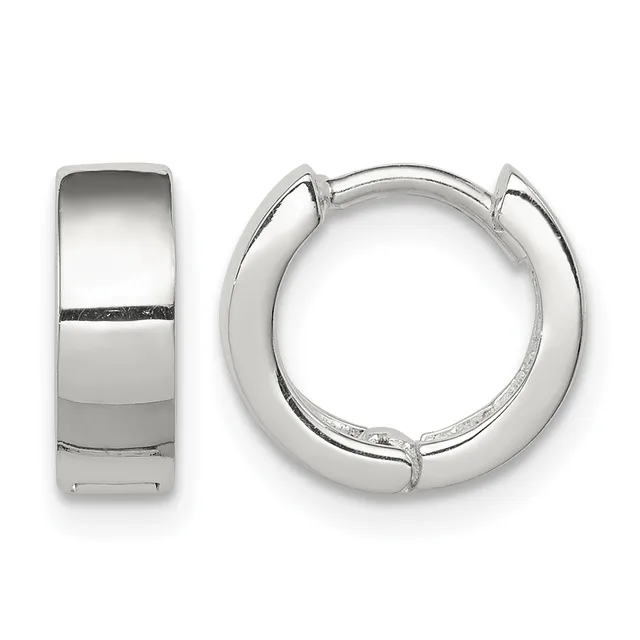
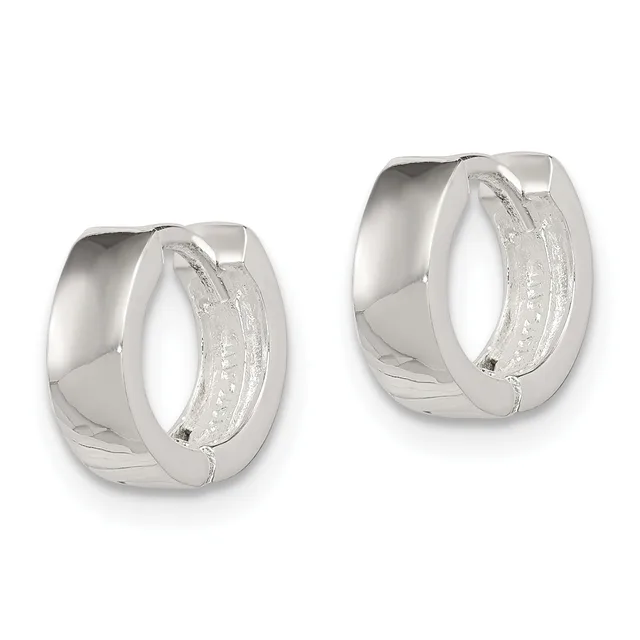
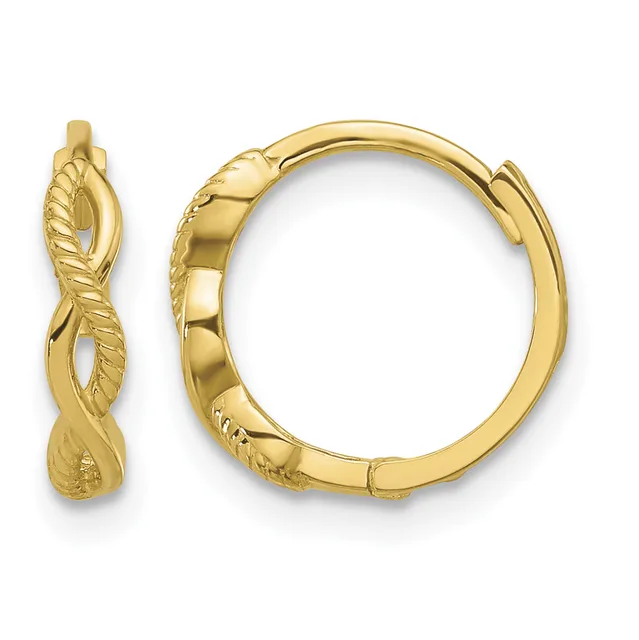
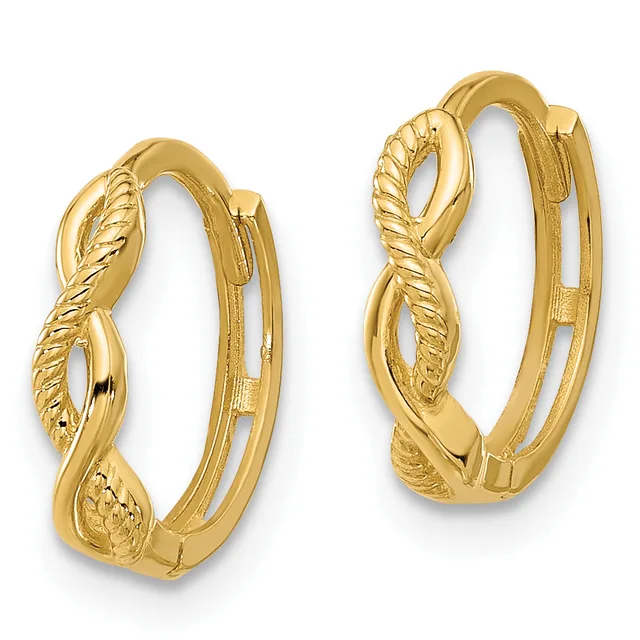
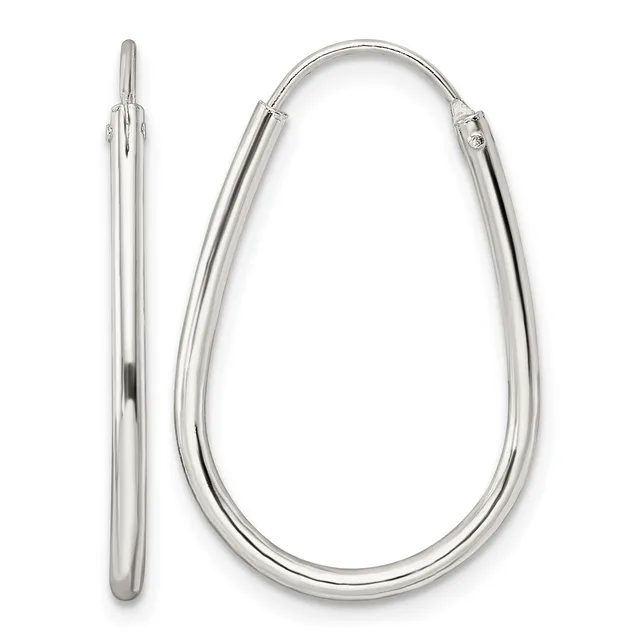
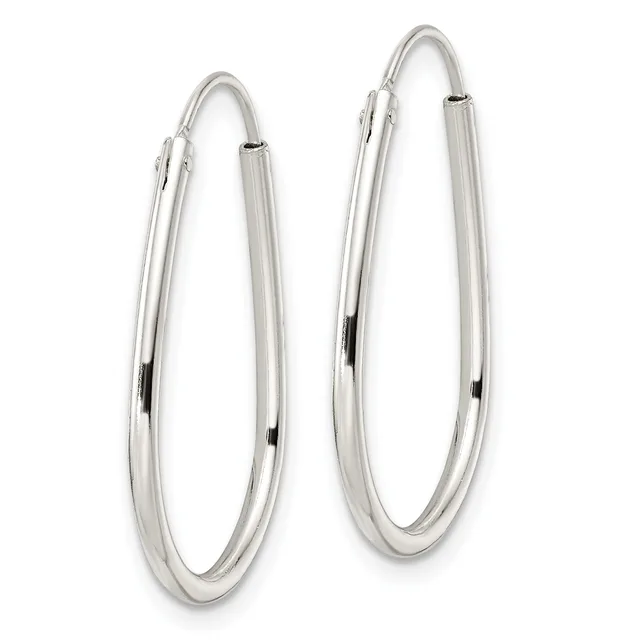
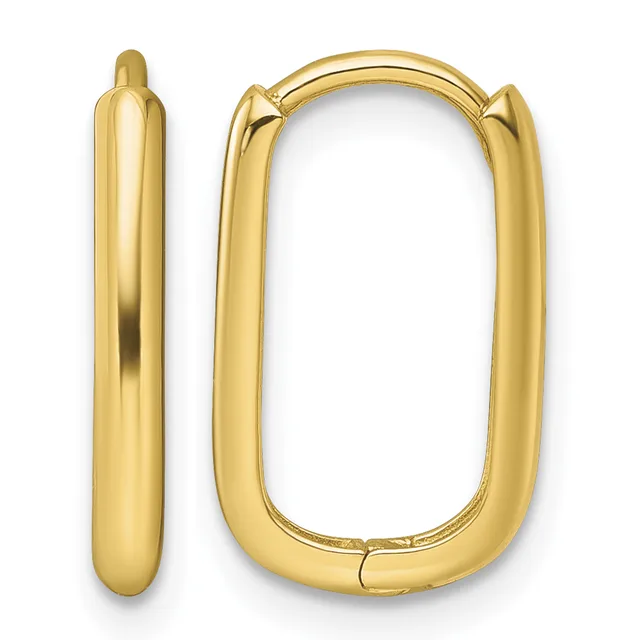
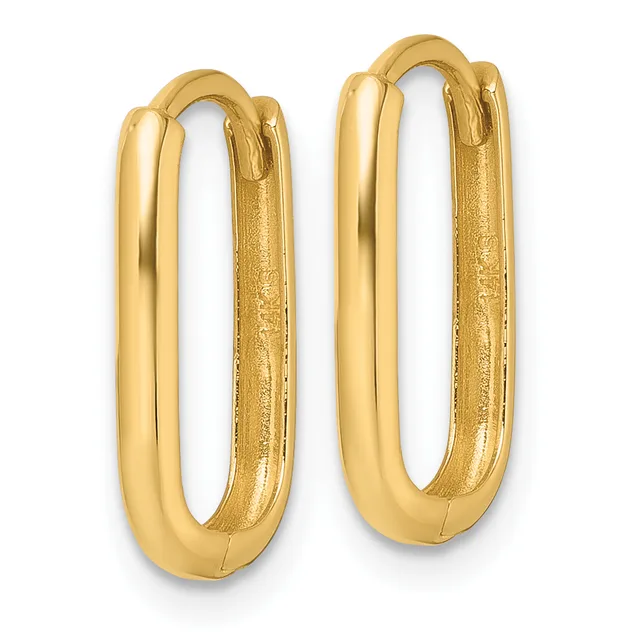
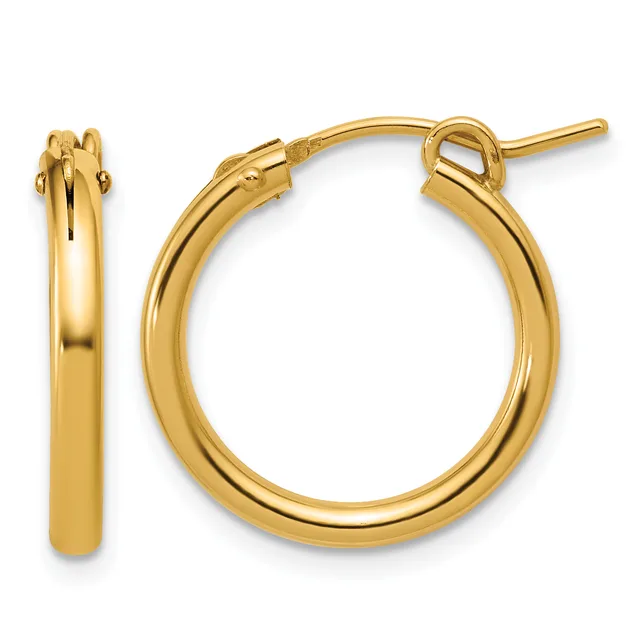
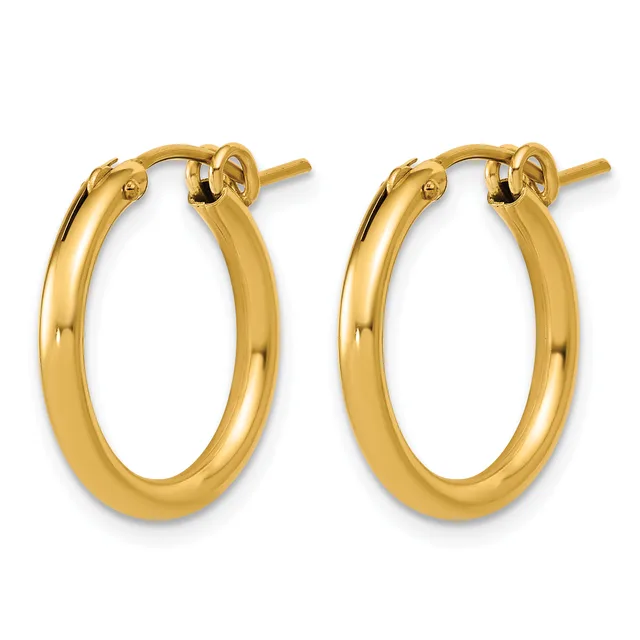
Four silhouettes, one category
The hoops here divide into four distinct shapes, each with its own wearing character.
- Round hoops are the largest group and the most familiar silhouette — a closed circle that ranges from tight hugging styles to hoops wide enough to graze the shoulder. The circle's symmetry suits most face shapes and works at almost any scale.
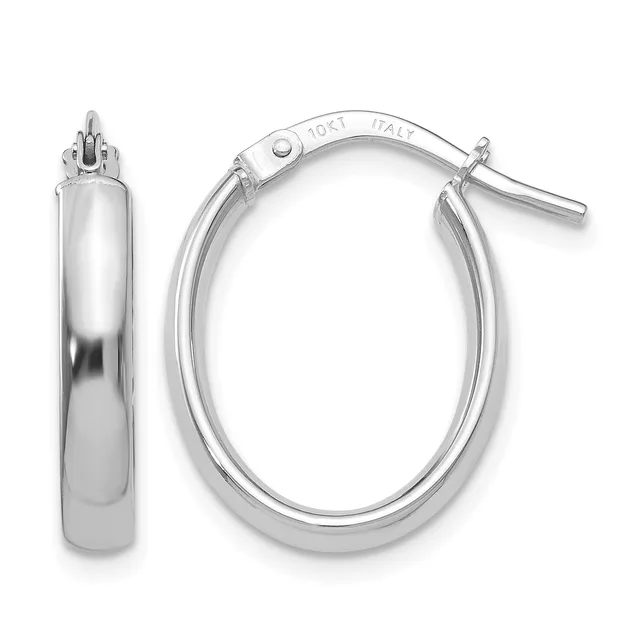
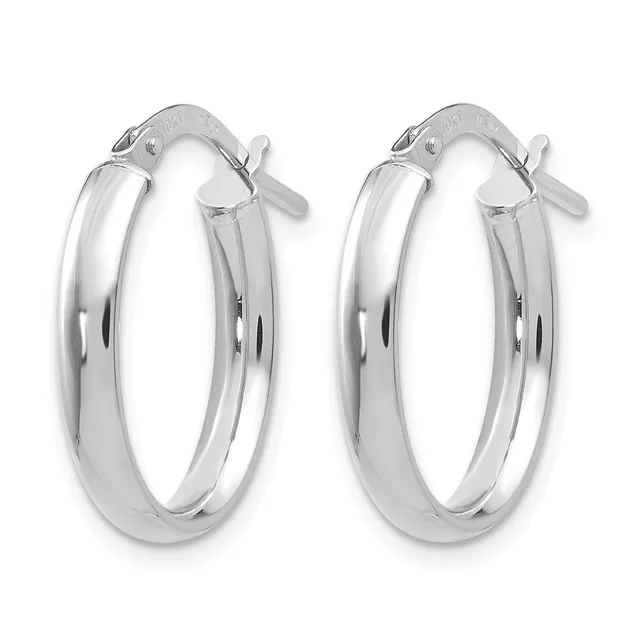
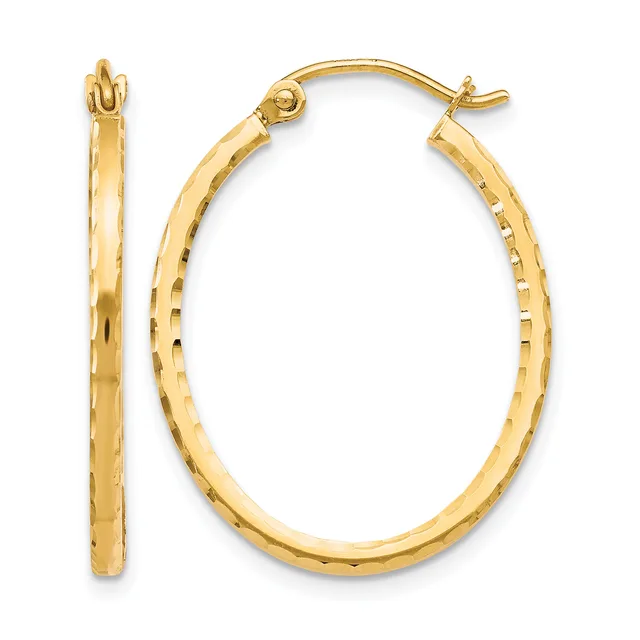
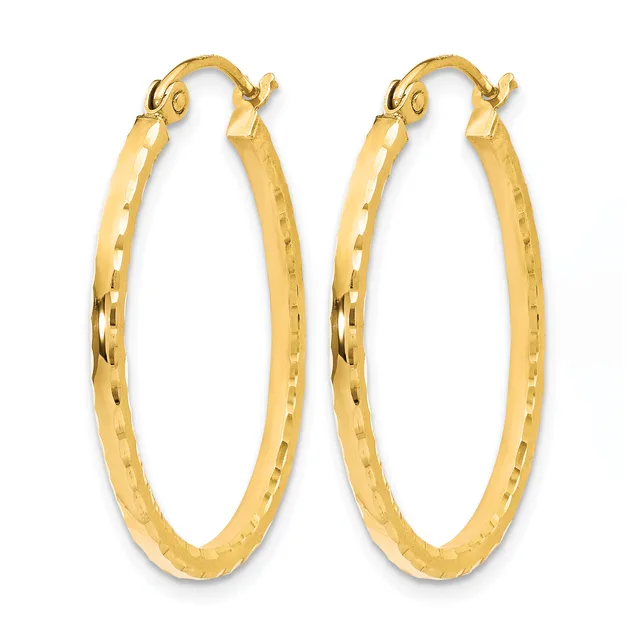
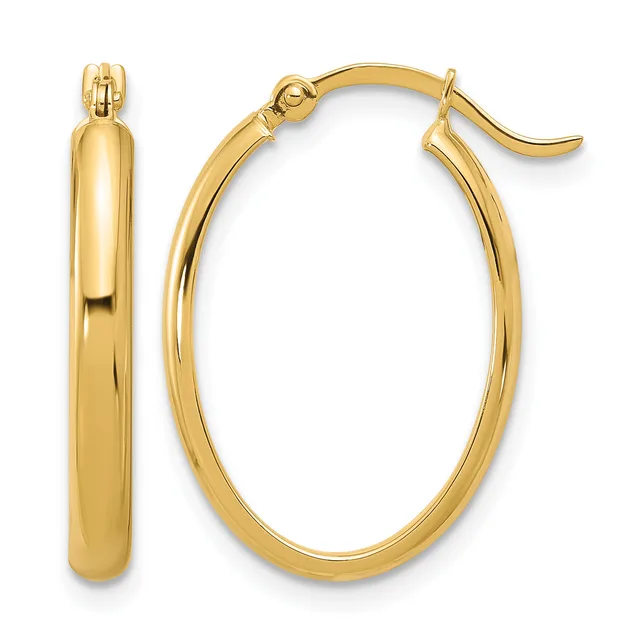
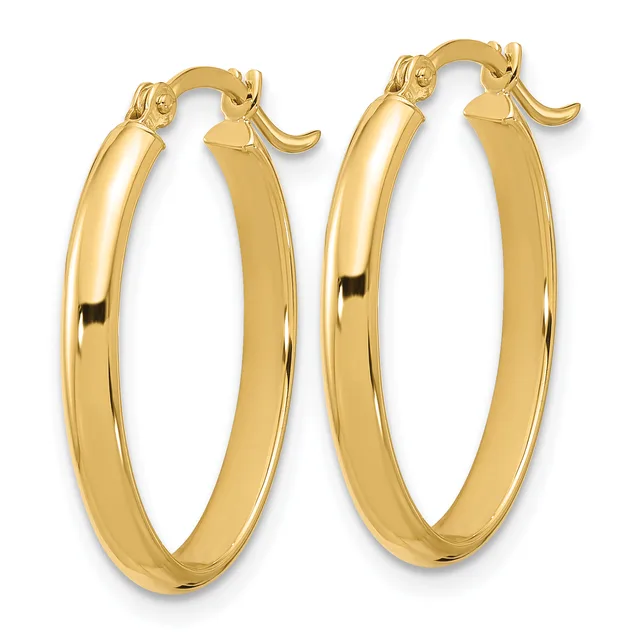
- Oval hoops share the closed construction of round hoops but stretch slightly on the vertical, which can elongate the look of the neck and jaw. The difference is subtle at smaller diameters and more pronounced at larger ones.
- Endless hoops use a continuous wire that threads directly through the piercing and coils or tucks to close, with no hinge or post. The absence of a clasp gives them a cleaner profile and makes sizing flexible, but they require a moment more to put on and take off than hinged styles.
- C, J, and post hoops open completely on one side, making them the easiest to put on. C-hoops have no back closure at all; J-hoops curve slightly further around the ear; post-back styles anchor with a standard butterfly or push back, familiar to anyone used to stud earrings.
What the metal means day to day
Most hoops here are offered in yellow gold, white gold, or rose gold, across 10k, 14k, and 18k karats, with some sterling silver options as well. Karat describes the proportion of pure gold in the alloy: 10k contains roughly 42% gold and is the most durable of the three because the higher alloy content resists scratching; 14k sits at about 58% gold, balancing durability with a warmer color; 18k reaches 75% gold, giving the richest tone but slightly more susceptibility to surface wear over years of daily contact. Sterling silver is 92.5% silver and develops a natural patina over time — a light polish restores its original brightness. Where pieces are described as gold-plated or vermeil, the base metal is coated rather than solid, so the thickness of that layer determines how long the finish holds before the base shows through, particularly at points of friction like hinge joints.
Sizing and fit
Hoop diameter is measured either across the inside of the ring (inner diameter) or from outer edge to outer edge. A 15–20 mm hoop typically sits close to the earlobe; 25–35 mm reaches below it; anything larger begins to move against the neck and shoulder. Tube diameter — the thickness of the wire or tubing itself — affects both weight and visual weight independently of the overall size. Thin-tube large hoops read as delicate; thick-tube small hoops read as bold. Endless hoops are sized at the wire's total length rather than a fixed diameter, so they offer some adjustment as you thread them.
Caring for hoop earrings
Hinged and post hoops benefit from occasional inspection of the hinge pin and latch, since repeated opening and closing is where stress concentrates. Endless hoops should be straightened gently if the wire kinks — forcing a sharp bend can harden and eventually crack the metal. For cleaning, warm water with a small amount of mild soap and a soft cloth handles most everyday buildup; ultrasonic cleaners are safe for solid gold and silver but should be avoided on plated pieces or any hoop set with stones that have surface treatments or fracture filling.
Frequently asked questions
What is the difference between endless hoops and regular hinged hoops?
Endless hoops use a continuous wire that passes through the piercing and coils to close, with no separate latch or hinge. Hinged hoops have a fixed clasp and open at a single point, making them quicker to put on but slightly bulkier at the closure.
How do I know what hoop diameter will work for my ear?
A hoop with an inner diameter of around 15–20 mm sits close to the lobe; 25–35 mm reaches below it. If you already own a hoop you like the fit of, measuring its inner diameter gives you a reliable reference point for comparing listings.
Are C-hoops and J-hoops secure enough for everyday wear?
C-hoops have no back closure, so they rely on the curve of the wire staying snug against the piercing — they are generally fine for daytime wear but can loosen if the wire is bent outward over time. Post-back styles in this same group add a butterfly closure and are more secure for active use.
Does karat affect the color of yellow gold hoops?
Yes. Higher karat gold contains more pure gold, which deepens the yellow tone — 18k yellow gold appears noticeably richer than 10k yellow gold, which has a slightly paler, more brass-adjacent hue due to its higher alloy content.
Can I wear hoop earrings if my piercings are sensitive?
Solid 14k or 18k gold and sterling silver are the metals least likely to cause irritation for most people with metal sensitivities, as they contain lower proportions of reactive alloys like nickel. Plated styles vary by base metal, so checking the base-metal description in the individual listing is worthwhile if sensitivity is a concern.