
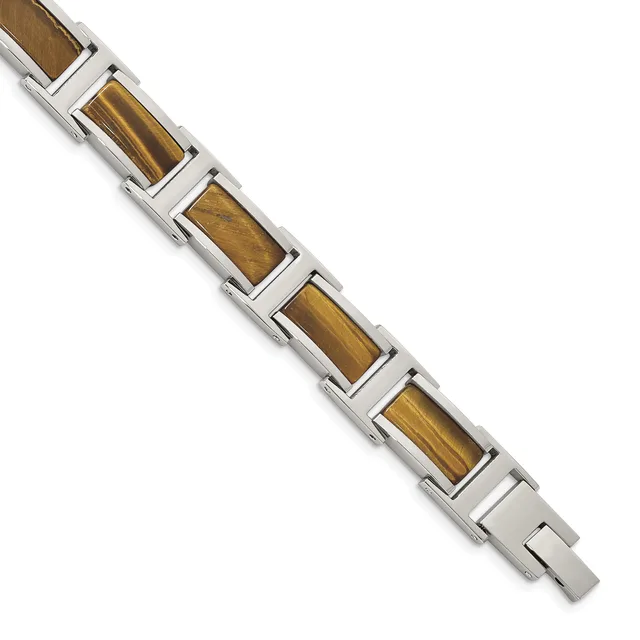
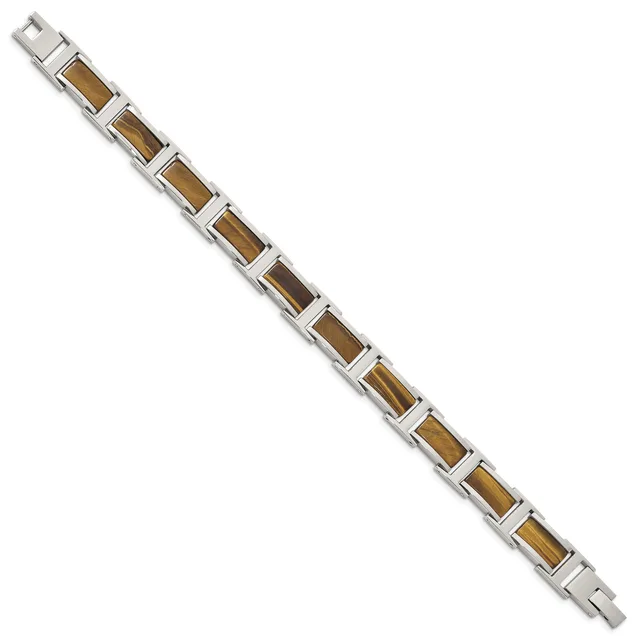
What You'll Find Here
The pieces in this category lean contemporary: bracelets built from natural stone, shell, and wood rather than precious metal alone. That means visible grain, organic color variation, and a weight and warmth that polished metal doesn't replicate. Each piece will look slightly different from the next because the materials themselves vary — that's a property of natural materials, not a flaw.
Choosing by Material
Natural stone bracelets are generally the most durable of this group. Stone holds its surface well and doesn't fade with light exposure, though it can chip if struck sharply against hard surfaces. Shell is lighter and carries subtle iridescent depth; it's less resistant to impact and should be kept away from prolonged water exposure. Wood is the warmest in tone and the lightest in weight, and it benefits from occasional conditioning with a neutral oil to prevent drying or cracking — especially in low-humidity environments.
Fit and Sizing
Because these bracelets use rigid or semi-rigid natural materials rather than a chain, fit is less forgiving than with a link bracelet. Measure your wrist and compare against the listed dimensions before ordering. A bracelet that's too tight stresses the material at the clasp or threading; one that's too loose catches and knocks against surfaces, which shortens its life.
Care
Remove any natural-material bracelet before swimming, showering, or heavy exercise — prolonged moisture weakens thread or elastic cores and can cause stone or shell to lose its surface finish. Store flat or in a soft pouch rather than piled with metal jewelry, which can scratch softer materials.
Frequently asked questions
Are these bracelets suitable for everyday wear?
Natural stone bracelets hold up well to daily wear with reasonable care. Shell and wood pieces are better suited to occasional or dress wear, as they're more sensitive to moisture and impact.
Can I wear these bracelets in the shower or pool?
No — prolonged water exposure can degrade the threading or elastic core inside these bracelets and dull the surface of shell and wood. Remove them before getting wet.
How do I know which size to order?
Measure the circumference of your wrist with a soft tape or a strip of paper, then compare that measurement to the bracelet's listed interior diameter or circumference. Natural-material bracelets have little or no flex, so accurate sizing matters more than with chain styles.
Will the color and pattern look exactly like the product photo?
Because these pieces use natural stone, shell, and wood, each one varies slightly in tone and pattern — the photo shows a representative example, not a precise match for every unit.