
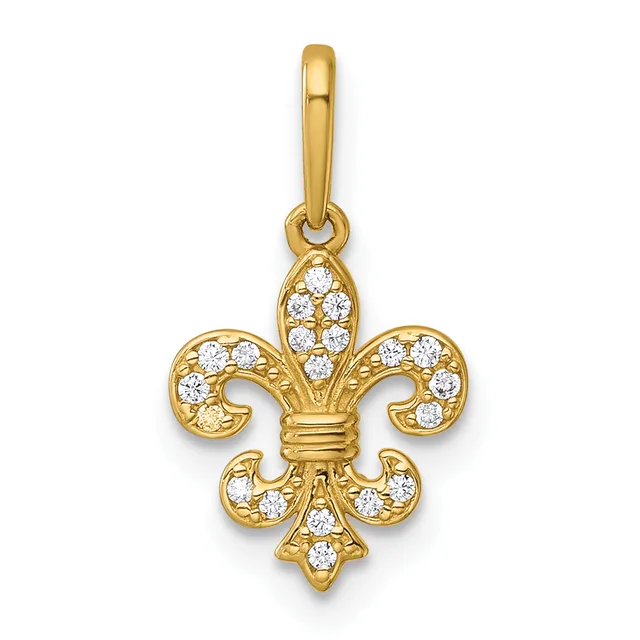
The Motif and What It Carries
The fleur de lis — three petals bound at the base — has appeared on royal seals, cathedral stonework, and civic crests for centuries. As a charm, it carries that weight lightly: a small, recognizable form that reads as both ornamental and meaningful depending on who wears it. It suits someone drawn to symbols with a longer story than a single season.
Wearing and Layering
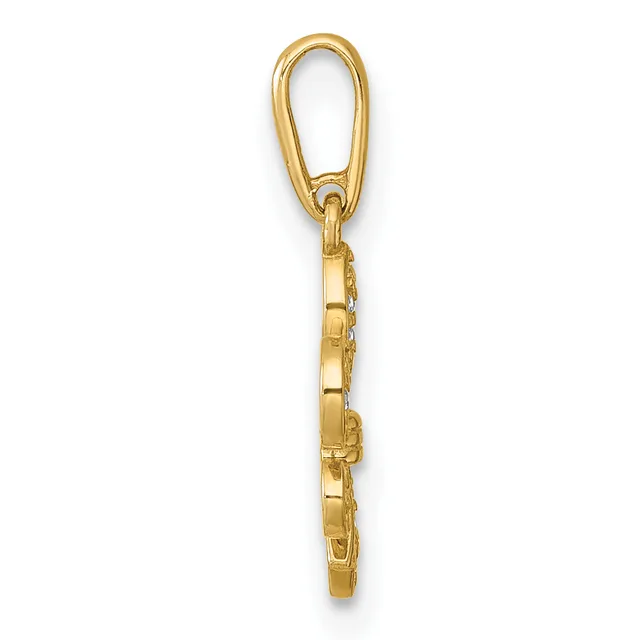
A fleur de lis charm works equally well worn alone on a delicate chain or added to a collection of themed charms on a bracelet or necklace. Because the shape is symmetrical and relatively flat, it lies cleanly against the skin without catching on clothing. When layering, pair it with other geometric or heritage motifs rather than organic shapes — the angular structure of the fleur de lis anchors that kind of arrangement better than it competes with softer forms.
Care
Fine metal charms benefit from being stored individually or in a soft pouch to prevent surface scratching. Remove before swimming or prolonged exposure to moisture, and wipe clean with a dry, lint-free cloth after wear. A jeweler can re-polish minor surface marks during routine check-ups.
Frequently asked questions
What does the fleur de lis symbol mean?
The fleur de lis is a stylized lily with roots in European heraldry, long associated with royalty, civic identity, and spiritual symbolism. Its meaning shifts with context and wearer — many people choose it for cultural heritage, others simply for the geometry of the form.
Can a fleur de lis charm be worn on a bracelet as well as a necklace?
Yes. The flat, symmetrical profile of the fleur de lis makes it a practical choice for both a pendant chain and a charm bracelet, as it moves easily without snagging.
How do I keep a fine metal charm looking its best?
Store it away from other pieces that could scratch the surface, keep it dry, and wipe it down with a soft cloth after wear. A jeweler can restore the finish if surface wear accumulates over time.