
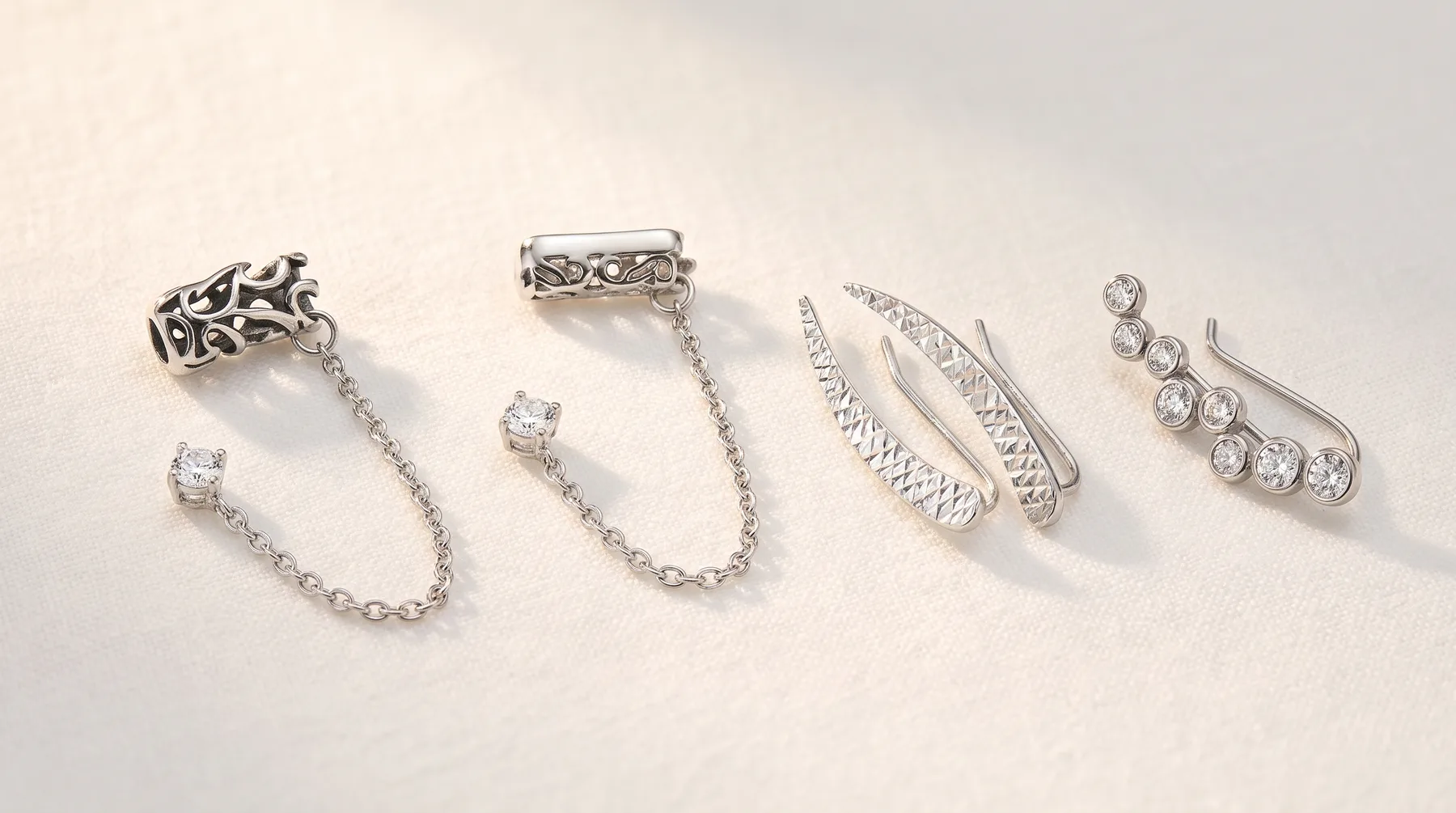
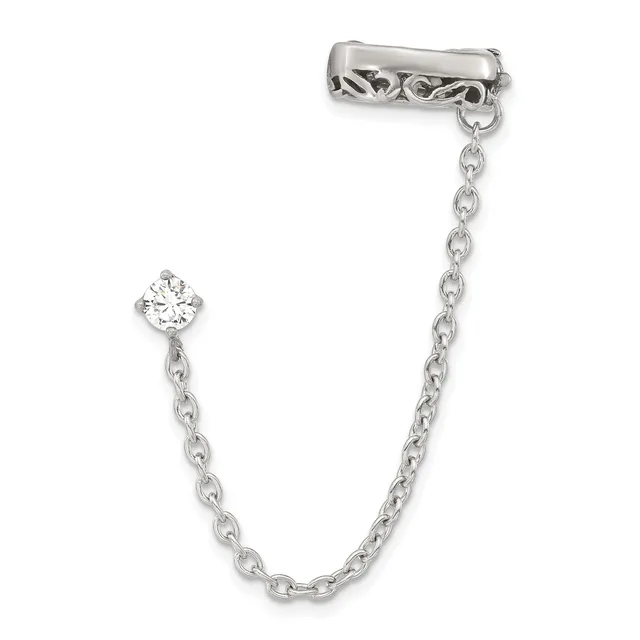
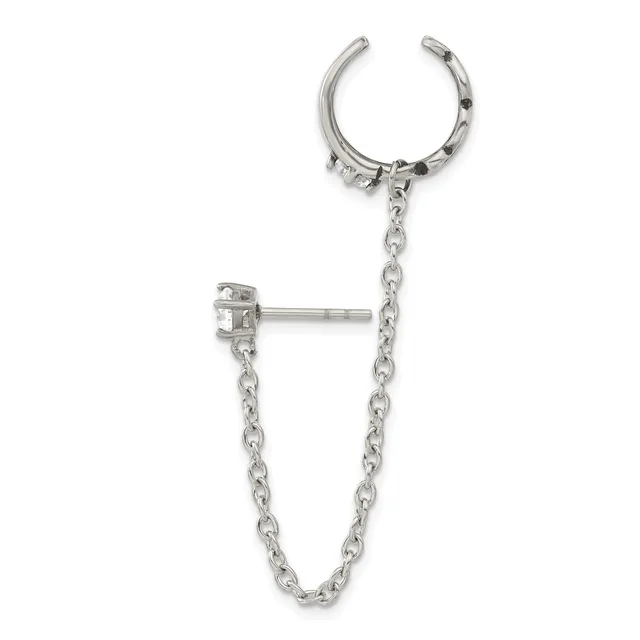
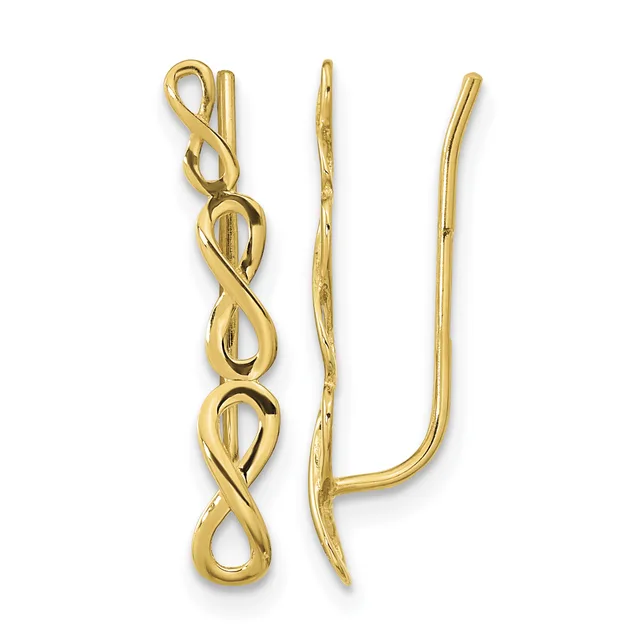
How Ear Climbers Differ from Other Earring Styles
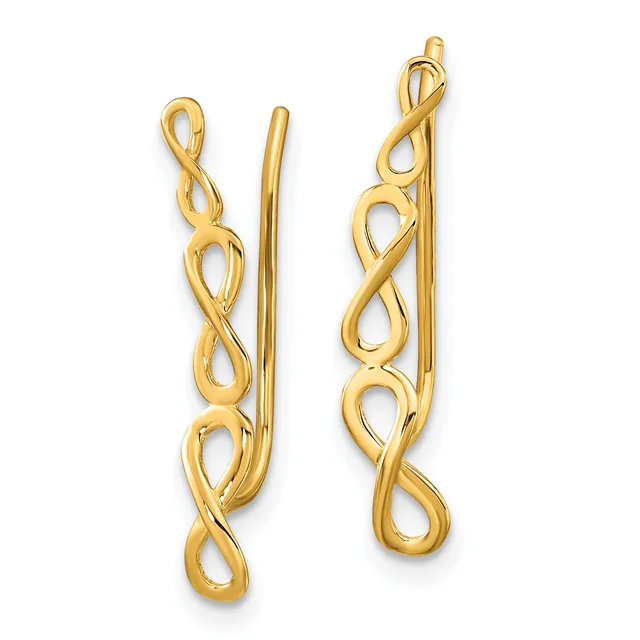
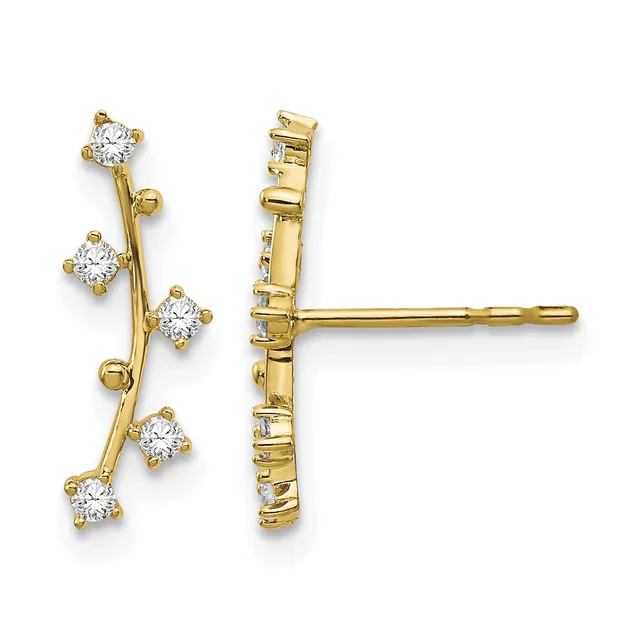
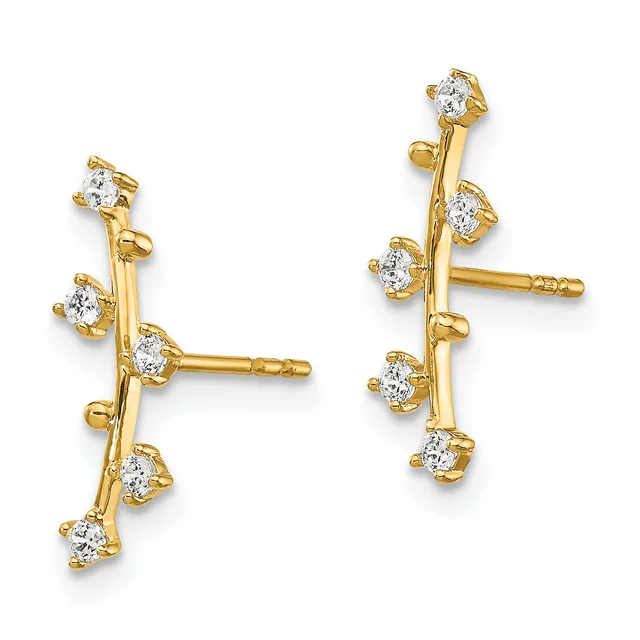
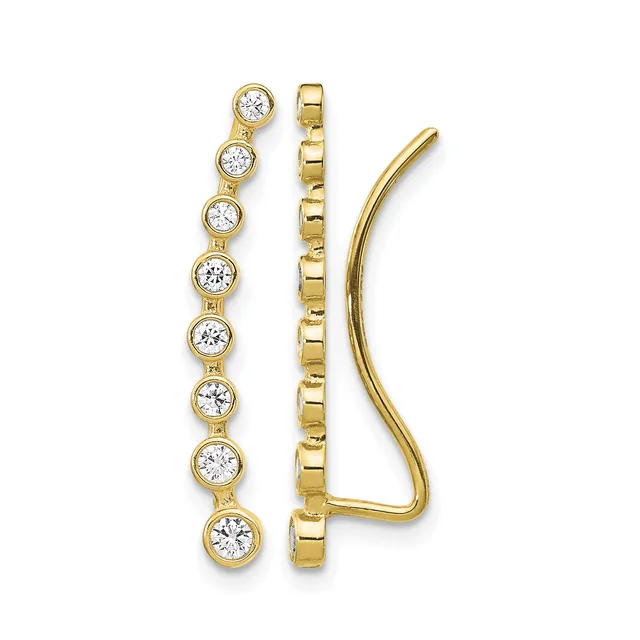
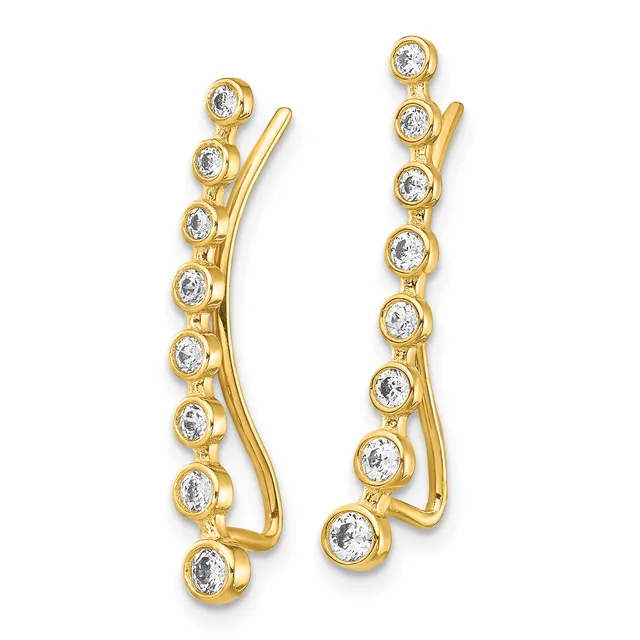
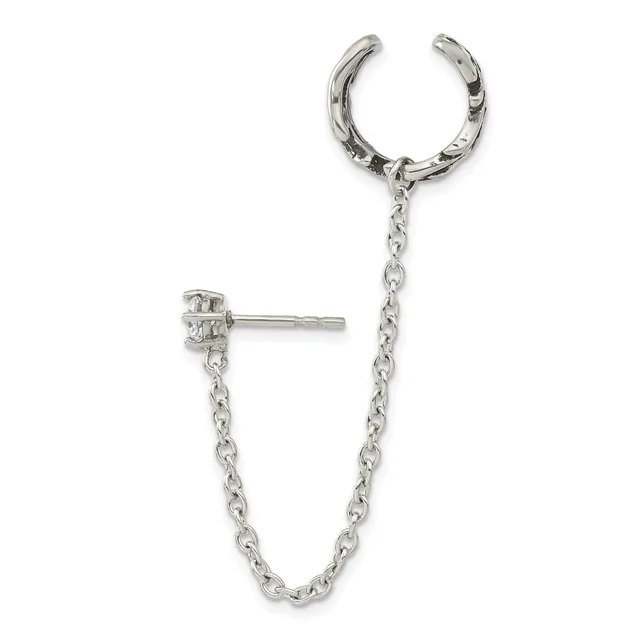
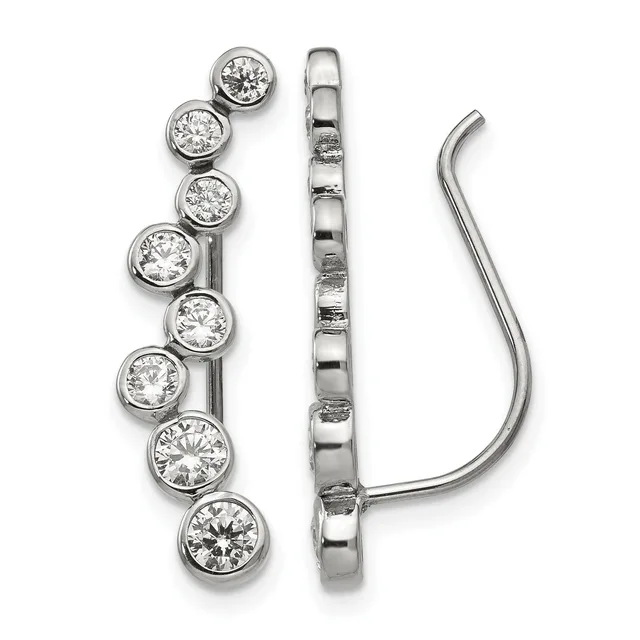
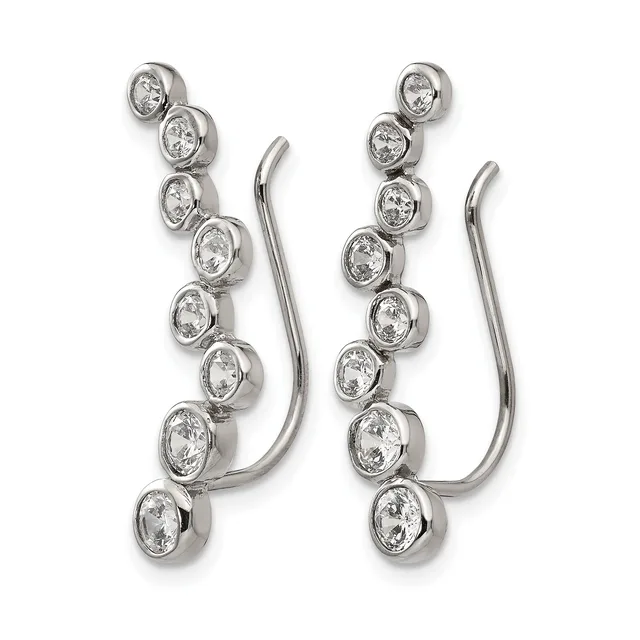
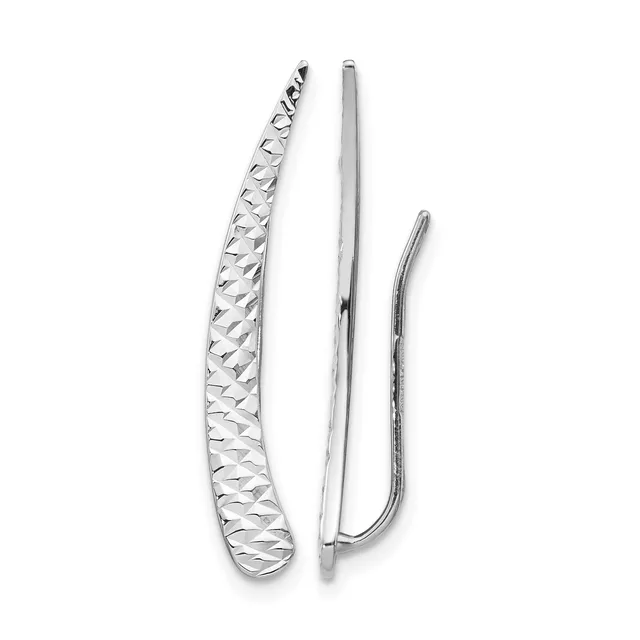
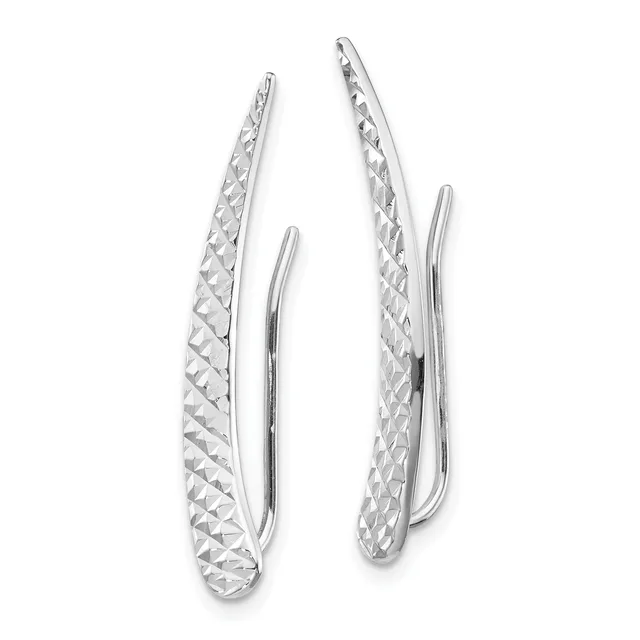
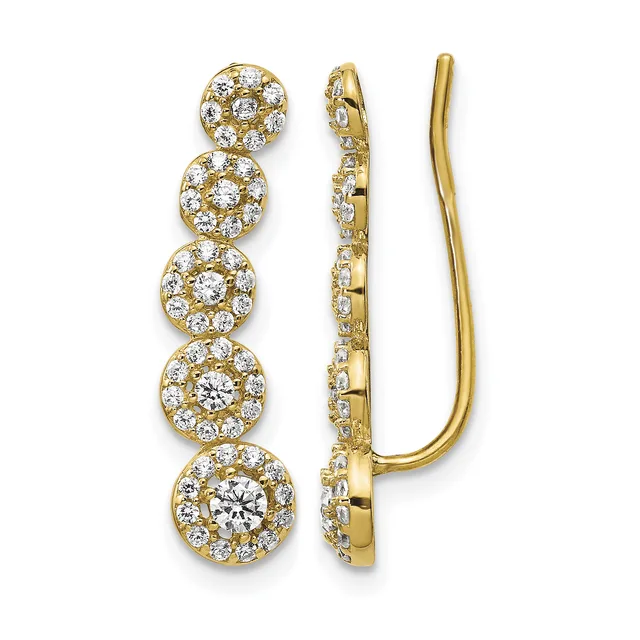
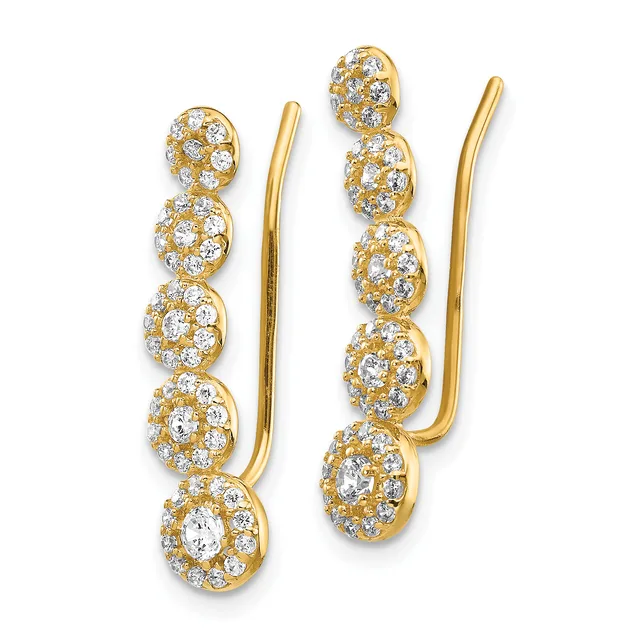
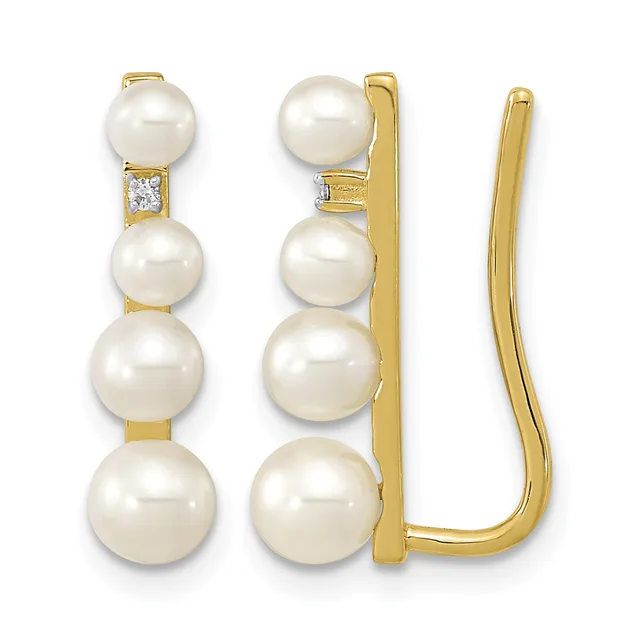
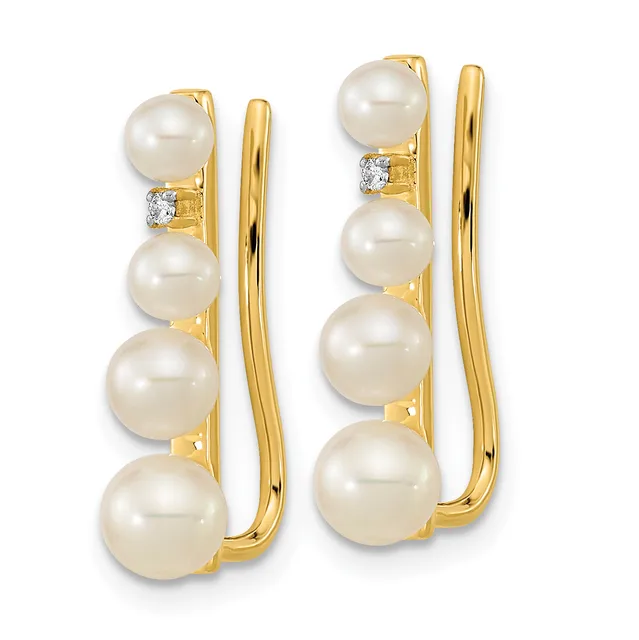
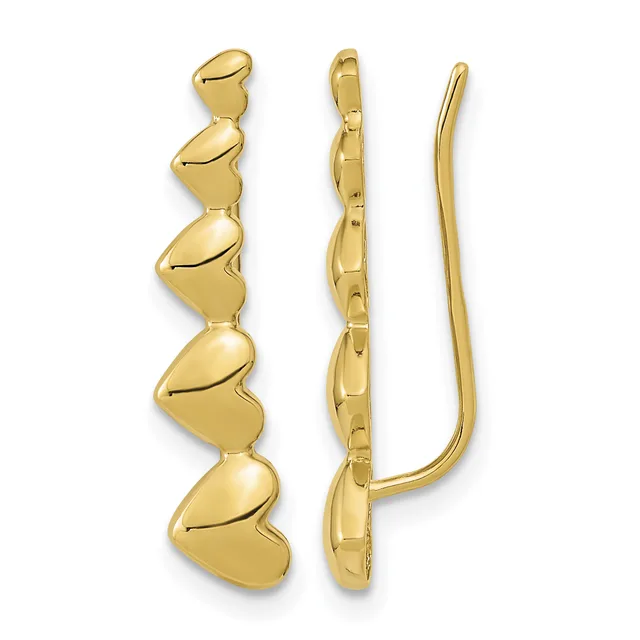
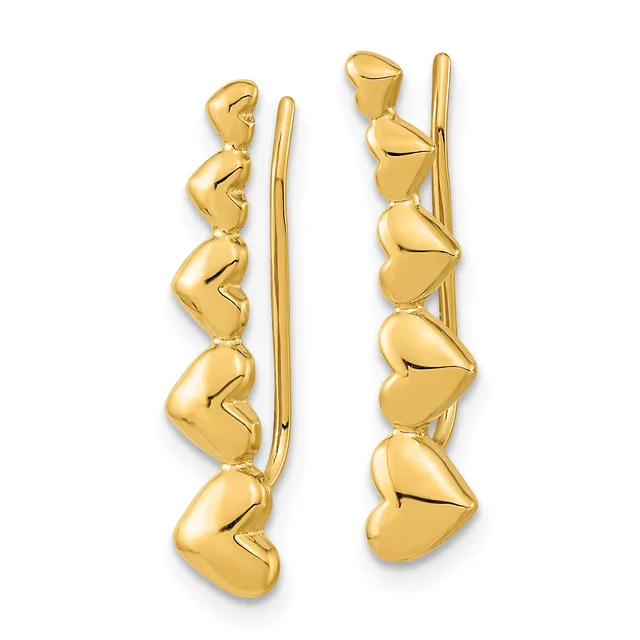
Unlike a stud, which sits at a single point, or a drop that hangs below the lobe, a climber is designed to travel along the ear's natural curve. The piece anchors through the lobe in the usual way, then follows the helix upward — giving the impression of multiple piercings from a single hole. The result reads as architectural rather than decorative in the conventional sense, and it tends to stay visible even when hair falls forward.
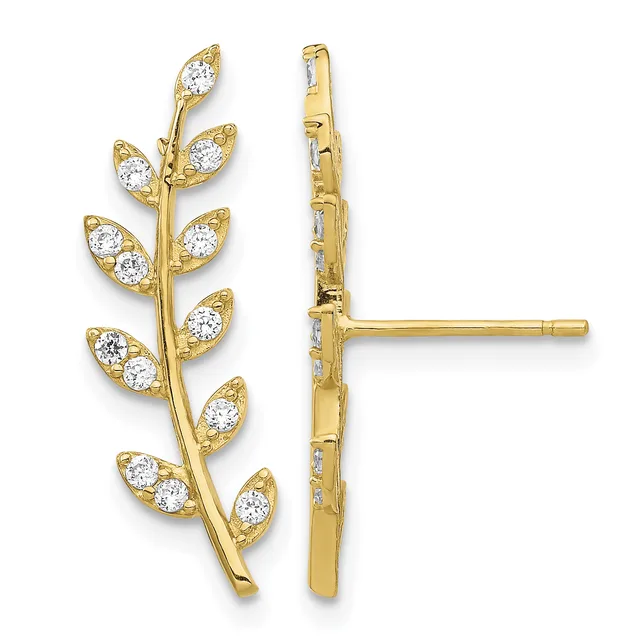
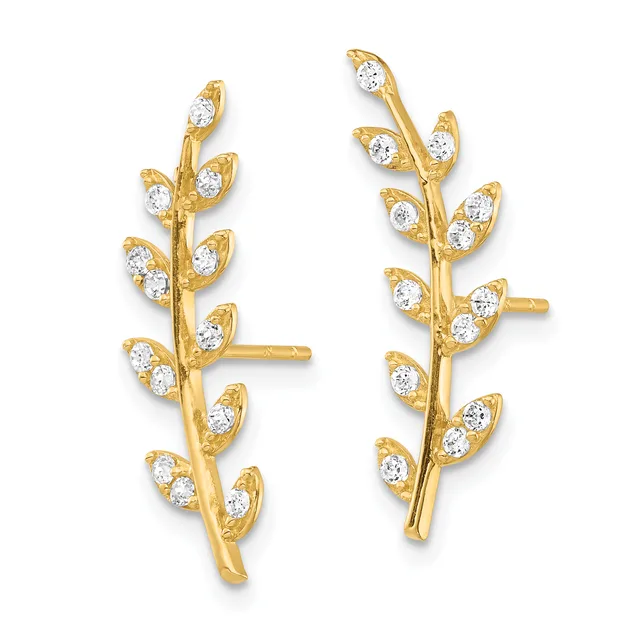
Within this category you'll find climbers that lean abstract and linear alongside those shaped into recognizable motifs — leaves, hearts, and other nature-influenced forms. The latter bring the same ascending silhouette with a softer, more figurative finish.
Metals and What They Mean Day to Day
The range here spans entry and fine price points, so the metal choices vary meaningfully. At the accessible end, pieces may use a base metal with a precious-metal finish; these suit occasional wear but benefit from keeping them away from water, skincare products, and prolonged friction, which gradually wear any surface plating. At the finer end, solid precious-metal construction holds its appearance through daily wear and can be polished back to its original surface if it dulls.
When you're deciding between options, consider how often you plan to wear the piece and whether it will sit against skin for long stretches. A climber that curves close to the cartilage will rub slightly with movement, so a harder, solid-metal piece tends to outlast a plated one in that position.
Fit and Comfort
Climbers are sized to a standard lobe piercing but vary in the length of the ascending arm — the longer the arm, the higher it reaches on the ear. Check the listed measurements before buying: a shorter climber suits smaller ears or a lower, lobe-adjacent look, while a longer arm reads more dramatically and needs enough ear height to lie flat. Because the arm curves rather than hangs free, it should rest against the ear without pulling; if a climber feels like it's lifting away from the skin, the fit isn't right for your ear's angle.
Care
Store climbers flat or in a compartment where the curved arm won't be bent further out of shape. Wipe with a dry, lint-free cloth after wearing. For fine-metal pieces, a jeweler can re-polish minor surface scratches; plated pieces should not be polished abrasively, as this removes the finish layer. Remove climbers before swimming, bathing, or applying products to keep both the metal and any stone settings in their best condition.
Frequently asked questions
Do ear climbers require more than one piercing?
No. A climber uses a single standard lobe piercing — the post goes through the lobe as usual, and the arm curves upward along the outer ear on its own.
How do I know which length will suit my ear?
Check the listed measurements for the ascending arm. A shorter arm sits close to the lobe, while a longer arm travels higher along the helix — you'll want enough ear height for it to lie flat and comfortably.
Are ear climbers comfortable for all-day wear?
Many people wear them daily without issue, but the arm rests against the ear rather than hanging free, so fit matters. A climber that curves naturally against your ear's contour will feel more secure and cause less pressure than one that pulls away from the skin.
Can I wear ear climbers if my piercings are fully healed but I usually wear studs?
Yes — climbers use the same standard lobe piercing as a stud. The only adjustment is learning to angle the post correctly on the way in, which becomes straightforward after the first try.
How should I store ear climbers to keep the arm from bending out of shape?
Lay them flat in a divided jewelry box or a soft-lined tray so the curved arm rests without additional pressure. Avoid stacking other pieces on top of them.