
What These Pieces Are
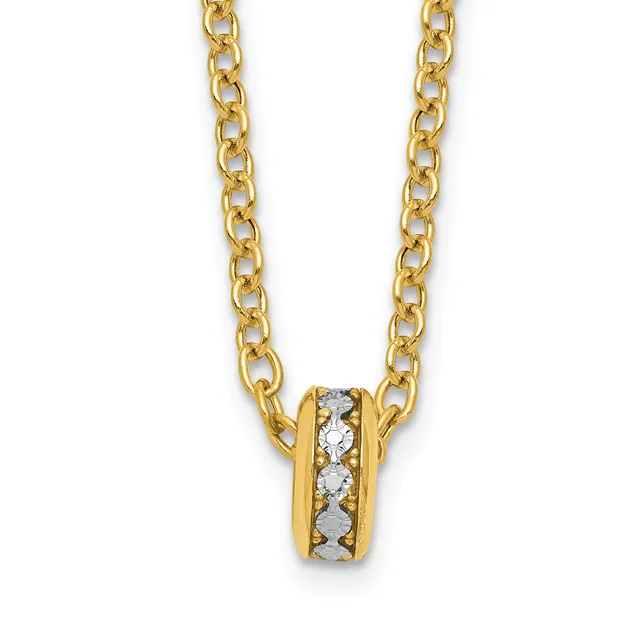
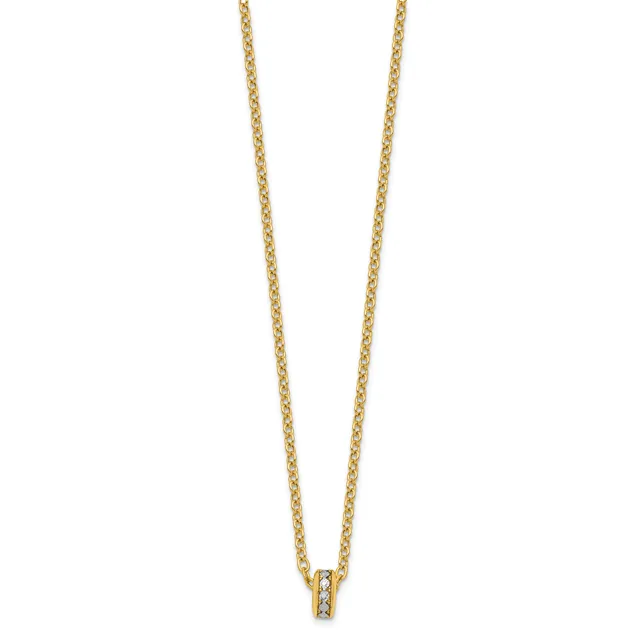
Every piece in this collection is a diamond pendant worn on a cable chain. The cable chain — built from uniform oval links that interlock at right angles — lies flat against the skin and distributes weight evenly, making it one of the most stable foundations for a pendant. It is a format that keeps the eye on the diamond rather than the chain itself.
Choosing a Diamond Pendant
Because this is a focused selection, the choice is less about filtering through volume and more about sitting with the piece itself. With diamond pendants, the details that matter most are the setting style, the metal, and how the stone is positioned on the chain.
- Setting: A closed setting protects the diamond's girdle and suits everyday wear. An open or prong setting lets in more light and makes the stone appear larger, but the prongs are contact points — worth being mindful of if the necklace will be worn during active daily use.
- Metal: The metal affects both colour reading and long-term wear. Yellow gold warms the apparent body colour of a diamond; white metals — white gold or platinum — allow a colourless or near-colourless stone to read as icier. Gold karat determines the proportion of pure gold in the alloy, which in turn affects hardness and the depth of colour.
- Chain length: A pendant's placement changes how it reads. Shorter lengths position the stone at the collarbone; longer lengths let it fall toward the décolletage and move more freely with the body.
Wearing and Care
Cable chains are durable but not indestructible. The link-on-link construction means that sustained pulling — catching on fabric, for instance — can stress individual joints over time. Fastening and unfastening at the clasp rather than pulling the chain over the head will extend its life significantly.
Diamonds attract oils from the skin and cosmetics, which gradually dull their brilliance. A periodic soak in warm water with a drop of mild dish soap, followed by a soft-bristle brush around the setting and a thorough rinse, restores the stone's light return without any risk to the metal. Store the necklace separately — ideally hanging or in a soft pouch — to prevent the chain from tangling or the pendant from scratching other pieces.
Frequently asked questions
What is a cable chain and why is it used with pendants?
A cable chain is made of uniform oval links connected at right angles to one another, forming a flat, even structure. It lies smoothly against the skin and distributes a pendant's weight without twisting, making it a practical and visually clean choice for showcasing a diamond.
How does metal colour affect how a diamond looks?
Yellow gold reflects warmth into a diamond, which can complement stones with a slight body colour. White gold or platinum reflect neutral or cool light, allowing a colourless diamond to appear crisper and brighter.
Is a diamond pendant suitable for daily wear?
Generally yes, though it depends on the setting. Closed or bezel settings protect the stone well during everyday activity; prong settings are slightly more exposed and warrant care around fabrics and hard surfaces.
How do I keep the diamond looking its best?
Soak the pendant in warm water with a small amount of mild dish soap, gently brush around the setting with a soft-bristle brush, then rinse and pat dry. Oils from skin and cosmetics are the main cause of dulling and are easily removed this way.